The best potted plants for autumn: easy to grow, easy to bloom, ideal for beginners
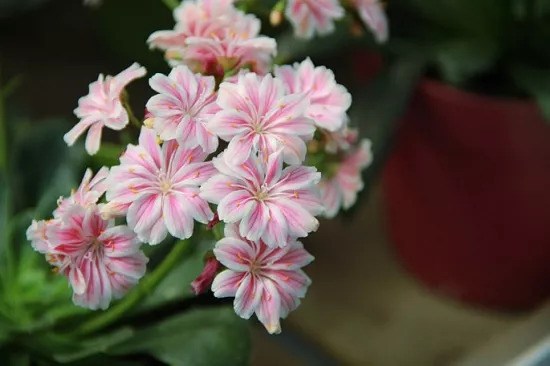
1. Lewisia
Autumn is exactly when Lewisia is at its most beautiful. Not too cold, not too hot, with plenty of light, the flowers are fresh and bright, vivid yet not gaudy, and extremely abundant. The leaves are fleshy, as it is actually a type of succulent, beautiful in both flower and foliage, enjoyed for its blooms and its leaves.
It is better suited to being grown in deep, fertile sandy soil. It dislikes overly wet conditions; soil that is too moist will cause root rot. The fertilizer used is generally fermented animal manure, and when fertilizing, take care not to let it touch the roots. It fears hot weather and ordinarily needs only half a day of light.
2. Wax flower (Hoya)
A new type of climbing ornamental plant, its flowering period can last all year round in the south, and it can bloom for more than half the year in the north as well. It is very easy to grow and can thrive even in water culture. Its leaves are emerald green, its flowers are unusual, and its ornamental value is very high.
Hoya likes a warm environment and prefers high temperatures, high humidity and semi-shade. In summer and autumn it needs relatively high air humidity and should be kept from harsh sun exposure; if the light is too strong, the leaves will turn yellowish and the color will become rough and dull. The most suitable growing temperature is 20-25°C.
3. Lipstick plant (lipstick chlorophytum)
Its flowers are shaped like lipstick, unique and interesting, and it blooms continuously throughout all four seasons. The leaves are thick and glossy, evergreen all year round. It has very high ornamental value.
The lipstick plant likes a hot, bright, semi-shaded environment with plenty of sunlight. Although it likes sunlight, it can only take 2-3 hours of direct sunlight per day at most.
When grown indoors, it is best hung about one meter from a south-facing window. During the day, keep the indoor temperature above 24°C, and at night the temperature needs to be 18-21°C.
4. Variegated star jasmine (Trachelospermum jasminoides 'Variegatum')
Also a new type of indoor potted ornamental foliage plant, its leaves are colorful, in shades of green, pink and white. They look like flowers but are actually colored leaves. It changes through many colors over the year, is highly shade-tolerant, and is very suitable for indoor cultivation.
Indoor potted variegated star jasmine must have moderate light. To maintain the best leaf color effect, it should be pruned at the right time, and after pruning, reasonable fertilization should be applied promptly to promote the sprouting of branches and leaves.
5. Kalanchoe (florist's kalanchoe)
There are many varieties of kalanchoe, and many double-flowered varieties are very popular and quite expensive. This is a potted green plant that truly blooms continuously all year round.
To grow kalanchoe well, you must create a small environment for it that is warm in winter and cool in summer. At noon in midsummer, avoid strong direct sun and place it in semi-shade with plenty of scattered light. After the start of autumn, from late August to early September, it can gradually be exposed to sunlight, and from October onward it should get more sunlight, to promote its transition from vegetative growth to reproductive growth.
6. Begonia
It is a very popular flower in autumn and winter, suitable for placing on indoor windowsills for care. When caring for it, be sure to maintain fairly sufficient scattered light and avoid excessive shading.
When caring for begonias, be sure to water regularly and avoid overwatering. Do not let water remain on the leaves or flowers, otherwise it can easily cause leaf spot disease.
7. Phalaenopsis (moth orchid)
It is suitable for placing indoors for care and can have appropriate scattered light to promote flower bud formation. Also, be sure to rotate the pot regularly to prevent the plant from growing crooked.
After the phalaenopsis blooms, keep it in shade to prolong the flowering period. When caring for it, be sure to water regularly and keep the sphagnum moss slightly moist, but it must not become waterlogged.
8. Desert rose
It belongs to the succulent plants, and succulents are all very easy to keep alive. Do not water too much each time; if there is too much water, it will easily cause root rot. Generally, water once every two or three days, and there must be no standing water in the pot. Pruning is also very important; if you do not pay attention to it normally, it will lose its ornamental value.