Mimosa pudica has such powerful functions too, did you know?
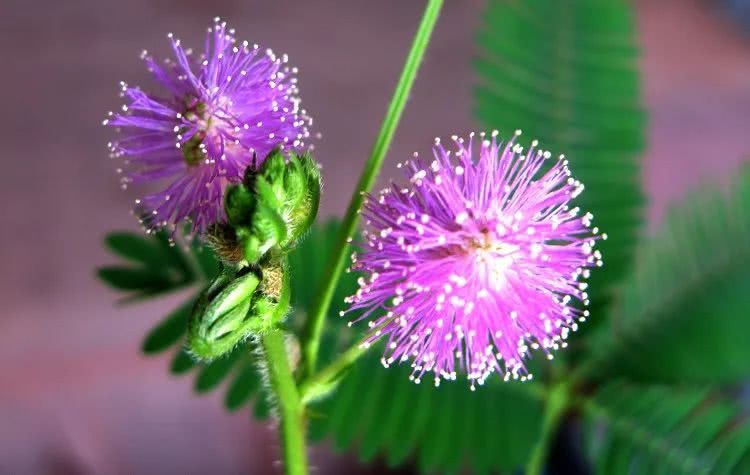
Mimosa pudica is a perennial herbaceous plant in the Fabaceae family. It is called mimosa because its leaves are quite sensitive and react in a special way to heat and light, which is also why when we touch it with our hands, its leaves curl up into a ball.
Mimosa pudica is very suitable for growing on an indoor balcony and is very easy to keep alive. It likes a warm, humid environment with plenty of light best.
Loose, fertile, well-drained sandy soil rich in organic matter is most suitable for cultivation. It generally grows in shrubbery or on wasteland.
In winter, be careful to move mimosa back indoors; the temperature must not be lower than 10 degrees, otherwise frost damage easily occurs.
Mimosa pudica is a wonderful plant that can foretell changes between sunny and rainy weather.
If you touch it with your hand and its leaves close very quickly but open very slowly, this indicates that the weather will clear up; if when you touch mimosa its leaves contract slowly and droop sluggishly, or even close slightly and then open again, this indicates that the weather will turn from sunny to overcast or that it is about to rain.
In addition, mimosa can also predict disastrous weather changes, and will produce growth activity that goes against its normal patterns in response to sudden out-of-season temperature differences, changes in geomagnetism, telluric electricity and so on.
According to Turkish seismologist Ercan, a few hours before a strong earthquake occurs, the leaves of mimosa, which are sensitive to external touch, suddenly shrivel and then wither.
In earthquake-prone Japan, scientists have found through research that under normal conditions, mimosa leaves open during the day and close at night. If mimosa leaves show the abnormal phenomenon of closing during the day and opening at night, it is a precursor to an earthquake.
Although mimosa is amazing, it is not suitable for growing indoors, because at night mimosa cannot carry out photosynthesis, so the toxins in its body will be released. They are only mild toxins, but long-term absorption can affect the human body. Therefore, it is best to move it outdoors for growing.
The entire mimosa plant contains trace amounts of toxins. This plant itself contains a substance called mimosine, and if you are in close contact with mimosa for a long time, it can make your hair turn yellow and fall out.