Both summer and autumn grain harvests are down: is the nation's rice bowl still secure?
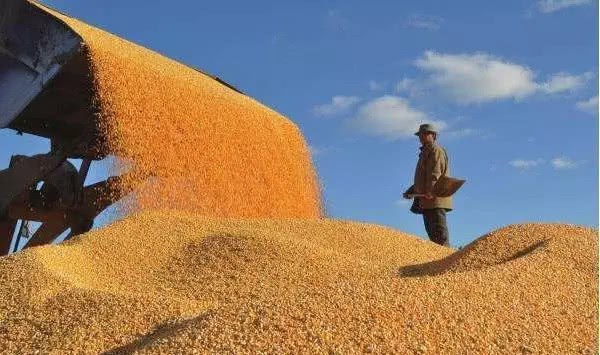
Judging from China's current grain production situation, the possibility of a reduction in both this year's summer grain and autumn grain harvests is very high. According to statistics from the relevant departments, this year's summer grain harvest fell by 2.2%, while international grain output has also slid to a new low in nearly five years, which will also have a considerable impact on China's grain imports. As for the autumn grain, given this year's sustained and widespread drought, a reduction can also be expected. At this point, the focus of public attention should be: against the backdrop of a possible grain reduction this year, is the rice bowl of the Chinese people still secure?
On this point, Kexue Xingnong believes that with a high self-sufficiency rate for staple grains, their position cannot be shaken, and China's food security remains solid!
The position of staple grains is stable
As for the three staple grains of the Chinese people - rice, wheat and corn - the self-sufficiency rate exceeds 95%, and every year China still has surplus stock of these crops. Although China's corn output is expected to fall considerably this year, and relevant departments estimate a corn shortfall of 20-40 million tonnes this year, China's current corn stocks remain high, and such a shortfall is not enough to pose a substantial threat to China's food security.
In recent years, although China's annual grain imports have been increasing, we operate a quota system for the three staple grains to ensure our self-sufficiency in them. In reality, the largest import volume is soybeans - in 2017, soybean imports reached 95.53 million tonnes. The self-sufficient position of the three staple grains has not been shaken, so no matter how international grain prices fluctuate, as long as the position of the three staple grains is stable, it is enough to guarantee an ample grain supply for China.
China's grain self-sufficiency rate is high
As mentioned above, at present China's grain imports are basically soybeans. In 2017, soybean imports reached 95.53 million tonnes, yet the country's total grain imports were only 130 million tonnes. Soybeans alone accounted for 73% of total imports, while imports of wheat, rice and corn were basically at the level of around 4 million tonnes. The grain self-sufficiency rate exceeds 95%, and even the overall grain self-sufficiency rate exceeds 82%. Moreover, for these grain imports, China also operates a quota system: on the one hand, to ensure the position of our staple grains and maintain stability; on the other hand, to avoid low foreign grain prices dealing a blow to our staple grains.
For instance, the imported wheat is basically used for making bread and pastries, while the imported rice is mainly used to meet China's demand for high-quality rice. From this it can also be seen that, at present, the contradiction in the Chinese people's demand for grain is one between quality and demand, not one between supply and demand.
In recent years in China, it is precisely against the backdrop of ever-increasing annual grain surpluses and ever-rising stockpiles that we have had sufficient confidence to dare to put forward the idea of "de-stocking". And the contradiction between quality and demand gives us sufficient confidence to dare to optimise our planting structure, adjust the planting layout, and better satisfy domestic grain production.
In summary, China's grain supply can still be handled with composure amid the ever-changing international market, and the Chinese people have no need to worry about this year's expected grain reduction. Today's China is an increasingly powerful China, and its ability to withstand risks and resist natural disasters is far stronger than in the 1960s and 1970s. For the older generation, that was an era full of fear about grain and having enough to eat. Yet today, with grain ever more abundant and stockpiles ever fuller, as long as we do our production work with peace of mind, there is no obstacle we cannot overcome.
This is Kexue Xingnong. You are welcome to follow us and learn together.