When is the best time for succulents to plump up? Miss it and you will have to wait another year
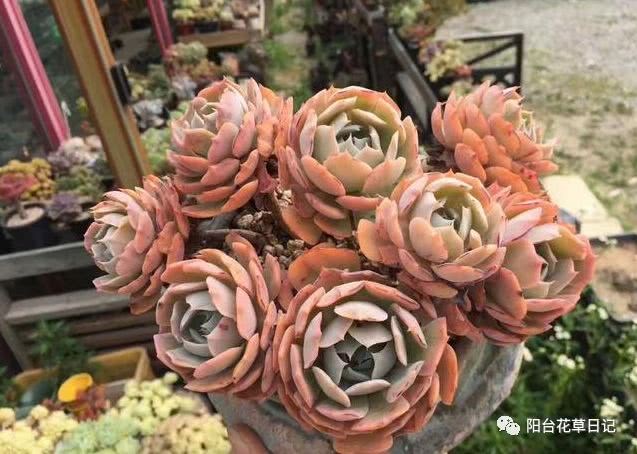
Succulents look best when they grow short and plump. After being battered through a summer, are your succulents now green, leggy and sunburned? You finally made it through the hellish summer. Now it is time to get ready to become beautiful.
So how do you turn a succulent into a little chubby one? After a summer of starving and thirst, your succulents have probably all turned into flat little old men, right?
First, we need to check whether the succulent's roots are strong, because only healthy roots can absorb water and nutrients. Second is controlling water. Water control is not the same as cutting off water in summer. If there is too much water, the plant will grow wildly, the leaves will not be compact, and the appearance will suffer.
Now let us talk about the process of fattening them up.
1. Growing a good root system is the foundation
Creating a low-water environment for succulents sounds like it must be a tough "tormenting" process, so having a strong root system that can absorb water is the foundation. After all, only the strong and sturdy can withstand all kinds of hardship.
Generally speaking, the size of a succulent's roots is directly proportional to the strength of its water-absorbing ability, and is also closely related to the size of its leaves.
If each leaf is compared to an important strategic reserve, then its roots are the supply center. When supply is ample, reserves will be plentiful; when supply is insufficient, it can only consume its reserves.
When a succulent's roots are large and it is watered a lot, the leaves tend to "grow wildly";
when a succulent's roots are large and it is watered little, the leaves will grow thick and compact;
and when a succulent's roots are small and there is a lot of water, the roots grow rapidly while the leaves grow and are consumed at the same time, with the overall size basically unchanged or slightly smaller, until the root system becomes large enough;
when a succulent's roots are small and there is little water, root growth stalls or slows, and the leaves either go dormant and stay unchanged, or are consumed, making the whole succulent smaller.
Note that growing roots is a process. Frequent repotting will affect the systematic development of the root system and shorten the life of the roots, so planting should be done in one step as much as possible, with one planting lasting more than 1 year (some mature plants can be repotted once every 2-3 years).
2. Create a low-water environment
A succulent with good roots and good health is itself relatively plump. Next, to make it compact and fleshy, you need to create a low-water environment.
Creating a low-water environment means controlling water, which is not the same as cutting off water; you still need to give appropriate water. If you are really so stingy that you do not give a single drop of water, the succulent will be like a clever housewife who cannot cook without rice, and will eventually quietly shrivel up.
So the key here is controlling the amount of water given. This amount must be explored and grasped by yourself according to the specific care environment, ensuring that even when water is given, a low-humidity state is maintained.
When controlling water, remember not to go from very wet to very dry, otherwise the roots will be unable to adapt to such a huge change. If you used to water a lot, then you need to gradually reduce the amount of water and lengthen the watering interval. You cannot start controlling water directly, otherwise the roots will not have time to adapt to this sudden drought and will dry up prematurely.
In addition, watering should be done in the evening or at night, because succulents use CAM metabolism, with stomata closed during the day and basically no water absorption, and only absorb water at night. If you water during the day and by night, when they need to absorb water, it is almost dry, then you are in trouble.
3. Add some ingredients to the succulent pot
If you want them to grow into big chubby plants as soon as possible, you must add some fertilizer. Once the succulent absorbs the fertilizer, its root system will become stronger and stronger, its growth will become more and more vigorous, and it will soon fill the pot.
Bone meal
You can add some bone meal to the pot, and the succulent's roots will burst the pot. When repotting the succulent, sprinkle 2-3 spoonfuls of bone meal into the nutrient soil and mix it with the potting soil to use as a base fertilizer; you can also dig 3-5 small holes around the edge of the succulent pot and bury the bone meal in them, using it about once every 2-3 months.
Whether mixed into the potting soil or buried directly in the flowerpot, bone meal can slowly release phosphorus and potassium fertilizer, so that after the succulent's roots absorb it, growth becomes stronger and stronger, and it will quickly fill the pot.
Eggshells
Collect the leftover eggshells from home, rinse them several times with clean water, wash the egg white inside the eggshells clean, and dry them in the sun to prevent attracting small insects. Crush the dried eggshells by hand, or put them directly in a grinder and grind the eggshells completely into powder, then store them in a small box for later use.
When repotting the succulent, grab a handful of eggshell powder and mix it directly with the potting soil as a base fertilizer for repotting, allowing the eggshells to slowly release phosphorus and calcium fertilizer in the soil so it can be absorbed by the succulent.
If you really do not want to repot, then dig 2-4 small holes around the edge of the succulent pot and bury the eggshells in them, which can also achieve the purpose of supplementing phosphorus and calcium fertilizer. After the succulent absorbs the nutrients in the eggshells, the plant will become stronger and stronger, and filling the pot will be a matter of minutes, right?
For people, the whole year's plan lies in spring, but for succulents, the whole year's plan lies in autumn. Everyone should hurry and take advantage of autumn to fatten up your succulents.
▍Comprehensive editing: Balcony Flower and Plant Diary hcrj520