The orchid grows slowly, and after a year of care it hasn't even put on half a jin of flesh. What should be done?
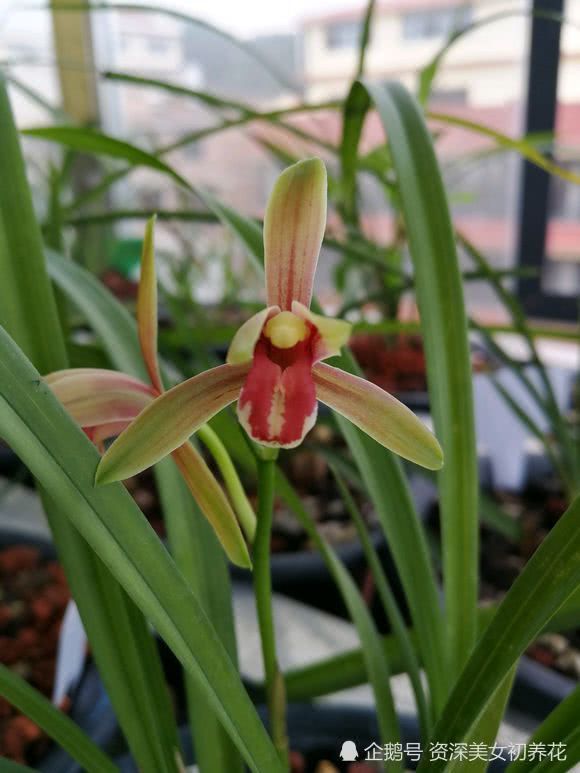
The orchid is a very delicate and beautiful flower; that is, while it is beautiful, it is also somewhat fussy, and with one careless move it is prone to root rot, yellow leaves, failure to grow, failure to bloom, and so on. And so this orchid, after a year of care, has become an "old fire duck", not even growing "half a jin of flesh", which has the gardener worried sick.
At this point, some gardening friends may laugh. What is an "old fire duck"? Huahua grew up in the countryside, where in the past the villagers all raised ducks, and the thing they feared most was buying the "old fire duck" breed. You feed it to the full every day, yet it simply does not put on meat. Other ducks can be taken to market at 4 months, but the old fire duck is still tiny, putting on no flesh, yet eating a great deal. Still, you cannot just throw it away, can you?
So how do we change this "old fire duck" state of the orchid, this failure to grow?
Give the orchid a sour bath
We all know that for an orchid to grow well, not only must the root system be good, the leaves must also absorb nutrients. Normally there is quite a lot of dust in the air, which very easily clogs the leaf pores, so the leaves cannot carry out photosynthesis, and therefore cannot release moisture and nutrients. Metabolism is not vigorous, and of course the plant cannot grow strong and healthy.
At this point we can use vinegar diluted with water to wash the leaves. Generally, choose vinegar with low salt content, dilute it about 200 times with water, and spray it onto the leaves with a spray bottle. First, it clears away dust; second, it has a sterilizing effect and prevents black spots and the like from appearing on the leaves. Generally, spraying once every half a month is enough.
Feed the orchid its meal and stay far away from the "old fire duck" state
The old fire duck does not grow big: on one hand it is due to the breed, and on the other hand it is an absorption problem. Caring for an orchid is the same. You must provide it with nutrients that are easy to absorb. Vinegar contains relatively large amounts of acetic acid, lactic acid, amino acids, calcium, phosphorus and other elements. It can not only supplement nutrients, but also sterilize and disinfect, preventing black spots, scale insects, powdery mildew and so on from appearing on the orchid.
Vinegar has such great effects. Does that mean we do not need to buy fertilizer at all and can just use vinegar to water the flowers? The answer is no, because long-term use of edible vinegar inhibits the growth of microorganisms. We generally recommend using an organic fertilizer specially made for orchids, rich and balanced in nitrogen, phosphorus and potassium, with various organic matter, minerals and amino acids added, and fermented purely from plants. It causes no irritation whatsoever to orchids and can be used with confidence.
If the orchid becomes an "old fire duck", beware of a disease invasion
Sometimes we keep complaining that the orchid is not growing, is growing slowly, and we rush to fertilize and think about watering, never considering that it may actually be sick. While treating the disease, we should also think about how to prevent pests and diseases for the orchid. In normal times, do the sterilizing and disinfecting work well: dilute vinegar 100 times with water and use it to disinfect the orchid's potting soil, flower pot, or the surrounding environment. Do not underestimate this small amount of vinegar; it can do a very good job of reducing the occurrence of pests and diseases.
In short, if you want to stay far away from the orchid turning into an "old fire duck", you must do the above points well.