Rose cuttings have a secret weapon: don't throw away empty cooking oil jugs at home
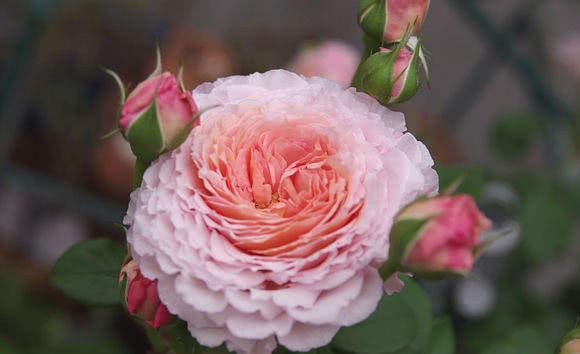
Cuttings are a plant propagation method we often use, and ornamental flowers with high good looks and popularity like roses benefit from it most. However, propagating roses from cuttings is not easy. Recently, quite a few readers have told us that they planted roses from cuttings full of hope, but the results were either no roots at all or blackened stems, and finding a single healthy rose seedling was hard! So is the success rate of rooting rose cuttings really that low? Actually, no. In the end, it is simply because you lack a secret weapon. So today, let us introduce it to you!
The rose-cutting wonder tool we are introducing today is the plastic jug for cooking oil at home. With it, we create a perfect "golden shield" for the rose cuttings, allowing airflow while effectively keeping warmth and moisture, with outstanding results!
First, take cuttings in the normal way. Select several one-year-old semi-lignified rose branches about 8 cm long. If you don't know how to identify semi-lignified branches, bend one slightly with your hand; if it bends only a little, it qualifies. Trim the "heel" slightly flat (cutting it flat with scissors also works), then remove the lower basal leaves, keeping only about 2-3 leaves at the top. The purpose of this is, of course, to reduce water loss during the cutting stage.
For the cuttings, we recommend "one room per person", meaning each branch gets its own dedicated container. Here, to save money and prepare for the next steps, we recommend using disposable plastic cups as the growing containers. Use tweezers to poke a few small holes in the cup walls and bottoms for airflow. As for the growing medium, the water retention and organic matter of peat soil and the drainage and aeration of large-particle sand and gravel are equally important. Mix the two media at a ratio of 2:1, then fill each plastic cup. Insert one cutting per cup, burying it about 1/3 deep.
The next step is adding the "golden shield". Wash a used cooking oil jug clean and cut it horizontally through the middle, but do not completely separate the top and bottom halves; a container that can open and close is best. Place the rose cuttings, watered thoroughly and held in the small plastic cups, into the jug, making sure there is some space between each branch. At this point our basic work is done. Just put the lid on and it forms a relatively sealed space. Of course, we need to poke a few small holes in the jug to allow normal air circulation.
What are the benefits of doing this? First, you can place it on a balcony, and even if a rainstorm hits while you are away, there is nothing to worry about, because the golden shield will block most of the rain, while what does get into the jug can instead water the roses. Second, to prevent some gardening enthusiasts from overwatering with a shaky hand, we can each time water from the opening at the top of the jug, so the water shared by each plant is relatively reduced, and even if the water reaches the bottom of the jug, as long as it does not rise above the rim of the cup holding the rose cutting, it is fine. The moisture-retaining effect is truly excellent.
Following this method, when these young leaves grow to 1 cm-2 cm in size, it means the plants already have a substantial root system. At that point, take the roses out of the jug and plant them in a shady spot, and the survival rate will be greatly improved. When the roses grow new leaves again, they can receive sunlight, and from then on you can care for them in the normal way for growing roses.