Clivia and Christmas cactus drink two free beverages in autumn, and by the end of the year the flowers burst into bloom
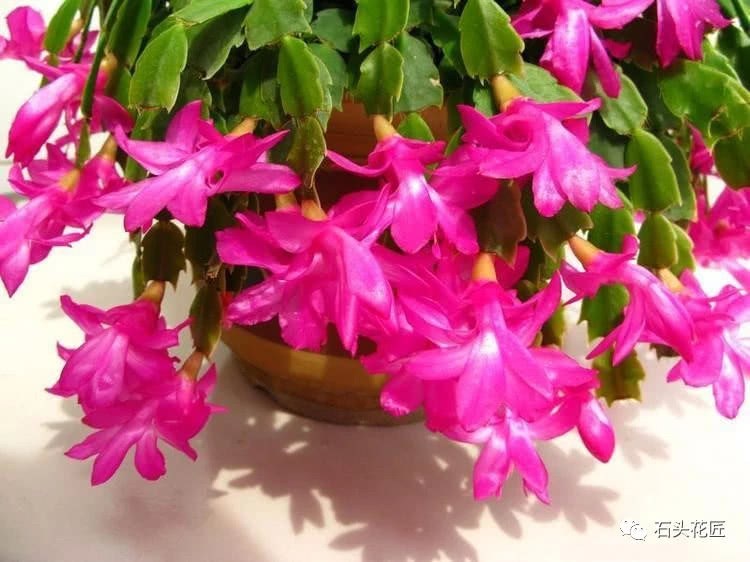
Gradually entering the cool autumn. Clivia and Christmas cactus have also entered a period of vigorous growth, and if conditions allow, gardening friends. You can put them outside for care, not only is the temperature suitable, the light is good, and the ventilation conditions are also very good. For winter-blooming plants like Clivia and Christmas cactus, during this period the flower buds of the plant are gradually developing, so the growing conditions must be good and suitable to ensure the normal development of the flower buds, so that more flowers can bloom in winter.
In autumn, give Clivia and Christmas cactus two kinds of "free beverages," and by the end of the year the flowers burst into bloom!
Along with the development of flower buds, fertilizing is also essential. Today Shitou will share with everyone. In autumn, apply two kinds of free fertilizer to Clivia and Christmas cactus to speed up plant growth and development. Let them bloom in bursting pots by the end of the year.
Speaking of these two kinds of free fertilizer, they are actually little tricks that everyone discovers in daily life. The first is rice water; there has always been a saying about using rice water to water flowers, but some gardening friends also have concerns and do not believe that rice water can be used to water flowers; some gardening friends have also failed, ultimately causing the potting soil to harden and grow bugs, all because the method of use was improper. The second is earthworm castings. Earthworm castings are called the king of organic fertilizer, rich in elements such as nitrogen, phosphorus and potassium, and are organic matter produced after earthworms absorb other substances. The nutrition is very abundant, suitable for growing flowers. But some gardening friends may not have noticed it in daily life.
1. Water flowers with fermented rice water.
Many gardening friends know about using rice water to water flowers, but do not know that rice water must be fully fermented before it can be used to water flowers. Especially for flowers like Clivia and Christmas cactus that are gradually about to enter their flowering period, you must pay attention when fertilizing. Actually the method is very simple: store the rice water in a plastic bottle and leave it in a cool place to ferment for a week. The fermented rice water is acidic, just right for the growth of Clivia and Christmas cactus. Mix the fermented rice water with an equal proportion of water, and pour it into the flower pots of the Christmas cactus and Clivia. Fertilizing this way is both safe and clean.
As for the phenomenon that some gardening friends previously used rice water and saw the soil harden and bugs appear in the pot. First, the soil hardening is because the rice water was added directly to the flower pot; in fact, unfermented rice water is alkaline, and pouring it into the potting soil will naturally cause the soil to harden, so everyone is advised to make sure it is fully fermented. And the phenomenon of bugs appearing in the pot is also because the rice water was not fully fermented, and only began to ferment after being poured into the soil; fermenting soil easily attracts bugs, so you still need to fully ferment the rice water before watering flowers, only then can it play its proper role.
2. Bury picked-up earthworm castings in the flower pot.
Especially summer and autumn are the peak period of earthworm activity, and it is not hard to find in the garden lawn that kind of wrinkled large clod of soil like in the picture; actually this is earthworm castings. Do not look down on it just because it is a clod of soil, this is a very rare organic fertilizer, rich in elements such as nitrogen, phosphorus and potassium, and is a natural organic fertilizer. Adding it to a flower pot, there is no need to worry at all about over-fertilizing; however much you add, the plant can absorb that much. Dissolve the earthworm castings you pick up in water to make an aqueous solution. Pour it directly into the flower pot, no need to worry about excess, because it is a natural organic fertilizer and will not cause fertilizer burn.
Especially for plants about to enter their flowering period, supplementing with this kind of organic fertilizer can both provide abundant nutrients and avoid the risk of fertilizer burning the plant. Especially for gardening friends with insufficient flower-growing experience. Choosing earthworm castings for fertilizing is as safe as it gets.
The two kinds of free fertilizer mentioned above, as long as the method of use is proper, will yield twice the result with half the effort. Not only do they supplement the plant with abundant nutrients. They are also very safe during use. There is no need to worry at all about burning the root system. Especially for plants about to enter their flowering period. Like Clivia, Christmas cactus, amaryllis, and kalanchoe, these winter-blooming plants. Supplementing fertilizer during this period is very crucial, and you can choose the two free beverages above.
Little tips about fertilizing plants. If you find it useful, please like below, follow, and forward to more friends.
I am [Shitou Huajiang], and I share little flower-growing knowledge every day!