Tear open an old pillow and toss it into the flower pot, and the flowers will grow vigorously while the succulents plump up nicely
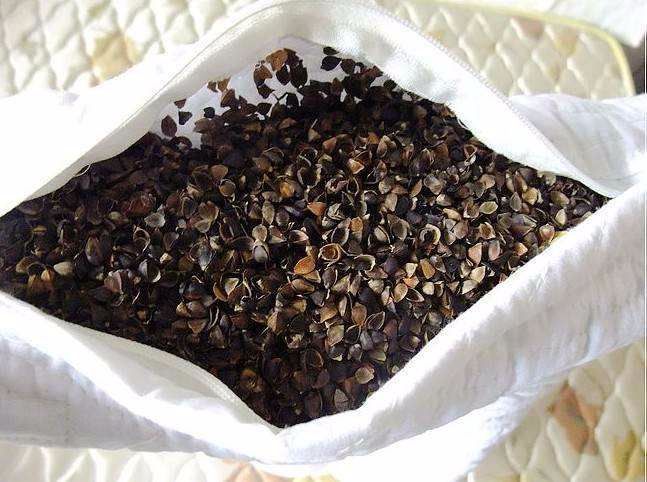
Pillows on the market today come in all sorts of styles: therapeutic pillows, cassia seed pillows, lavender and tea leaf pillows, but the most original ones are still buckwheat or even rice chaff. I still remember that when I was in school, my pillow was filled with rice chaff, and it would rustle with every turn! But this kind of pillow absorbs moisture easily, so you need to take proper care of it! Still, if it has been unused for a long time and you want to swap in a new one, the old filling you replace has plenty of great uses!
Buckwheat hulls
Buckwheat tastes good, and buckwheat hulls have many uses too! Buckwheat hulls are rich in rutin and vitamins, as well as various trace elements, making them an excellent raw material for phosphorus and potassium fertilizer. Tossed into a flower pot, they can do a great job of promoting plant growth. In addition, putting buckwheat hulls into a flower pot can also improve soil aeration, so the flowers grow even better!
How to use
Loose and airy: Take the buckwheat hulls out directly, dry them in the sun, and mix them with soil. Because untreated buckwheat hulls are very hard to decompose in the soil, they can only serve as an airy growing medium, so there is no need to worry about burning the roots; plant with confidence!
Making nutrient soil: If you want to use buckwheat hulls as a nutrient additive, it takes time. Steam the buckwheat hulls in a pot, with no time limit; the longer the better. If you have a pressure cooker or a pot at home, pour in water and steam them for 2-3 hours. Then mix them with garden soil, seal it up, and leave it in the sun to bake. After a month, it is ready for planting flowers!
Rice hulls
Rice hulls are rich in potassium carbonate and also contain trace elements such as nitrogen, phosphorus and sulfur, making them a natural high-quality fertilizer. Before buckwheat and other pillow fillings appeared, rice hulls had always been the best raw material for pillow stuffing.
Think about it: when farmers harvest wheat every year, they leave some of the wheat straw in the field and let it break down on its own. In fact, this uses the fermentation of the wheat straw to release nutrients. This avoids burning it and causing air pollution, while also adding nutrients to the soil.
How to use:
Spread the rice hulls out flat and dry them in the sun.
(A quick reminder first: rice hulls take quite a long time to decompose.) Follow the method for making nutrient soil: one layer of soil, one layer of rice hulls, pour on water, then another layer of soil and another layer of rice hulls, until the container is full. Then leave it in the sun to bake, and once a month open it up to check how the decomposition is going. Fully decomposed rice hull soil is excellent nutrient soil; mixed with peat and garden soil, it is loose and airy and can be used to grow succulents, orchids and other plants.