What kind of wild vegetable is the high-calcium vegetable? Its calcium content is 3 times that of milk, and grown in a pot at home it can be harvested for 20 years
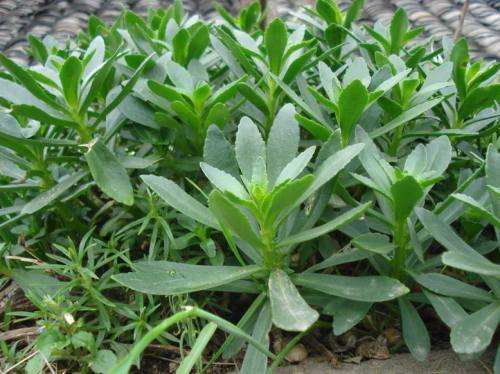
In rural areas there is a wild vegetable called stonecrop (Sedum aizoon), and although it grows haphazardly on barren slopes, roadsides and other places, looking utterly unremarkable, and is sometimes pulled up as a weed, it is edible and nutritious, and it is also a vegetable with a very high calcium content, commonly known as the "high-calcium vegetable".
Studies have shown that stonecrop is rich in nutrients, with a calcium content of 331 mg per 100 grams, about 3 times the calcium content of milk and more than 10 times the calcium content of ordinary vegetables. Moreover, eating stonecrop regularly can also help prevent and control high blood pressure, coronary heart disease and other conditions, so it is also called the "high-calcium heart-nourishing vegetable".
We often grow flowers and vegetables on the balcony, so this high-calcium vegetable can also be planted in a flower pot. It is a vegetable that can be picked and then grows again repeatedly. For city dwellers who have no land to plant in and no time for maintenance, stonecrop is convenient to grow and easy to manage; a single cut stem can be stuck in soil and take root, simpler than keeping a potted flower.
Stonecrop is a perennial herbaceous plant with a plant height of 20-45 cm. The whole plant can be used as medicine, and it is an edible vegetable that is both food and medicine. It can be eaten fresh, prepared in any way, and has a delicate, fresh and smooth taste; the whole plant can also be dried in the sun and used as medicine.
Grown in a pot at home, its leaves are thick and emerald green, its stems are tender yellow, and when mature it blooms with bright small yellow flowers, so it can also be kept as an ornamental green plant. In addition, stonecrop has strong adaptability, tolerates poor soil, is not picky about climate, and is very cold-hardy; it can grow normally above 5°C, can be planted all over the country, and is easy to keep alive and manage.
Stonecrop has extremely strong disease resistance and does not need spraying with pesticides to control pests. For balcony potted vegetables, it is a purely natural, pollution-free green vegetable. Plant the wild vegetable in a flower pot, and you will never need to go looking for it in the wild again.
For potted stonecrop, the survival rate is high. It is generally propagated by division or cuttings; cuttings taken in spring, summer and early autumn take root readily, with a survival rate as high as over 95%. Planted in the same year, it gives a harvest in the same year, and the following year it enters its peak production period. It only needs to be planted once, and when harvested it grows back as you eat it, just like chives, and can be continuously harvested for 20 years of fresh stems and leaves!