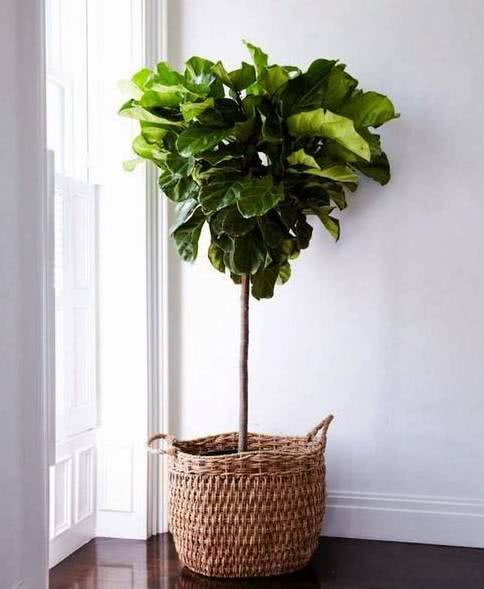
A single fiddle-leaf fig can make your home feel effortlessly artistic
Naodong Handmade
You have 40 friends following this official account!
The fiddle-leaf fig, also known as the fiddle-leaf rubber plant, is an evergreen tree of the genus Ficus in the mulberry family, named for its leaves, which swell at the tip into a fiddle shape.
The fiddle-leaf fig is tall and elegant, with densely growing leaves that are deep green and glossy. At a glance it looks lush and full of life, with very high ornamental value, making it an ideal foliage plant for spacious halls. Placed in a corner of the living room, it instantly elevates the room's style.
Below, let's talk with you about the fiddle-leaf fighow to cultivate and manageit!
The fiddle-leaf fig likes warm, humid conditions and plenty of sunlight; it enjoys sun but also tolerates shade.
It adapts well to light and grows well in bright, indirect light. In summer and autumn, when temperatures are high, direct sunlight should be avoided so the leaves do not get scorched and lose their gloss.
However, it should not be kept in too dark a spot either, otherwise the plant grows spindly and weak; 50% shade should be provided. The optimum growing temperature is 25°C to 35°C,it goes dormant at around 15°C, and it can overwinter safely above 5°C, so attention should be paid to cold protection in winter.To improve its cold resistance, besides controlling watering in late autumn and winter, you can apply extra phosphorus and potassium fertilizer about one month before winter arrives.
For potting soil, garden soil and peat soil can be mixed with a small amount of sandy soil, along with a small amount of decomposed base fertilizer; it should be slightly acidic, with a pH between 6.0 and 7.5.
Place the potted plant in a semi-shaded spot indoors, and do not expose it to too much direct sunlight.It has a strong attachment to its original spot, so the placement should be chosen with the long term in mind; once a spot is chosen, avoid moving it around at will. Temperature fluctuations are harmful to its growth.
In spring and summer the fiddle-leaf fig grows a great deal and needs more water, so it must be given sufficient water, along with extra misting of the leaves. Because its leaves are broad, it needs a lot of fertilizer, so during the growing season it generally needs liquid fertilizer or granular compound fertilizer every 1-2 weeks to promote plant growth and deep green leaves; from when new leaves unfurl until mid-August, fertilize once every 10 days, mainly with nitrogen fertilizer.
Stop fertilizing when growth stops or during dormancy. Repot once every 2-3 years. The fiddle-leaf fig's stem rarely branches, especially when young, so the stem should be cut back each spring to break the plant's apical dominance, prompting the dormant buds below the cut to sprout new shoots and form a branching shape.
During growth, too much or too intense light and poor air circulation make it prone to red spider mite damage;
A hot, dry environment easily attracts whiteflies and scale insects. Short-term temperature fluctuations and too much water during dormancy can cause leaf spot disease; in severe cases, remove the diseased leaves.
Yellow-brown spots on the leaf edges are generally caused by damp cold. Wilting leaves are caused by waterlogging and high temperatures in winter. Poor drainage leads to leaf drop; the rotten roots should be cut away and the plant repotted.
All the excitement is in the Huayipai Youzan store
Flowers and love | Huayipai