Want your orchids to explode with growth? Watering enough is the key, and these tricks work really well
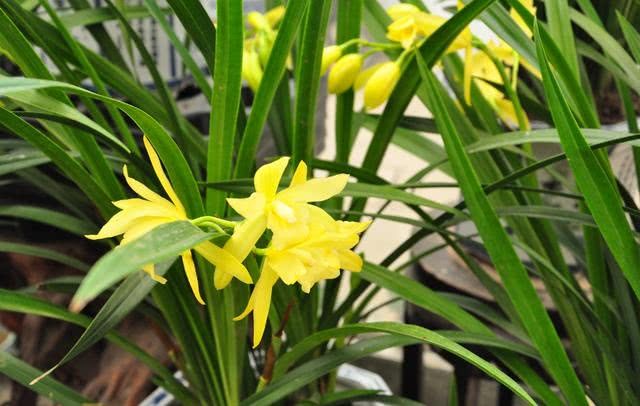
Many experienced old orchid growers will casually say one thing: "Whether an orchid is doing well, only water knows"! Indeed, watering is crucial for planting and caring for orchids, and it is even fair to say that if your orchids have consumed a great deal of effort so far and still have not exploded with growth, then a considerable part of the reason may be some slight mistakes in watering. So what exactly should you pay attention to when watering orchids, and what should you actually do? This is exactly what we want to share with you today!
If you cannot do these two things, growing orchids is just wasted effort!
To be honest, most of the little tips or clever tricks about orchid watering you can find online right now are correct, but one point must be made clear: they are also general! For example, the principle of "water when dry, stop when wet" is not wrong in essence, but you still need to apply countermeasures according to the specific situation. Only when you water correctly is there a chance for potted orchids to explode with growth. So what are the specific key points? In fact, there are only two aspects: roots and leaves. As long as you "feed" these two little guys well, planting and caring for orchids will go smoothly. Of course, roots and leaves each have their own corresponding countermeasures, and remember that you must not treat them all the same!
Take care of roots and leaves separately, and these clever tricks are the most effective!
For potted orchids, there are mainly two ways to replenish water to the roots. Simply put, they are the "slow pouring method" and the "soaking pot method":
The slow pouring method is mainly divided into two types: the "sand and gravel slow pouring method" that goes straight to the roots, and the more effective "pot rim slow pouring method"! The former evolved from the sand column method used when changing compacted soil. Insert a straw into the potting soil roughly to the place where the orchid roots are, fill it with large particles that have good drainage, and when watering you can pour water directly at these straws, so that the water can reach the plant roots directly. Of course, remember not to water too much, because root rot may occur; the pot rim slow pouring method requires us to use a watering can to slowly water along the edge of the flower pot. The advantage of doing this is that it can increase the water content in the soil, and the effect lasts longer. It is also not easy to pour into the leaf core. Of course, the disadvantage is that it is slow, and you need to repeat the operation several times to achieve the effect of watering thoroughly.
Everyone is even more familiar with the soaking pot method! Choose a container with a larger diameter and greater depth than the orchid pot, put in some water, then soak three-quarters of the orchid pot together with the growing medium into the container, but make sure the water surface does not go over the rim of the pot when soaking. After soaking for a few hours, take it out and place it in a cool, ventilated place to dry. Repeat several times to complete it, and the effect is good!
As for the leaves, we can actually directly use a sprayer to spray the orchid leaves, because according to the physiological characteristics of orchid leaves absorbing atomized water vapor, this mist can enter the orchid through the stomata and supplement the water needed for its normal growth. However, note that it is best not to let the leaf core get wet, otherwise if it is not handled in time, rot in the core may very likely occur.
Secondly, for orchid leaves, in addition to using spraying, maintaining the humidity of the entire environment is also very necessary. In terms of values, the humidity is best at around 75%. This is to simulate the growing environment of orchids under natural conditions. You can set up a water reservoir or water basin under the flower rack to increase water evaporation. If you grow orchids on a balcony, you can also place some buckets, water basins, and other containers on the balcony, or directly wrap the orchid pot with a wet sponge cover, which both retains moisture and lowers temperature, achieving two goals at once!
In fact, watering orchids is very simple. You only need to do the work that should be done well. As long as everyone follows today's method and does not slack off in other aspects, then you will definitely be able to grow the most beautiful pot of orchids. If you do not believe it, try it quickly!