Detailed Explanation of the Methods and Steps for Making a Crabapple Bonsai
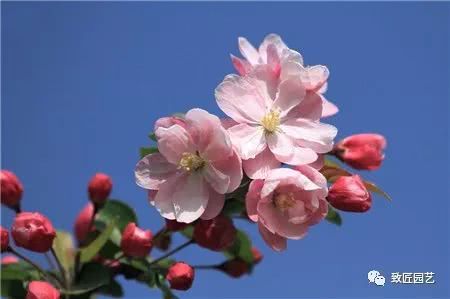
To make a crabapple bonsai, a relatively deep rectangular or oval pot is commonly used, though you can also choose a square or round pot according to your personal preference. If it is a cascade style, a deep cylindrical pot can be used. The pot material can be purple clay or glazed pottery, which have good air permeability and water permeability.
Most crabapple varieties prefer slightly acidic conditions, so slightly acidic or neutral soil can be used, with loose, fertile, well-draining leaf mold and garden soil being the best. A layer of sandy soil or vermiculite needs to be placed at the bottom of the pot to aid drainage.
Different crabapples grow differently, so the planting time can be chosen according to the specific growth period and dormant period. Both spring and autumn work, but the dormant period is best. Before planting, short roots, long roots, and thick roots should be pruned to prevent the plant from coiling in the pot. After planting, water it. Place it in a shaded spot for 1-2 weeks, then it can be moved to a place with ample light.
Crabapples grow relatively quickly and need regular pruning. Before new buds emerge in spring and after leaf fall, dead branches, diseased and pest-infested branches, weak branches, crossing branches, overlapping branches, and overly dense branches should be cut off. According to the needs of the crabapple bonsai's styling, overly long branches should be cut to promote the growth of side branches and increase the number of flower buds. After pruning, wire should be used to fix the shape. Because crabapples grow too quickly, attention must be paid to removing the wire in time to avoid "wire bite." Crabapple bonsai are mostly in slanting-trunk, curved-trunk, and cascade styles, and should emphasize the vigorous and both firm and supple characteristics of the branches and trunk. An old stump specimen with slanting, horizontal branches and brilliant flowers is full of interest.
Crabapples like somewhat moist soil. During the spring and summer growing period, the pot soil should not be too dry. During the flowering period, sufficient moisture should be maintained, while in winter the pot soil should preferably be on the dry side. Be careful of water accumulation in the pot soil and rain exposure, as this can easily cause root rot. In high-temperature summer weather, some water should be sprayed on the leaf surface to raise air humidity and benefit crabapple growth. Normally, every week, clean water should be used to spray the leaves and the surrounding area to increase humidity and clean the leaves.
During the growing period, the crabapple bonsai should be fertilized once every 10 days with diluted cake fertilizer water, but do not fertilize during the plum rain season. At the bud stage, a quick-acting phosphorus fertilizer should be applied as a top dressing, but be careful that the fertilizer liquid does not splash onto the leaves; this helps the flowers form buds, and it is best not to fertilize during the flowering period. In winter, sufficient base fertilizer can be applied, and dried cake fertilizer, decomposed barnyard manure, and bone meal can be used.
The most suitable growing temperature for a crabapple bonsai is 10-20°C, and it likes environments with good ventilation and scattered light. In high-temperature summer weather, attention should be paid to shading and ventilating the plant, and water should be sprayed on the leaves to lower the temperature. In winter, the crabapple should be placed in a sunny spot indoors, and the indoor temperature must not be lower than 10°C. During the growing period, the crabapple should be placed outdoors under scattered light 1-2 times a week.
The trunk of a crabapple is relatively large, and after being made into a bonsai, it is prone to falling over, so thin bamboo should be used to set up a support to hold the branches and trunk. Every two or three years, the soil around the crabapple should be turned in spring. If the plant is too tall, the longer branches and leaves should be pruned.
Crabapples are prone to red star disease, leaf spot disease, sooty mold, and so on, and the corresponding medicine can be sprayed according to the specific situation. Crabapples are also susceptible to pests such as aphids, scale insects, and longhorn beetles, which can be killed by spraying dichlorvos, deltamethrin, and similar insecticides.
Wonderful content