There are so many jade plant varieties, and they can grow into bonsai-like trees with almost no care
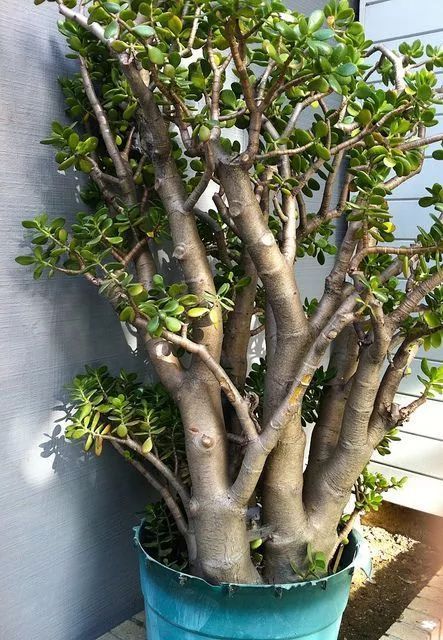
Jade plants look just like trees, but they are actually succulents, and their trunks are brown. After a few years of growth they become tree-like, and like most succulents they are native to South Africa, where in the wild they can grow to three or four meters tall; if grown as a houseplant, they usually only reach just over 30 cm.
The jade plant is also called the "thick-skinned" plant, because its leaves are very fleshy and hold a lot of water, which is why it is so drought-tolerant and does not need frequent watering; even if you forget to water it for one or two months, it can still survive.
The jade plant originally had many varieties, and the fairly similar ones include the tube-leaf jade, the golden jade, and the blue bird, among others; these similar varieties were all obtained through hybridization and are all very popular potted plants.
Growing a jade plant is very easy; it can grow indoors in a ventilated spot with bright light, and it is even better if you keep it on a south-facing windowsill, ideally giving it more than four hours of direct sunlight each day.
For growing jade plants, it is best to use a loose, well-draining sandy soil; you can mix peat soil with perlite at a 2:1 ratio, and for the pot choose a terracotta or clay pot with good drainage and excellent breathability.
Succulents do not need frequent watering in any season, and when the temperature is lower in winter you should also restrict watering; you must wait until the soil is completely dry before giving water, because if you water too much, its roots rot easily and its leaves tend to turn yellow and drop.
The best temperature for growing jade plants is between 15 and 25 degrees, and the nighttime temperature can be about five degrees lower; with a suitable temperature difference the jade plant grows better, and if there is plenty of light plus a larger temperature difference, the edges of the jade plant's leaves will show a red rim, creating a brilliant sight, and it may even bloom with bright pink or white flowers in winter and spring.
In spring and autumn, you can give a dilute fertilizer once every three or four weeks, and in the hot summer and cold winter you should stop fertilizing, otherwise it easily causes fertilizer burn.
If you want to propagate a jade plant, it is very easy: just pluck a few leaves and place them on the surface of the soil, and they will take root and sprout in half a month; of course, if you want it to grow a bit faster, you can cut off some branches about nine cm long, remove the lower leaves, and keep only some of the leaves at the top.
After that, let the wounds dry; you can place them in a ventilated, shaded spot for 3 to 5 days and then replant them in the soil, and do not water right after planting; you can keep them in a ventilated spot with bright light, and after two or three weeks of care, gradually expose them to light.