Winter jujube de-greening is slow and affects its appearance. How can winter jujube de-greening be promoted quickly?
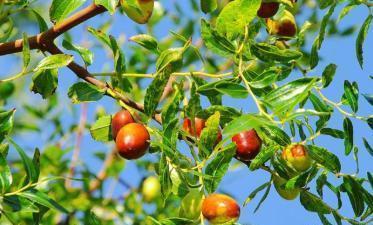
What is winter jujube? Some people understand it literally and wonder whether it is a jujube tree planted in winter. Actually, it is not. Winter jujube is merely a cultivated variety of jujube tree. It is thornless and relatively late-maturing, but it has a good fresh-eating taste, with plenty of flesh and thin, crisp skin. Because the weather in September is already a bit cool, it is called winter jujube. The winter jujube fruit is oblong or long ovate, 2-3.5 cm long and about 2 cm in diameter. When naturally ripe, it is red or reddish-purple.
Winter jujube has a relatively long flowering period
and also has a second-growth habit. Some have a flowering period from May to July, with full bloom in early June and fruit maturity from August to September. However, in order to bring them to market earlier and sell for a good price, jujube farmers will buy some chemical agents to speed up the ripening of winter jujube. We all know that fruit ripened with chemicals does not taste as good as fruit ripened naturally. I suggest starting with cultivation and management techniques, which can also speed up the early ripening of winter jujube. So how should it be managed?
In terms of fertilizer and water management
Although jujube trees have strong adaptability and are drought-tolerant, if you want to achieve high yield and high-quality jujubes, scientific fertilizer and water management is also indispensable. Winter jujube likes phosphorus and potassium fertilizers and organic fertilizers. Apply 50 jin of organic fertilizer and 1 jin of superphosphate per tree. In autumn, apply a ternary compound fertilizer in furrows. Irrigate thoroughly once before flowering. When young fruit is set, apply more phosphorus and potassium fertilizers and less nitrogen fertilizer to prevent excessive vegetative growth and late ripening.
Management during the whole-year growth stages
After the jujube fruit is picked, from November to March of the following year, promptly prune diseased and pest-infested branches, sweep up fallen leaves cleanly and remove them, and at the same time apply a heavy application of organic fertilizer, about 50 jin of organic fertilizer per tree. Fertilizing at this time is also called "postpartum fertilizer." In April, winter jujube enters the bud-breaking stage; pay attention to spraying lime sulfur mixture to prevent red spider mites. In May (branch-shooting and leaf-expanding stage), pay attention to watering and apply more nitrogen fertilizer and organic fertilizer. In June, it enters the flowering stage. When 6-7 flowers open on the bearing shoots, carry out girdling, and at the same time spray once with gibberellin + borax to increase the fruit-setting rate. During the fruit coloring stage, use 1000-fold diniconazole + agricultural streptomycin + Zaotefeng + Meilin calcium, which can prevent and treat diseases and improve jujube fruit quality.
If some chemical agents must be used to promote ripening, what chemicals can make winter jujube de-green quickly?
It is recommended to use the plant endophyte Guoliang and potassium phosphite, with an interval of 5 days each time. Applying Guoliang 2-3 times makes winter jujube de-greening more obvious; or spray once with Daconil M-45, which contains complexed zinc and manganese ions and is easily absorbed and utilized by fruit trees. It can supplement the trace elements necessary for fruit trees. Continuous use can make leaves dark green, fruit color well, fruit surface smooth, and de-greening fast. Some studies have shown that applying selenium and superoxide dismutase (SOD) to jujube trees can improve the technological content and quality of jujube fruit and significantly improve economic and social benefits (1).
If they are picked green jujubes, they can be stored together with ripe apples for more than 24 hours, which can also have a ripening effect.
This is Science Xingnong. You are welcome to follow and join us to grow knowledge together.