The aftereffects of fruit bagging are becoming obvious: should fruit growers keep bagging?
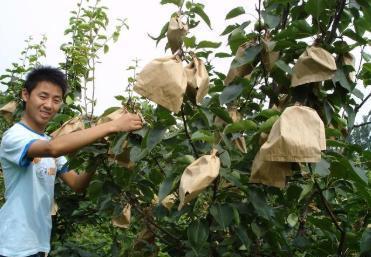
Personally, I think bagging fruit is still very suitable for fruit growers under the current circumstances, since there is currently no better way to solve the problem of fruit pests. Although not bagging is more environmentally friendly, fruit growers may have to face a total loss of harvest, so for now, with no better way to solve the problem of fruit pests, bagging is still the most effective method.
I remember a few years ago, the grapevines our family grew were not sprayed with pesticides because they were for our own consumption, and we never even considered bagging. In the early stage of fruit set, the grapes did not have many problems, but as the fruit continued to grow, it began to attract sparrows, flies and other pests, so that by the time the grapes ripened, more than half of them had already gone bad.
The next year, our family also bought some paper bags specially designed for grapes and bagged the grapes early. Because it was our first time using them and we had no experience, we took the bags off rather late, which affected the coloring of the grapes. Although the color was not that good and the taste was slightly worse, everything else was fine. At least we harvested more, and eating them felt safer.
Advantages of bagging fruit
From this, it is clear that bagging fruit has a big impact on the later harvest. If fruit is not bagged, fruits such as peaches, grapes, plums and oranges are very susceptible to damage from fruit flies, causing a large reduction in yield and even seriously affecting quality.
Also, I wonder if everyone still remembers the citrus incident in Guangyuan back then. A large area of local citrus was harmed by fruit flies, and fruit fly larvae were found inside the citrus across a large area. They could not be sold and had to be buried. For fruits like citrus, mango and plum that easily attract fruit flies, the most effective control method is bagging; no other method is better than bagging. So before a better way to eliminate fruit flies is found, the threat fruit flies pose to orchards without bagging is simply too great.
Besides the advantages mentioned above, bagging fruit has many other benefits. Bagging fruit can improve the appearance of the fruit, which can enhance its marketability and allow fruit growers to sell their fruit at a good price. Second, bagging fruit can reduce pesticide contamination of the fruit, acting as a barrier to some extent and lowering pesticide residues in the fruit. In addition, after fruit is bagged, it can reduce the occurrence of fruit cracking, frost damage, sunburn and so on, increasing the market value of the fruit.
Disadvantages of bagging fruit
Of course, bagging fruit inevitably has certain drawbacks. For example, as mentioned in the question, after bagging fruit, a large number of bags remain in the orchard. Some bags are plastic products that cannot degrade, causing soil pollution in the orchard. In addition, bagging is rather troublesome and requires a large input of labor. Also, if the bags are removed at the wrong time, it can lead to poor coloring of some fruits or affect sugar accumulation.
However, compared with the advantages of bagging fruit, I still rather recommend that fruit growers bag their fruit, since the appearance of fruit plays a big role when selling.
This is Science Xingnong; you are welcome to follow, and I will take you along to grow your knowledge.