Now is the perfect time to plant cilantro; give the seeds a rub before sowing for faster sprouting
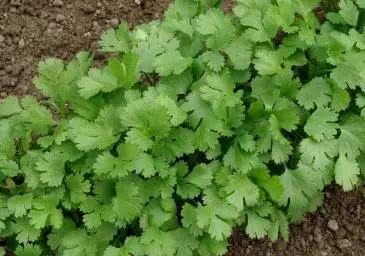
Cilantro is a garnish in our daily diet. Although it is only a garnish, it has the effect of enhancing flavor, adding a decorative touch, and removing fishy odors. It is a standard accompaniment for hot pot and beef and mutton soup, and it is also indispensable in all kinds of snacks.
Although cilantro is a garnish, it is indeed a famously delicate vegetable among leafy greens: it rots at the first sign of rain and turns yellow at the first sign of sun, so once summer comes it is prone to reduced yields or even total crop failure, and this unstable yield causes relatively large fluctuations in market prices. So although cilantro can be planted all year round, the usual planting time for cilantro is from after mid-August to early April of the following spring, because cilantro can tolerate low temperatures of -1°C to 2°C, but its most suitable growing temperature is 15-20°C. In summer it needs shading to prevent damage from torrential rain.
Cilantro seeds have a hard outer shell, and water in the soil finds it very difficult to penetrate, which leads to a low germination rate, which is what people mean by "cilantro is easy to plant but hard to sprout." So first use an object to slowly rub the cilantro seeds open a small crack (be sure not to crush them), so that the two seeds inside the fruit separate, increasing the number of plants and promoting the germination rate. After rubbing, soak the seeds in clean water at about 35°C for two days, changing the water once in between, then remove them, drain off the excess water, and put them into a wet cloth bag.
Place them at room temperature to sprout, moistening them every 2 days. For a larger planting area, you can also mix in and apply a 800-fold dilution of Xin Gao Zhi Mo, which can repel underground pests and diseases, isolate viral infection, strengthen respiration intensity, and improve the seed germination rate. After about 10-12 days, when the young roots show white, they can be sown. About 2-3 kg of dry seeds are used per mu of land.
When sowing, evenly broadcast the cilantro seeds into the soil, then cover with a thin layer of soil one cm thick, and then cover with plastic film or a straw mat, which can keep the soil moist and lower the temperature. When most of the cilantro seedlings have emerged, the film or straw mat can be removed to let the cilantro seedlings contact sunlight. Cilantro likes moisture, so water frequently to keep the soil moist, and at the same time drain the accumulated water in the furrows. In summer, shading and rain protection are needed, so that the cilantro can be guaranteed to emerge well and grow strong.
This is Science Agriculture; welcome to follow, and let us grow our knowledge together.