After the Start of Autumn, these 3 improper practices are what roses fear most
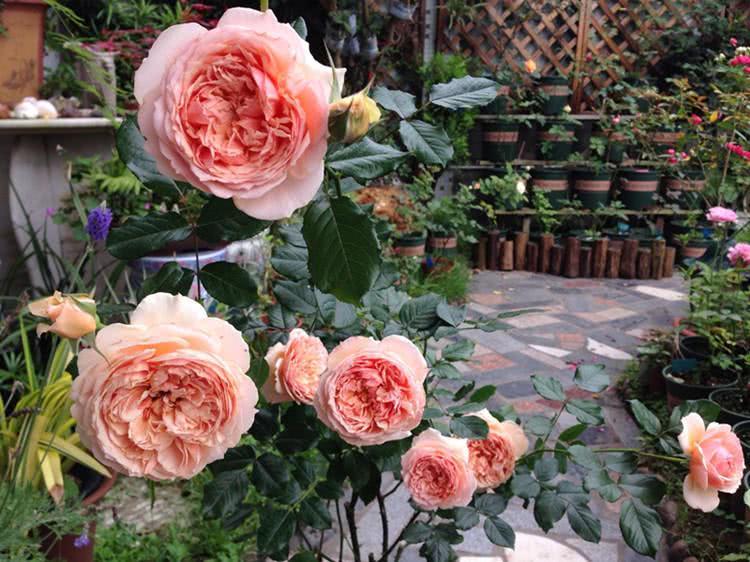
After the Start of Autumn last week, many people thought the temperature would drop somewhat, but the blazing heat still left many people dripping with sweat. For roses, things are different after the Start of Autumn, and all kinds of problems often appear. It can be said that as long as you operate improperly, roses can easily "get caught in the crossfire."
In fact, after the Start of Autumn, the phenomenon of roses "getting caught in the crossfire" is very common, especially the problem of yellow leaves. The main reason is that the high temperature does not drop, but the moisture in the air has decreased by 20%. The hot, dry weather has changed the conditions for growing roses, and they are no longer the same as in summer. So then, the 3 "improper practices" that cause roses to "get caught in the crossfire" are what flower lovers must watch out for.
1. Improper fertilizing stuffs the roses to death
After the Start of Autumn, even people get "tanned dark" (meaning tanned black) under the blazing heat, let alone the rose, this "Sister Lin." So during this period from late summer to early autumn, add "this fire called fertilizer," and roses can easily run into problems. Therefore, when growing roses, you need to pay attention to fertilizer. If you apply too much, it is very easy to "stuff the roses to death" and burn the seedlings.
2. Improper pruning kills the roses
After the Start of Autumn, many flower lovers cannot hold back their inner "primordial power" and start picking up scissors to "sharpen the knife and turn it toward the roses." But here, do not rush, because pruning branches in this season can easily cause all kinds of problems. When pruning roses, you must pay attention to whether the branches you prune are reasonable. If not, it is very easy to harm the roses. At the same time, you must also pay attention to the wounds after pruning; otherwise, viral infection can also leave them "caught in the crossfire."
3. Improper watering chokes the roses to death
After the Start of Autumn, while the high temperature remains unchanged, the dryness of the air has increased by 20%. This also means that the water consumption of the roses and the potting soil has increased somewhat. But at this time, you need to pay more attention to watering. Too much watering makes rose roots suffocate and turn yellow; too little watering leaves the roses short of water and dry-yellow; watering immediately after drought easily causes the soil and roots to clump, and the roses become yellow from lack of oxygen. So when growing roses after the Start of Autumn, improper watering "chokes" the roses.
So then, when growing roses after the Start of Autumn, if flower lovers encounter these 3 "improper practices," how should they deal with them next?
For the first point: "Fertilize without being greasy"
When fertilizing after the Start of Autumn, avoid using granular fertilizer with strong fertilizer effect. It is enough to appropriately use decomposed fertilizer as a top dressing. You can also use organic liquid fertilizer specially for roses, diluted 1000 times with water, then spray and water it on. The fertilizer strength is mild and long-lasting, and using it once every half a month or once a month is enough. In this way, you avoid both fertilizing to death and lacking fertilizer, thus achieving "fertilize without being greasy."
For the second point: "Cultivate character and nature"
Pruning roses after the Start of Autumn allows the nutrients of the roses to flow back. At this time, the parts that should be pruned are residual branches, weak branches, and diseased branches. In addition, you should also remove straight branches and keep slanted ones, appropriately keep new branches and remove old branches, so that the old and new replace each other. After pruning, you can appropriately apply lime sulfur powder to the wounds to prevent wound infection.
For the third point: "Quench thirst appropriately"
Although the moisture in the air has decreased somewhat, the high temperature remains. So avoid watering at noon and water in the morning and evening instead, to avoid the roses being "steamed" badly. When watering, you must water thoroughly; otherwise, the surface is wet but the middle and lower parts are still dry, and the roses will still die of dryness. After drought, do not water immediately. You can appropriately move them to a shady place, then water slowly, so that the roots can absorb water slowly while also taking in oxygen. In this way, the roses are less likely to turn yellow from lack of oxygen.