Take good care of your Christmas cactus with these 3 points in autumn, and flower buds will grow vigorously, bursting into bloom in late autumn until the branches bend under the weight
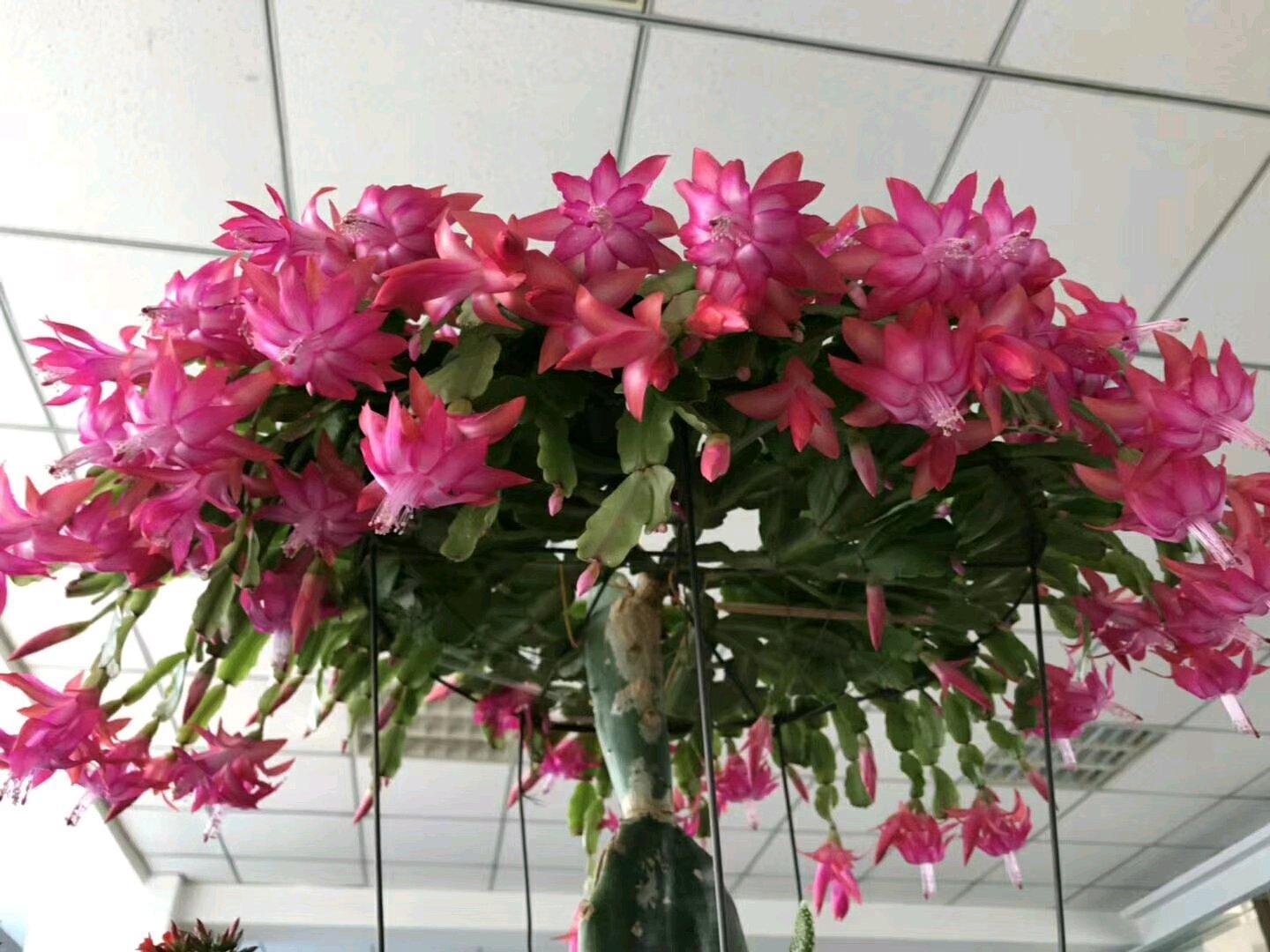
As autumn arrives and the weather turns cool, many flowers and plants wake up from dormancy. The Christmas cactus is one of the flowers deeply loved by many gardening enthusiasts, because its blooming period runs from October to around February of the following year, making it a plant very suitable for indoor flower viewing in winter. Recently, many gardening enthusiasts have left messages asking: if you want your Christmas cactus to bloom at National Day, how should you care for it now?
1. Pre-bloom pruning. After autumn arrives and the Christmas cactus wakes up, the first thing to do is prune it, because after a summer of dormancy, the Christmas cactus has basically grown in a messy way, with an unattractive shape. The general pruning points are: cut each branch back at the point 3-4 stem segments below the flower, which can ensure the whole plant shape stays intact, preserve nutrients, and encourage the Christmas cactus to produce more flower buds.
2. Reasonable lighting. If you want to control the blooming time, you need to reasonably control the light. The Christmas cactus is a short-day plant. In autumn the sun is not so intense, and giving it 8 hours of light per day can very well promote photosynthesis. When evening comes, move it to a ventilated, lightless room to promote flower bud differentiation and earlier blooming; this is commonly known as the "lock it in a dark room" method of forcing flowers. When moving it, be careful not to touch the flower buds, because if the buds fall off, the loss outweighs the gain.
3. Fertilizing to promote flowering. For a plant like the Christmas cactus with such large leaves and many flowers, if you want a burst of blooms, fertilizing is certainly indispensable. After waking up, the Christmas cactus needs a large amount of nutrients for growth. In fact, if the nutrient supply is insufficient, never mind blooming, the Christmas cactus will also show phenomena such as leaf drop, no growth, or even yellow leaves.
After pruning, in the early stage we first use an organic nutrient solution containing more nitrogen, once every 7 days. This can promote the root growth of the Christmas cactus, make the top buds grow quickly, and make the rootstock grow thick and plump. After about a month of care, when the Christmas cactus has grown vigorous and is about to enter its blooming period, we then use a flower-promoting nutrient solution containing more phosphorus and potassium, once every 10 days, to promote bud formation in the Christmas cactus, so the buds grow plump, and when the time comes the flowers bloom large and vivid.
When doing the above 3 steps, there is also an important accompanying part, namely the watering method. Many gardening enthusiasts say that their Christmas cactus at home is always limp, and a big reason is root rot caused by improper watering. The Christmas cactus is not tolerant of moisture; if watered too much, it easily gets root rot. In autumn, water only after the surface of the potting soil has completely dried. If you are afraid you cannot tell, you can use a plant and flower detector to assist: insert it into the potting soil, and through your phone you can see the numerical changes in soil moisture, fertility, humidity, and temperature, which is simple and convenient.
Do these points well, and around National Day you can basically see your Christmas cactus bloom. Everyone is welcome to share flower-growing knowledge together, making flower growing simpler and happier.