Why do spider plants at home always have yellow leaves? It turns out they cannot use it, so remove it quickly
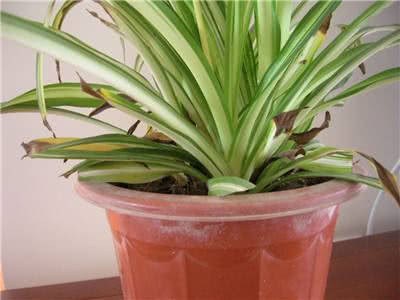
Summer is about to end, and many flowers and plants that were originally wilted and in poor condition have gradually passed their dormant period and recovered their vitality, but the spider plant at Huahua's neighbor's house has had problems. At first, when it was just bought back, it was still green and glossy, but after a summer, the branches and leaves had all turned yellow, which is really distressing....
When Huahua went to bring the spider plant back and took a look, the source of the trouble was found: the spider plant the neighbor bought back had its soil surface covered with a layer of plant ash. If this spider plant could survive, that would be miraculous. If any flower lover's spider plant also has this on the soil surface at home, hurry up and clean it out and throw it away, it really cannot stay!
Plant ash, as the name suggests, is the ash left after things like plants, flowers, and wood are burned. Many flower lovers have probably used it as fertilizer before. It cannot be denied that for some flowers and plants it does promote growth, but for spider plants, it really cannot be considered fertilizer.
Because the plant ash left after plants and wood are burned is a substance that tends to be alkaline, but spider plants prefer to grow in soil that tends to be acidic. The soil in the north is already alkaline and needs acidic substances to neutralize it. If a layer of plant ash is also covered on the surface of the spider plant, then the result can be imagined.
Not only should this not be done for spider plants, typical southern plants such as gardenia and jasmine are the same, otherwise the result will definitely be "disastrous." In fact, spider plants are relatively easy to care for in daily life. As long as you do the points Huahua mentions below well, there will not be any problems.
The first point is the watering issue for spider plants. During the growth process, spider plants generally need a large amount of water. In the cooler seasons of spring and autumn, everyone should just maintain a frequency of watering once a day. In summer high-temperature weather, you can water twice a day. In winter, once a week is enough.
Spider plants are a kind of plant that greatly loves fertilizer. From spring to autumn, they should be fertilized about once a week. Only in this way can enough nutrients be provided during the growing period. In winter, when the weather is cold, the amount and frequency of fertilization should also be reduced accordingly.
If you want spider plants to grow well, the final key point is still the soil. Because the soil in the north is relatively alkaline, if spider plants are planted directly into it, they may not survive for long. At this time, you can use the fermented rice-washing water and willow branch water Huahua mentioned before. In this way, once the acid and alkali are neutralized, the soil becomes very suitable for spider plants to grow, and the speed of sprouting will also be faster.
If the plants at home show yellow leaves, do not rush. First look at where the problem actually lies. Only by improving the flower-growing environment in this way can you be completely safe, right? Have you all learned the knowledge Huahua taught everyone this time?