What to do about sores, boils, and swollen abscesses? It turns out this plant can solve them
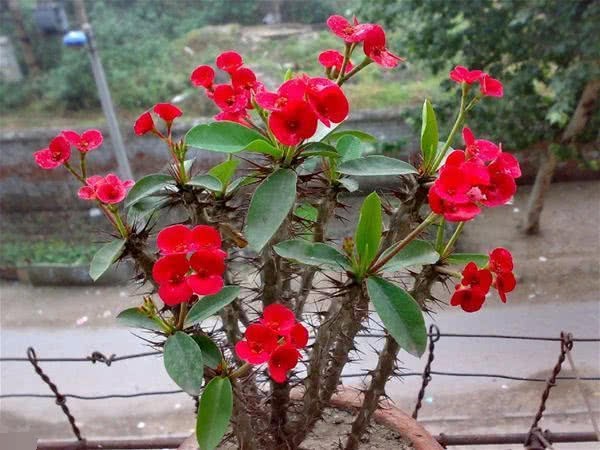
One time, the editor visited a friend's home and saw a very beautiful potted plant. It was in bloom, covered all over with red flowers. What made it different was its covering of thorns, so those with trypophobia should stay away. According to the friend, it blooms year-round, is very much loved, and is especially easy to grow. I took a branch home, looked it up online, and unexpectedly made a discovery.
At the friend's home
It turns out it is called crown of thorns (Euphorbia milii): it is widely cultivated in the tropical and temperate regions of the Old World; it is cultivated in both northern and southern China, and is commonly seen in parks, botanical gardens, and courtyards. It likes a warm, humid environment with plenty of sunlight. It tolerates slight shade, but fears high temperatures; it is fairly drought-tolerant but not cold-tolerant. Loose, well-drained leaf mold soil is best. If the temperature is relatively low in winter, it may enter a short period of dormancy. There are also some that bear yellow or white flowers, which are extremely rare. If a flower enthusiast sees one, they will surely pay a high price for it, and its collectible value is also quite high.
Close-up photo
Its planting method is simple: the cutting medium is nutrient soil used for cuttings, river sand, peat soil, or similar materials. For home cuttings, limited by conditions, it is very difficult to obtain an ideal cutting medium. It is recommended to use a pre-mixed and sterilized cutting medium; medium-coarse river sand can also be used, but it should be rinsed several times with clean water before use. Choose a thick, strong branch, about 10 cm to 15 cm long (it should have 3-4 leaf nodes), wipe away the white sap flowing from the cut, apply plant ash, and let it dry in a cool place for 2 to 3 days. After the wound is dry, insert it into plain sand and water thoroughly. Water sparingly afterward, and water again only when the potting soil is slightly dry. After about 50 to 60 days, it will be able to root. This crown of thorns is cold-tolerant, so water it less, do not let the temperature get too low, and do not apply too much fertilizer
Grown for more than a year
This crown of thorns has a certain medicinal value: roots, stems, leaves, and milky sap: bitter, cooling. Toxic. Drains pus, detoxifies, and removes excess water. Used for carbuncles and sores, hepatitis, and edema. Flowers: bitter, astringent, neutral. Slightly toxic. Stops bleeding. Used for uterine bleeding. Roots: used for fish-mouth sores, lymphogranuloma inguinale, and traumatic injuries. Cuanni thorn: roots and stems mainly treat gengshen (boils). Cuanni thorn: roots, stems, leaves, and milky sap treat sores, boils, and swollen abscesses. So it can be said: although this plant looks beautiful and stubborn, it is also a good medicine!