When wild grass is hung up, it is surprisingly even more beautiful than spider plant
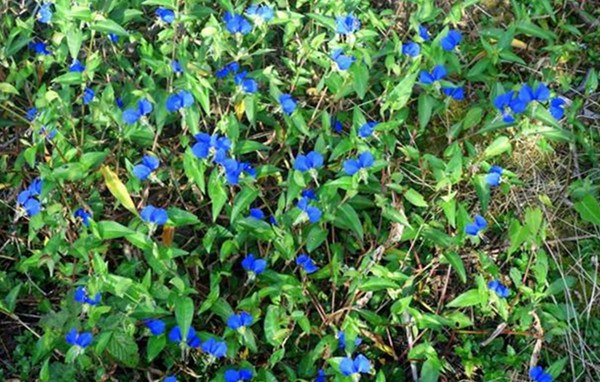
Dayflower is distributed in Yunnan, Sichuan, Gansu and other provinces and regions in China. Dayflower, with ovate-lanceolate leaves, comes in purple and green forms, has creeping stems, roots at the nodes, and sprouts in spring and summer. The flowers are like butterflies, with male and female parts growing together, blue on top and white below, blooming after autumn. It is a very beautiful wild plant.
Introduction to Dayflower
Dayflower, also known as: Bizhuzi, Lanhuacao, Zhuyecai, JiguanCai, Yazhuacai, Danzhuye. It grows in many places, by roadsides, ditches and damp shady places in the wild, and is easy to collect.
1. Purple Dayflower
Purple dayflower is also called Zibei Yazhucao, Hongsanqi, Hongqichuan, Zizhumei, Zijinhua, etc. Its scientific name is Rhoeo spathacea (Sw.) Stearn; it belongs to the family Commelinaceae and the genus Tradescantia. It is a perennial herb. Native to North America. The plant height is 30-50 cm, and the stems are upright. The leaves are alternate, clustered, and red-purple on the underside. The umbel is terminal, with many flowers, blue-purple, and also purplish-red or red, with the flowering period in summer and autumn. A species in the same genus is Tradescantia fluminensis, also called hanging bamboo grass, with weak bases, trailing growth, long elliptical to ovate-long elliptical leaves, and white flowers, suitable for potted hanging or placing on a high stand for viewing. It likes warmth and humidity, is slightly cold-tolerant, and loves sunlight.
2. Blue Dayflower
Blue dayflower is also called wild butterfly flower, half-day lotus, Bizhuzi, Lanhuacao, Zhuyecai, JiguanCai, Yazhuacai, Danzhuyehua, etc. Its scientific name is Rhoeo spathacea (Sw.) Stearn, and it belongs to the family Commelinaceae and the genus Rhoeo.
The blue dayflower flower is a beautiful blue. In ancient times people used it as a dye. Dayflower blooms in the morning and withers in the evening; a single flower lasts only one day, and its flower language reflects this, being regarded as an illusory love like morning dew. In addition, it is the lucky flower of Virgo.
How to Grow Dayflower
Every node of dayflower can produce new roots. Cut the stems of the plant and insert them in the prepared field at a spacing of 5 x 10 cm between plants and rows. After cutting, keep the soil moist. When the light is strong, a shade frame should be set up to block the sun, so as to avoid excessive water loss causing the cuttings to die. Roots can form in about 15 days. To grow purple-leaf dayflower, generally change the pot once every spring, and use garden soil plus a small amount of river sand as the potting soil. During the seedling stage, keep it in a place with scattered light for care, and during the mature plant stage, grow it in partial shade.
Uses of Dayflower
The taste is mild. The tender stems and leaves are fleshy and juicy and can be used as a vegetable. From May to June, collect them and stir-fry or make soup, or mix with flour and steam. It can treat various infectious fever illnesses (decocted alone in water), as well as various bleedings, dysentery, venomous snake bites, etc. It is a herb, with stems slanting upward, the base lying on the ground, sometimes rooting at the nodes. The leaves are lanceolate, with green veins. The flowers are dark blue. The flower buds are small, with a common peduncle. For joint swelling and pain, carbuncle and swollen toxins, and sores and purulent ulcers, take fresh dayflower, pound it, add a little liquor, apply to the affected area, and change once a day.