Amaryllis leaves grow too lushly; after pruning, it blooms even more
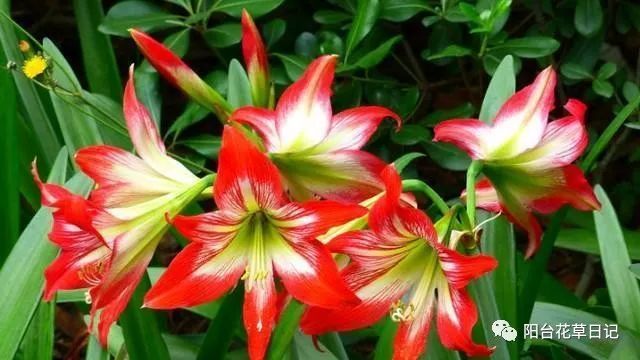
Amaryllis, also known as red flower lily, is a beautiful plant with lovely blooms, elegant and graceful, with brightly colored, large and full flowers. With proper care, it can even produce multiple flowers on a single stalk and bloom multiple times a year, and is often grown as an ornamental plant. Many gardening enthusiasts have found during care that amaryllis leaves growing too long affects its overall appearance. What should you do if amaryllis leaves are too long? Can you cut them?
There are many reasons why amaryllis does not bloom. If it is because the plant is too densely grown, you need to prune the plant at the appropriate time; if it is because of insufficient sunlight, you need to place it in a sunny spot; if it is because the temperature is unsuitable, you need to maintain the indoor temperature; if it is because the wrong soil is used, you need to replace the soil.
Some people say amaryllis leaves should not be cut because the leaves carry out photosynthesis and promote growth, while others say the leaves can be cut. Opinions vary, and there are all kinds of things being said.
Previously, the editor also did not cut the leaves. I kept a pot of amaryllis for two years and it never bloomed, just leaves, big and green, especially beautiful. Other people's amaryllis bloom without leaves, and can bloom again and again, many times, but mine at home just would not bloom. Later, out of frustration, I cut all the leaves. Strangely enough, not long after cutting the leaves, it bloomed. I was overjoyed, finally seeing flowers.
Later, whenever I saw the amaryllis had many leaves, I would cut them off. Sometimes even without cutting, they would slowly turn yellow, wither, and fall off on their own. They would fall off and grow again, and once they grew I would cut them, back and forth like this. Regardless of spring, summer, autumn, or winter, as long as I saw many leaves I would cut them all off. I do not know whether cutting the leaves is actually right, but one thing is certain: it blooms quite a lot. Before one flower falls, the next flower stalk is already pushing out. It blooms with or without leaves. Sometimes it is quite amusing, with not a single leaf, just two or three flower stalks with a few flowers; at first glance it looks quite bizarre.
Why does cutting the leaves actually result in more blooms?
Reason: When amaryllis is overly lush, the entire plant's nutrient demand becomes much greater than before. If nutrients are still supplied in the previous manner, the nutrients will be insufficient, and it will be difficult for the flowers to open. At this point, pruning is necessary to ensure the plant has enough nutrients to bloom.
After the amaryllis flowers fade, simply use scissors to cut off the entire flower stalk from the base. As the saying goes, faded flowers and withered willows are not pleasing to look at, so do not be reluctant to part with them. Cutting off such flower stalks can, first, avoid excessive consumption of nutrients, and second, promote the sprouting of new shoots and encourage the amaryllis to grow new flower stalks. In this way, cutting off the flower stalk after each bloom can promote a second round of flowering.
In addition, after each bloom, the nutrients in the potting soil have been almost entirely absorbed, and the lack of nutrients is also unfavorable for blooming again. So after cutting off the flower stalk, you can apply some organic fertilizer. It is recommended to bury it directly into the soil, keeping some distance from the roots to avoid burning them, which will better promote the growth of the flowers.
▍Comprehensive editing: Balcony Flower and Plant Diary hcrj520