Grow roses this way, and even a small space can become a little garden
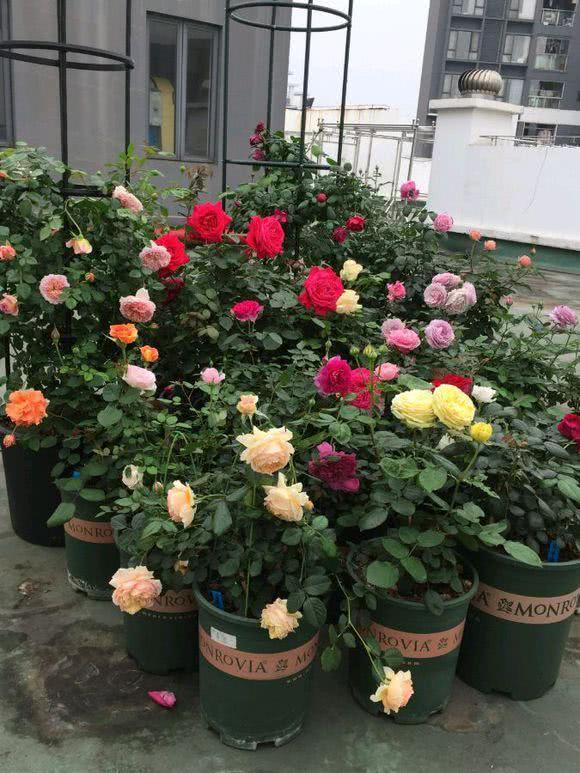
Living in the city, our small balcony is our little corner for leisure and relaxation. Planting a few pots of flowers when we have time, especially roses, is a delight to the eyes. But space is always limited, so we need to use some great tricks to create our own little rose haven.
The balcony space is small, but you must ensure there is enough light
As everyone knows, roses are light-loving plants. Without light, it is hard even to keep them alive, let alone get them to bloom or grow lush and full. So if you want to grow roses, no matter how small the space is, as long as there is plenty of light, they will still grow strong and bloom. Generally, a south-facing balcony, or one facing slightly south, is a good choice. A north-facing balcony is really quite difficult.
When pruning roses, pay attention to direction
Previously we all said to keep the rose branches that grow outward, as this is how roses grow into a full, bushy plant. But if the balcony is too small, keeping only the outward-growing branches means they will keep growing outward, and of course there will not be enough space. To make use of limited space and grow better roses, you can keep the upward-growing rose branches and the inward-growing rose branches, and prune the outward-growing rose branches appropriately. This saves space, maintains a good plant shape, and also allows for ventilation.
After pruning the roses, be sure to remember to replenish enough nutrients, otherwise the damaged branches cannot absorb enough nutrients and will recover more slowly. Generally, about one week after pruning the roses, when the wounds begin to scab over, you should appropriately replenish nutrients. You can use an organic fertilizer specially made for roses, dilute it 800 times with water, and water the potting soil once a week.
Manually control the plant shape
Besides pruning, to save space, you can also manually control the plant shape. That is, pull the main branches that grow outward back inward a bit. You can tie them with string, or use a rack, or insert a support stick into the soil and fix the outward-growing branches to the rack or wooden stick, so the branches can be pulled back in. However, this method easily causes the branches to become crowded. Generally, you should prune away some of the thinner, weaker branches to ensure ventilation and avoid pests and diseases.
At the same time, after each blooming period, you should also appropriately prune off the flower stems, in order to ensure that more nutrients are concentrated for the other branches that are going to bloom, and also cut off the remaining branches, dead branches, or inward-growing branches.