Rose plants kept barely alive through the summer need rescuing right after the Start of Autumn
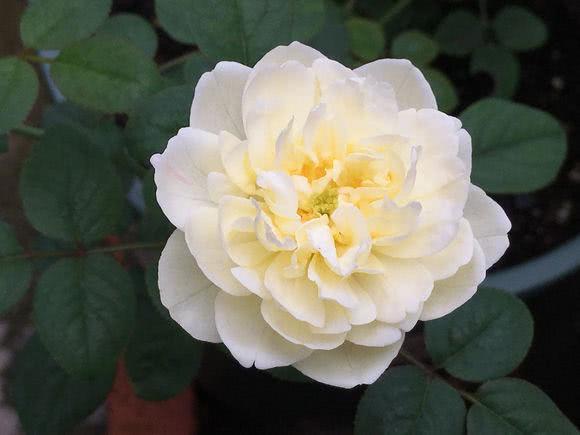
Growing roses in summer is a huge challenge for many flower lovers, and it is also a very big test for the roses themselves, testing their heat tolerance and their resistance, because in summer roses easily turn yellow, die, or stall in growth, and at the same time you may even end up killing the roses. After the Start of Autumn, the climate gradually turns cooler, and it is the perfect time to rescue them.
Reasons for yellow leaves on roses
The summer weather is hot, and many flower lovers know that roses are fairly afraid of heat, so watering frequently is common. Once you water too much, combined with high temperatures, the potting soil becomes stuffy and the roses cannot breathe smoothly, which easily causes problems. Then there are the lazy flower lovers who completely forget to water their roses in summer. In hot weather the water evaporates quickly, and with high temperatures plus drought, the rose roots have no way to transport water, so of course the leaves turn yellow.
So in this kind of hot weather, how can we rescue our roses from danger?
Control watering well
Although the summer weather is hot and there is still lingering summer heat after the Start of Autumn, plus the dry weather, the water in the potting soil evaporates fairly quickly, we still need to be restrained when watering, and we cannot water however is coolest, itching to water the roses several times a day. In some places, because the potting soil drains well and ventilation is good, there is not much of a problem, but for some rose potting soil that does not drain very smoothly, the amount of water should be reduced accordingly, and it is best not to water at noon.
Proper pruning
Summer is also the peak period for pests and diseases. If you are not careful, rose branches develop black canes, die back, or become infected with pests and diseases. At this time the quickest method is to first cut off these branches, then spray the corresponding fungicide and insecticide. You can use acetamiprid to kill insects and bifenazate to control disease, diluted 1000 times with water, used once a week. If the symptoms do not improve, use it 2 times in a row.
Replacing the soil. Newly bought roses are all planted with soil. There are certainly some differences between the soil used for greenhouse care and the soil used at home. To improve the soil, you can use leaf mold plus garden soil and river sand, mixed in a ratio of 1:3:1. During the seedling stage, basically no base fertilizer is needed, because leaf mold can provide enough nutrients, and using too much will instead cause fertilizer burn. If you want to use fertilizer, you can use slow-release fertilizer, which has a slower effect and can also provide the nutrients the roses need.
Watering to settle the roots
After repotting a rose, in order to make the soil bind more tightly and avoid cracks forming, it is generally recommended to water once to settle the roots, watering thoroughly in one go, and at the same time place it in a relatively cool environment for about a week. If you are worried that the potting mix contains bacteria, you can water once with a fungicidal liquid specially made for roses. Be careful to dilute it 1000 times, and do not make it too strong.
When should fertilizing begin?
Newly potted roses must go through a period of acclimatization. Once the seedlings are basically growing normally, you can care for them normally. You can use pure plant-based organic fertilizer to ensure fertility, promote vigorous rose growth and sturdy plants, with one branch bearing several flowers.
If your roses have been in a half-alive state since summer, there is still time to rescue them now, so hurry up and take action!