What to do about yellow leaves on pothos? Pay attention to these 4 causes and easily grow glossy green leaves
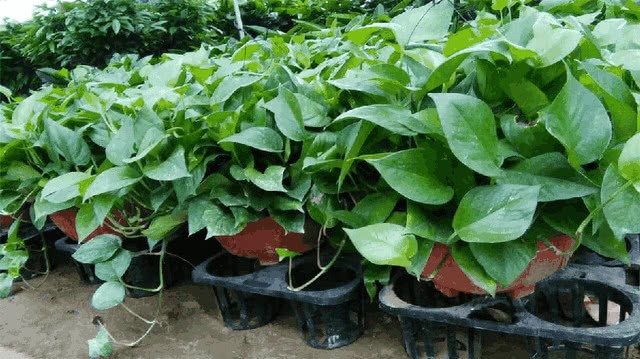
Such a beautiful and easy-to-grow pothos, if it often has yellow leaves, is no longer beautiful. Once a leaf turns yellow, it has to be pulled off, and the pothos will also change from its original dense growth to sparse, becoming more and more unattractive! So why does a pothos that has been growing well develop yellow leaves? Here are several causes of yellow leaves on pothos and ways to deal with them. Flower lovers can take a look.
I. Main causes of yellowing pothos leaves
Overall, if pothos leaves turn yellow, when grown in water it is mostly because there are bacteria in the water, while when grown in soil it may be because the roots are rotting. Relatively speaking, water-grown pothos is more likely to develop yellow leaves than soil-grown pothos. The specific factors behind yellowing pothos leaves are mainly three aspects: improper watering, imbalanced light, and incorrect fertilizing.
1. Improper watering
Too much or too little watering can both cause water-related yellowing in pothos. If the leaf surface is dark yellow and lusterless, and the newly grown tips shrink and stop growing, it may be due to overwatering. But if the leaf tips or edges wither and dry out, the new leaves grow normally, yet the old leaves turn yellow and drop, then it is due to underwatering.
Solution: Pothos likes a humid environment, and its leaves require relative humidity above 60%, so it should be watered moderately. If you cannot judge the amount well, follow the watering principle of letting the potting soil dry and then become moist. In summer and autumn, spray water on the leaf surface every day in the early morning, at noon, and in the evening to increase humidity. In winter, the amount of watering should be reduced, and note that indoor pothos leaves should also be sprayed with water to keep them moist.
2. Light-related yellowing
Pothos likes shade. Strong light exposure will cause the leaf tips and leaf edges of the plant to wither, and yellow spots will appear on the side of the leaves facing the sun. Conversely, if it is placed in a dark environment for a long time, the leaves cannot get enough sunlight and cannot form chlorophyll, which will also cause pothos leaves to turn yellow, so light needs to be supplemented in time.
Solution: Although pothos is a shade-loving plant, it is still a green plant after all, so it still needs sunlight. Especially in winter, when sunlight is not strong, it can be placed outdoors for a few hours a day, and there is no problem with that.
3. Fertilizer-related yellowing
Too much fertilizing, too high a concentration, or even no lack of fertilizer can all cause pothos leaves to turn yellow. When too much fertilizer is applied, the pothos leaf surface is thick and lusterless, and the leaf surface looks unrelaxed, with old leaves turning yellow and dropping. This can be reduced by flushing with water. When fertilizer is lacking, the leaf surface color becomes lighter, appearing pale green or yellow, and fertilizer should be supplemented in time.
Solution: For fertilizing pothos, mainly use nitrogen fertilizer, supplemented by potassium fertilizer. Before the pothos growing season arrives in spring, apply a 0.3% solution of ammonium sulfate or urea once every about 10 days, and use a 0.5‰-1‰ urea solution for one foliar feeding, which can both meet the growth needs of pothos and keep the leaves green and glossy. Fertilizing should be stopped in winter.
II. The ultimate solution for yellowing pothos leaves
If there are too many yellow leaves on the pothos and it has already become very bare, then it is better to propagate it by re-cuttings!
1. Soil culture: Pothos can be propagated by cuttings. Each node on its stem has a leaf bud, and just taking one node for planting can allow it to grow. So when the leaves of a cultivated pothos turn yellow severely, you can remove the rotten roots and pick off the yellow leaves, then replant the cuttings. You can insert several pots at one time, and then you can get several pots of pothos growing in full.
2. Water culture: For water culture, change to fresh water, and you can also cut off the vines whose leaves have not yet turned yellow and replant them. During the planting process, bury two to three nodes; for water culture, also two to three nodes, and change the water once every three or four days (boiled cold water is best). Just after planting, it must not be exposed to direct strong light, and it can be placed in a position with weaker light. In about 20 days, the newly planted pothos will take root and grow.