What are some elegant, scholarly green plants suitable for placing in a tea room?
Naodong Handmade
You have 40 friends following this official account!
Ancient literati loved to model themselves on nature, and the inspiration that all things brought them initially must have come from their spirit and charm in their natural state. In other words, only when the flowers, grasses, and trees in nature attracted literati with the forms and postures they displayed, and their inherent spirit resonated with lofty scholars, would the ancient sages invite them into their gardens, keep them beside their studios, and bring them onto their desks.
1
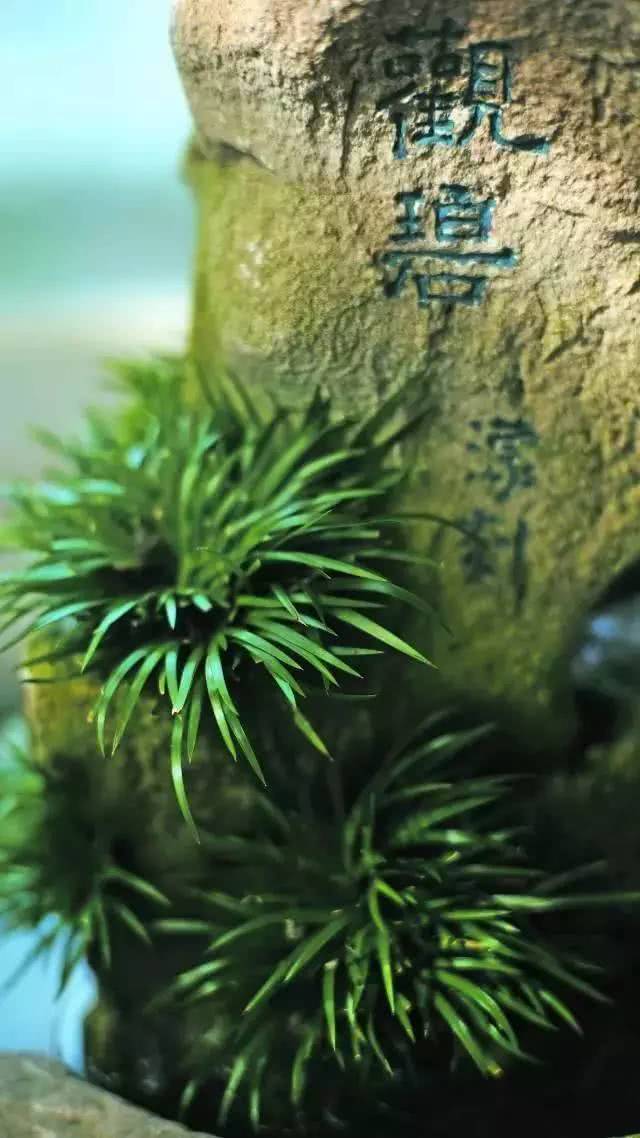
Acorus gramineusAcorus calamus
Acorus gramineus likes shade and moisture, and is mostly kept away from the sun when cultivated. In the severe cold of autumn and winter, when all grasses rot and die, Acorus gramineus remains "fine as hair, green and luxuriant, lonely in the cold with no one to share it." Even when battered by wind and snow, it still stands mournfully fragrant alone. Its cold, lean, heroic bearing is what hermits admire in its form; its frost-defying, proud bones are what former sages valued in its spirit. It is truly like a gentleman cultivating himself: though trapped in poverty, his noble spirit remains; though enduring cold and hardship, his steadfast will does not waver.
In "Six Records of a Floating Life," Yunniang placed Acorus gramineus seeds on charcoal, then nourished them with rice water. After they grew into a tray, she placed them on the desk to admire.
2
Moss
The scene of soft, lush, emerald moss in a tea room sets off the elegance of a humble room and the serenity of its environment to the fullest. Suddenly, the humble room is no longer humble and is full of vitality.
The bond between delicate moss and the Chinese people has gone through more than a thousand years of tempering before gaining life, spirit, and energy, gaining an independent character, and enriching the Chinese aesthetic world.
3
Asparagus fern
Asparagus fern is a highly ornamental plant that can be placed in the living room or study. While purifying the air, it also adds a literary atmosphere.
The name asparagus fern really sounds lovely. People say one would rather eat no meat than live without bamboo, but bamboo is too large and not easy to move into a tea room. Perhaps when people at the time saw this plant, it truly had the character of bamboo, so it was named "asparagus fern."
4
Pennywort
Pennywort, whose name carries the ugliness of a copper coin, seems unable to match elegance. But the emerald roundness of pennywort and the fairy-like quality of growing by water make people not care about its name.
The above is Laoshuhuahua's painting of pennywort.
5
Orchid
Plum, orchid, bamboo, and chrysanthemum, the four gentlemen, have been loved by literati since ancient times. Plum and chrysanthemum are seasonal plants, and bamboo is too large and not suitable for lying on a desk. Only this orchid fits all four seasons and has a small body. Standing in a tea room, it brings out the best in each other.
6
Maidenhair fern
Maidenhair fern has the appearance of a "small ginkgo." Because it fears dryness and strong light, it must be placed in a spot without direct sunlight for care, making a tea room seem especially suitable. Maidenhair fern is easy to keep alive, and its lines are extremely beautiful. Placed on a tea table, it is rustic and elegant.
7
Bowl lotus
Bowl lotus: imagine a lotus blooming in a porcelain bowl on a tea table. Its plain and elegant realm is fully displayed within a small space.
All the excitement is in Huayipai Youzan Mall
With flowers, with love | Huayipai