These 10 succulents are the easiest to grow, truly the fighter jets among succulents
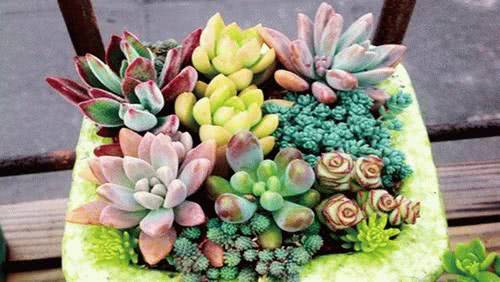
Succulent beginners must not rush into buying succulents; some succulents are not something you can handle. You need to know that if you don't understand many details, succulents can easily be killed, for example, if you water too much, or the mother plant dies after the succulent blooms.
As a beginner, you can choose some succulents that just won't die. Today I'll introduce 10 succulents that are impossible to kill. Friends who worry about not being able to grow succulents well can give them a try!
[Sedum rubrotinctum 'Aurora' / Jelly Beans]
Jelly Beans grows actively in spring and autumn, so it needs plenty of water. Follow the principle of not watering until dry, and water thoroughly when you do. It goes dormant in summer, when you can control watering. In summer, water in the evening; in winter, water on a warm afternoon.
If the leaves curl up, it has started to go dormant, and you can control watering at this point. In autumn the leaves will automatically spread out and start growing, and you need to increase the light exposure at this time.
Propagation rules for Jelly Beans:
1. Leaf cutting propagation: pluck off plump, healthy leaves, let them air-dry, and the leaves will automatically produce young plants.
2. Division propagation: carefully separate clustered Jelly Beans and plant them directly.
3. Stem cutting propagation: select a small branch as the cutting, and it roots extremely easily.
[Graptosedum 'Bronze' / Graptopetalum paraguayense x Sedum stahlii]
A Crassulaceae succulent, the top choice for beginners, and one that will easily overgrow before you know it.
Its leaves are purple year-round, making it especially suitable for mixed arrangements. Graptosedum 'Bronze' is great for growing into an old stump, and its form will be very beautiful.
But its biggest drawback is that it is prone to mealybugs, and it is also the favorite of the Lycaenidae butterfly, so you need to observe frequently during care to check whether there are any bugs.
The most heartbreaking thing in this world is none other than an old stump of many years dying a heroic death. If it has been damaged by bugs beyond saving, you can use cuttings, but you will have a huge project on your hands.
Propagation rules for Graptosedum 'Bronze':
1. Leaf cutting propagation: pluck off plump, healthy leaves, let them air-dry, and you can say the success rate is 100 percent.
2. Stem cutting propagation: select a small branch as the cutting, and it roots extremely easily.
[Echeveria 'Black Prince']
Black Prince likes a warm, dry, and sunny growing environment. It tolerates drought but not cold, and can tolerate slight partial shade.
Spring and autumn are its growing seasons. Keep plenty of light and follow the principle of watering thoroughly after the soil dries out, to maintain its plant shape and color.
High summer temperatures will send it into a brief dormant period, with slow or completely stalled growth. At this time you need to provide proper shading and control watering, avoiding excessive exposure and prolonged rain, which can cause rot from high temperatures.
In winter, normal watering is fine above 10 degrees, and it can tolerate low temperatures of 3 degrees. In low temperatures, control watering and keep the potting soil dry, and it will winter safely. Black Prince grown in clusters and trained into an old stump will be very beautiful. Note that you can repot once every 1-2 years to ensure healthy growth.
Propagation rules for Black Prince:
1. Leaf cutting propagation: take healthy, plump leaves, let the wounds dry in a ventilated place, and they will automatically grow young plants.
2. Offset cutting: take healthy offsets, let the wounds dry in a ventilated place, then insert into the medium and wait for roots to form and the plant to establish.
[Graptoveria 'Titubans' / White Peony]
White Peony is a common variety that is super easy to grow. It likes light and dryness, is fairly drought-tolerant, has strong adaptability, and is quite suitable for outdoor growing.
In high summer temperatures, however, exposure or waterlogging may cause the leaves to dry out and drop. Spring and autumn are its growing seasons, when full sun is fine; high summer temperatures will send it into brief dormancy, so pay attention to ventilation and shading.
The most suitable temperature during the growing season is 15-25 degrees, and in winter it must not go below 3 degrees. For the medium, it is best to choose sandy soil with good breathability. During the growing season, water according to the principle of watering thoroughly after the soil dries out.
Propagation methods: offset propagation, leaf cutting, beheading. Special note: offsets are best in spring; leaf cuttings can be done in all four seasons; beheading easily produces offsets, with a high survival rate.
[Kalanchoe daigremontiana / Mother of Thousands]
Mother of Thousands is a succulent in the Crassulaceae family, Kalanchoe genus, native to Africa, also known as Bryophyllum, Lace Lady, and Flower Butterfly.
Known as the cockroach of the succulent world, it has extremely strong vitality and can take root and grow as long as there is soil.
Its leaves are long spindle-shaped, opposite, and fleshy, dark green with brown markings. The leaf margins are irregularly serrated and will grow a huge number of small buds called adventitious buds, shaped like butterflies or lace, which is why it is named Flower Butterfly and Lace Lady.
Mother of Thousands has three varieties, namely broad-leaf Mother of Thousands, narrow-leaf Mother of Thousands, and stick-leaf Mother of Thousands. Propagation is simple: the adventitious buds fall to the ground and take root, and it can be propagated in all four seasons. Grow Mother of Thousands, and you are bound to become a big grower.
[Echeveria chihuahuaensis / Chihuahua]
Chihuahua is simple to grow. During the spring and autumn growing seasons, keep plenty of light and water according to the principle of watering thoroughly after the soil dries out.
High summer temperatures send it into dormancy. Pay attention to proper shading and watering control, maintain good ventilation, and avoid excessive exposure or prolonged rain, which can cause rot from high temperatures.
In winter, move it indoors to a sunny spot, control watering, and keep the potting soil dry.
Propagation rules for Chihuahua:
1. Leaf cutting propagation: in spring and autumn, twist off healthy, intact leaves, place them on moist mixed soil, and patiently wait for them to sprout.
2. Stem cutting propagation: take healthy branches, let the wounds dry in a ventilated place, then insert into the medium and wait for roots to form and the plant to establish.
[Sedeveria 'Letizia' / Fire Tia]
Fire Tia likes a sunny, warm, and dry growing environment. It tolerates drought but not cold.
High summer temperatures will send it into dormancy. Pay attention to shading and watering control, but do not shade too much or it will become leggy and the leaves will turn green. At the same time, ensure good ventilation to avoid rot from high temperatures.
In autumn and winter it can take full sun, and this is the best season for it to color up. The fiery red leaves look like flames, and watering follows the principle of watering thoroughly after the soil dries out.
In winter, normal watering is fine if kept above 5 degrees. Below 5 degrees, gradually control and stop watering as it enters dormancy. Below zero degrees, be sure to keep the potting soil dry to prevent freezing.
Propagation methods for Fire Tia:
1. Leaf cutting propagation: take healthy, plump leaves, let the wounds air-dry naturally, and they will automatically produce young plants.
2. Cutting propagation: take healthy branches, leave about 2 cm at the bottom, let the wounds air-dry, then insert into the medium and wait for roots to form and the plant to establish.
3. Beheading to produce pups: after beheading, the cutting can be planted, and the beheaded spot can be left to produce pups.
[Graptopetalum mendozae or Graptopetalum mendozae 'Maruba']
Graptopetalum mendozae can be grown outdoors, but once summer temperatures exceed 35 degrees it can be given a watering break and go dormant. At this time it should be moved to a cool, ventilated place to prevent death from high temperatures, and watering resumes in autumn for growth.
In winter, water if kept above 0 degrees; otherwise stop watering to prevent frost damage. However, depending on the soil condition, you can water when it is too dry, using bottom watering to prevent the leaves from turning to mush. Growth resumes in spring.
Propagation rules for Graptopetalum mendozae:
1. Leaf cutting propagation: pluck off plump, healthy leaves, let them air-dry, and the leaves will automatically produce young plants.
2. Stem cutting propagation: cut off the top of Graptopetalum mendozae, leaving about 4 cm of stem, let it air-dry and wait for the wound to heal on its own, then insert it and wait for it to take root.
[Astrophytum asterias / Star Cactus]
The Star Cactus plant is flat and round like a ball, with a single plant diameter of 5-8 cm. The body has line grooves, somewhat like flattened meridians. It is native to the United States and Mexico.
The Star Cactus has no spines, only white star-shaped wool, breaking the impression of cacti we had since childhood. When it blooms, it produces funnel-shaped yellow or red flowers at the top of the ball. Adult Star Cacti only need repotting once every 5-6 years.
[Mammillaria grahamii / White Bird or Silver Fingers]
White Bird may be the only succulent that I find soft and cute even though it has spines, because its spines are snow-white, and the whole thing looks like a big snowball, simply super adorable.
White Bird is super easy to grow. During the growing season, water according to the principle of watering thoroughly after the soil dries out, keep plenty of light, and pay attention to ventilation.
But note that White Bird's growing season is in summer, and at high temperatures it also needs proper shading to avoid prolonged exposure. In the rainy season, ensure good ventilation to prevent waterlogging from causing rot at high temperatures. In winter, below 2 degrees, you can stop watering and keep the potting soil dry.