Which is more heat-tolerant, red-cob corn or white-cob corn?
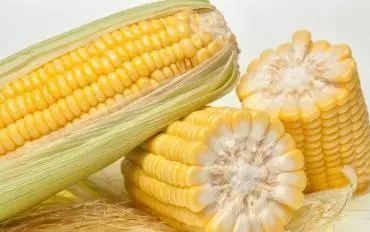
This question is just like asking "Are people with single eyelids taller or people with double eyelids taller?" There is no inherent connection between the two. But whether it is red cob or white cob, a cob that can resist high temperatures is a good cob.
Let's look at the corn planting area in the Huang-Huai-Hai region. At present, the main summer corn varieties planted in the Huang-Huai-Hai region are Zhengdan 958, Jundan 20, Ludan 981, Nongda 108, Jidan No. 7, Zhongke No. 4, Denghai No. 9, etc. Among these corn varieties, some have red cobs and some have white cobs. In terms of general probability, the ones with large planting areas are certainly the ones that make people feel they suffer more serious damage under high temperatures.
Replace with high-definition large image
Different corn varieties also differ in their resistance to high temperatures. Below let's look at a set of classifications of variety resistance to high temperatures.
Corn varieties with high heat tolerance include: Dedan 121, Zhongzhong No. 8, Yu'an No. 3, Zhengdan 1002, Zhengdan 958, Weike 702, Liangshuo 88, Longyu 369, Dingxin 918, Xindan 29, Shengrui 999, etc.
Corn varieties with moderate heat tolerance include: Aoyu 116, Denghai 605, Xiuqing 823, Shaodan No. 8, Lile 66, Jinsai 38, Zhongdan 909, etc.
Varieties that are not heat-tolerant or have low tolerance include: Qiaoyu 20, Xindan 26, Yudan 6060, Liyu 86, Puyu No. 5, Luo 7008, Xianyu 808, Qiyuan No. 9, etc.
Corn varieties that are relatively sensitive to high temperatures include: Xianyu 335, Huaiyu 5288, Zhengyu No. 10, Yudi 216, Xindan 38, etc.
Corn varieties have a great effect on resistance to high temperatures, but in the later cultivation process there are many influences on corn heat tolerance.
First, for example, delaying the corn sowing period avoids high-temperature weather during the pollination period. Second, increasing phosphate fertilizer and increasing irrigation also improve the corn's ability to tolerate high temperatures. Third, appropriately reducing corn density enhances the resistance of individual plants. After excluding these factors, what kind of corn variety did you actually choose?
Above we mentioned the differences among corn varieties in heat resistance. Below let's look at which corn varieties have red cobs and which have white cobs.
White-cob ones include: Zhengdan 958, Zhongke No. 10, Liyu 35, Weike 702, Jixiang No. 1, Jundan 20, etc.
Red-cob ones include: Xianyu 335, Huanong 101, Denghai 605, etc.
Replace with high-definition large image
Considering the heat resistance of different varieties and the red or white cob color, there are red cobs that are heat-tolerant, and white cobs that are heat-tolerant; those that are not heat-tolerant likewise include both red cobs and white cobs. Therefore, treating red or white cobs as an indicator of heat tolerance is clearly unfair.
In the Huang-Huai-Hai region, both red-cob varieties and white-cob varieties are planted. In terms of planting area, Zhengdan 958 and Xianyu 335 are the most prominent. Setting aside other growth-period indicators, this year's weather temperature is too high, which is obviously unfavorable to the yield of Xianyu 335 corn. And in the planting process, many red-cob varieties are somewhat related to Xianyu 335. Therefore, under this year's high-temperature stress, the yield difference shown between red cobs and white cobs has emerged.
As still said, red cob or white cob is not an indicator that determines corn heat resistance. Farmer friends should not be misled by red or white cobs. Choosing suitable, heat-tolerant corn varieties (regardless of red cob or white cob) together with appropriate management measures can achieve relatively ideal yields.
This is Science Agriculture. You are welcome to add a follow and learn together with us.