Only 5 tips for Monstera deliciosa care, and it can keep growing and propagating even in a pot
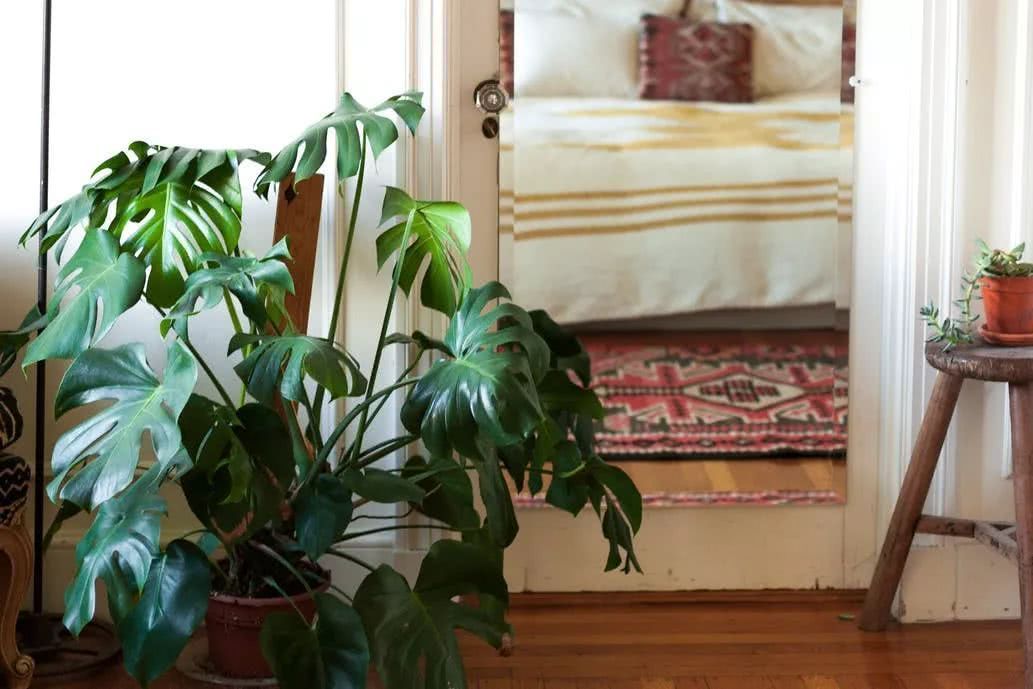
The iconic split leaves of Monstera deliciosa are very beautiful. It is often used in art or flower arrangement designs, and can also be displayed on its own. Monstera deliciosa can be grown for many years, and paired with different containers, it can also create different styles, but do you know how to care for and propagate it?
1. Monstera deliciosa's environmental requirements
Monstera deliciosa leaves are not split when young. As it ages, its leaves slowly split. Its leaves are very large and glossy.
I have also seen other Monstera varieties, such as Monstera obliqua (Swiss cheese vine), whose leaves have many holes.
The image above shows Monstera obliqua
Monstera deliciosa is a tropical foliage plant native to the tropical rainforests of southern Mexico and Central America. It rarely blooms indoors, and easily produces flowers when grown outdoors. Its flowers can also grow into edible fruit, which is said to taste a bit like fruit salad.
2. Is Monstera deliciosa toxic to cats and dogs?
Aside from the fruit, which is not toxic to humans, most houseplants are toxic if ingested. Daily contact with Monstera deliciosa is not toxic, but the sap of its stems and leaves is toxic, so prevent pets from ingesting it.
3. Suitable temperature
Monstera deliciosa is especially suitable for growing indoors. It likes a warm and humid environment year-round, and the minimum care temperature should be kept above 5 degrees. Monstera deliciosa likes higher air humidity, so avoid dryness. You can plant it in a shaded spot. It has very low light requirements. If the sunlight is too intense, the leaves are easily scorched. If it grows in a place that is too dark, it is hard for good-looking splits to form on the leaves. It is best to grow it in a spot with appropriate scattered light or bright light every day.
4. Notes on potting soil and watering
To grow Monstera deliciosa, choose a larger container. For the soil, choose well-draining, loose and airy peat soil, paired with perlite, and you can appropriately add compost soil.
If you want Monstera deliciosa to climb and grow, it is best to set up a support in the pot. You can wrap the support with felt or palm fiber, and let Monstera deliciosa's aerial roots wrap around the support, so it will climb upward. Regularly spray water on the felt or palm fiber to maintain higher air humidity.
During care, when the soil 3 to 5 cm below the surface is dry, water thoroughly once. Avoid the soil drying out. In spring and summer, you can apply a thin organic fertilizer 1 to 2 times a month.
Also, pay attention to regularly cleaning the leaves to avoid too much dust accumulating on them, otherwise it will affect photosynthesis and the leaves will lose their luster.
5. How to propagate Monstera deliciosa?
The best way to propagate Monstera deliciosa is by stem cuttings or layering.
We all know that Monstera deliciosa grows some aerial roots at its growth nodes. We only need to press a section of a branch into the soil and bury its aerial roots in the soil. After it grows for two to three months, you can cut it off below the aerial roots, and it will become an independent potted plant.
Of course, you can also cut off a section of a branch and directly insert it into the soil to propagate. The cut branch should be about 9 cm long and have 2 to 3 growth nodes. The lower leaves of the branch can be removed, keeping 1 to 2 leaves. Finally, place it in a ventilated and shaded place to dry for half an hour, then insert it into water or moist soil to propagate, keeping the soil moist and the air humidity high. The most suitable temperature is kept between 18 and 25 degrees.