A flower that had been grown for 3 years suddenly withered and died, and a small plastic bag brought it back to life
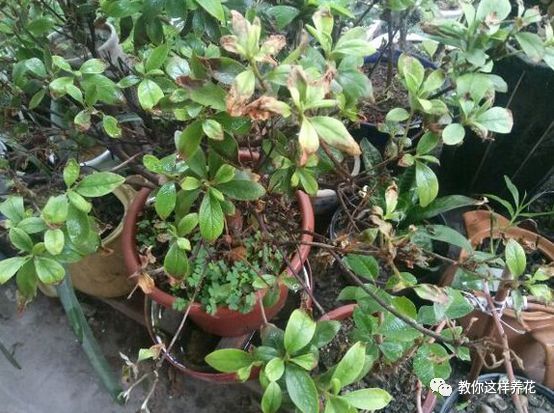
Rhododendron is a flower that many gardening enthusiasts grow, but it often dies in large numbers. There are countless cases of withering and wilting, and other flowers are actually very similar. Today let's look at a case where a 3-year-old rhododendron was brought back to life after wilting, hoping it can give gardening enthusiasts some inspiration and help with treating the wilting and dying that commonly occurs in flowers and plants.
“
Treating flowers and plants
”
Treatment after wilting
When flowers and plants suddenly wilt, the most common types are heat wilting caused by hot weather, cold wilting caused by a sudden drop in temperature, drought wilting caused by lack of watering, fertilizer wilting caused by concentrated fertilizer, and water wilting caused by long-term overwatering. Of course, the treatment methods also differ somewhat.
Heat wilting is mainly caused in summer. In rooms with heating in winter, the air is very dry, and the humidity may be only around 10%, which is very unsuitable for the growth of moisture-loving flowers, making yellowing and curling inward very likely. When this happens, they should be moved to a moist, ventilated, cool place for care.
Drought wilting often appears together with heat wilting. Of course, if no one tends to them for a long time and no one waters them, high humidity can also cause flowers and plants to lack water. Generally, wilting starts from the top and moves downward, the stem cortex shrinks, and finally they die. When drought wilting occurs, water should be replenished in time.
If concentrated fertilizer is applied, seedling burn will occur, and the leaves will wilt and die. Generally, a large amount of water is used to let the fertilizer drain out with the water and reduce fertilizer damage.
Long-term excessive watering blocks root respiration, causing root rot, so water and nutrients cannot be absorbed. When this happens, watering should be stopped, ventilation and drainage should be strengthened, and part of the branches and leaves should be cut off to reduce consumption while waiting for recovery. If the root rot is severe, the plant should also be removed from the pot, the rotten roots cut off, and repotted to wait for repair.
-Wilting after forgetting to water-
Wilting caused by not watering is very common in daily life. For example, when going out, you tell your family when to water, but when you come back you find they forgot, and the flowers and plants have wilted badly. Generally speaking, if the wilting is caused by drought, watering directly or soaking the pot will allow them to recover quickly.
After watering
Cyclamen before lack of water
Cyclamen after watering
Rhododendrons often encounter this problem too. Rhododendrons like moist environments. If the temperature is sufficient, they cannot lack water. If low humidity is added, they will quickly dry out, wither, and wilt. Here is a little trick: if this happens, you can move it to the shower area in the bathroom, block the drain so the floor fills with water, and close the bathroom door. Put the rhododendron in the water overnight, and the leaves will recover very well.
In addition, when watering, be careful not to pour water on the flowers, otherwise the flowers will easily fade.
-Wilting after forgetting to water-
A gardening enthusiast's rhododendron that had bloomed for a year suddenly had wilted and yellowing leaves, which was very distressing.
After removing it from the pot, many rotten roots were found, and the area near the roots was somewhat black. So more than half of the roots were cut off, the leaves were cut off, and only secondary branches were kept.
A plastic bag was put over it and it was placed in a cool, ventilated place for care. After more than a month, it began to sprout.
After 3 months it gained new life. In this way, the gardening enthusiast saved the rhododendron that was close to death.
(Rhododendron Bar lala840320)
In fact, many flowers and plants with root rot from overwatering, or root rot from other causes, can use this method for reference: cut off excess branches and leaves, keep secondary branches, and retain some bud points. Cut off the rotten roots, place in breathable potting soil, cover with a plastic bag to retain moisture, and keep in a warm, ventilated place for care. After about 1 month, check whether the bud points show signs of growing out. If they do, it has survived. If there are still no signs of sprouting, then it can only be thrown away.
So when flowers and plants wither, don't rush to throw them away
Just handle them simply and put a plastic bag over them
Maybe they will even be brought back to life!
After reading this, show it to other gardening enthusiasts!