This flower is so easy to grow: one seed can propagate a whole large pot, and it blooms almost all year round
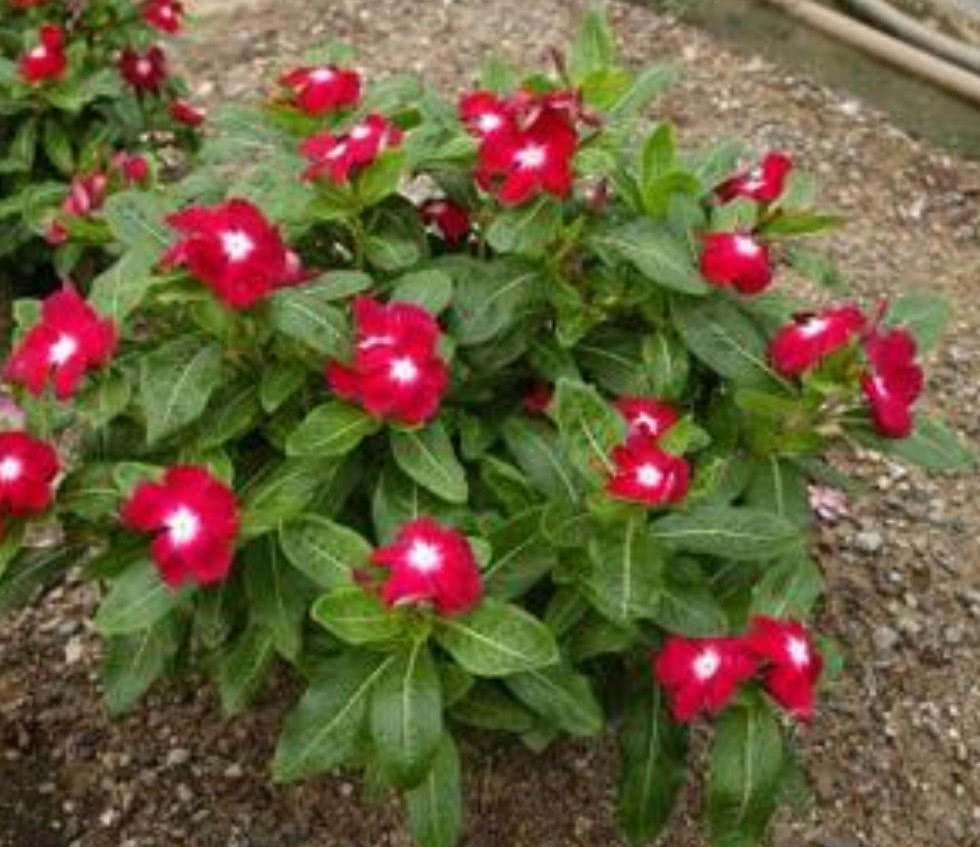
Many gardening enthusiasts complain that the flowers at home are too hard to grow, especially flowering plants. After finally caring for them for more than half a year, they still do not bloom, and with the slightest carelessness they wilt and die, which is really worrisome and exhausting. The plant introduced here is not only easy to propagate, but also grows well with hardly any management, and it can bloom almost all year round. Grow a pot of it quickly!
This plant is the Madagascar periwinkle (Catharanthus roseus)! That is right, the Madagascar periwinkle has a particularly long flowering period. In the warm regions of southern China, where the temperature and light are suitable, the Madagascar periwinkle can bloom all year round, so it is also called "daily spring". When it blooms, 5 petals form a small flower, in various colors. Because it is easy to grow, easy to manage, and has a long ornamental period, the Madagascar periwinkle is cultivated and enjoyed as a flowerbed plant in many cities.
Propagating the Madagascar periwinkle is also very simple: one seed can grow into a whole large pot. Interested gardening enthusiasts can try sowing it. Usually between March and May, at a room temperature of 20-25°C, scatter the seeds evenly on clean sandy soil, cover with a layer of fine sand, spray with water mist, and keep it moist; generally, seedlings emerge in 7-10 days. When the seedlings grow 2-3 pairs of true leaves, they can be transplanted. To make the plant shape round and full, when the seedlings grow to about 10 cm, carry out the first pinching and topping; then about 20 days later, when the new shoots grow 6 leaves, carry out the second pinching. Do not pinch more than 3 times, otherwise too much pinching will affect the quality of flowering.
The Madagascar periwinkle is a sun-loving plant. If you want it to bloom more, you must give it sufficient light. Long-term shade will cause the branches to grow leggy and bloom sparsely. The Madagascar periwinkle likes fertile, well-drained, slightly acidic soil and is very tolerant of poor soil. A while ago, a gardening enthusiast sent a message saying that the Madagascar periwinkle she grows, given sufficient light and with very little fertilizing and management, can still be covered with flowers and keeps blooming. It really brought this gardening enthusiast many surprises, which is enough to show its easy-to-grow and freely flowering habits.
The Madagascar periwinkle likes dry conditions and avoids wetness. Usually, water it by the principle of watering when the soil is dry and stopping when it is wet; never water too frequently, to prevent water accumulation in the pot from rotting the roots. The Madagascar periwinkle is relatively tolerant of high temperatures, but if it is grown outdoors, in the hot and rainy summer season, promptly pour out the accumulated water in the pot to prevent stuffy roots from causing the plant to rot. For an adult Madagascar periwinkle, if you want its branches and stems to grow stronger and bloom more, start in early spring by promptly supplementing with a compound fertilizer comprehensive in nitrogen, phosphorus, and potassium. Around April, the Madagascar periwinkle enters its flowering period, and you can increase the supply of phosphorus and potassium fertilizer to promote flower bud differentiation. During its vigorous growth period, if you have decomposed organic liquid fertilizer at home, you can dilute it and drench the roots of the plant once every half month to promote faster growth.
It should be noted that the Madagascar periwinkle belongs to the Apocynaceae family, and its sap is correspondingly toxic. When pruning, wear gloves or wash your hands promptly to prevent infection. Gardening enthusiasts with young children at home should place the Madagascar periwinkle where children cannot easily touch it, to prevent accidental ingestion and accidents. Amazingly, although the Madagascar periwinkle is toxic, it is a plant whose whole herb can be used as medicine. In medicine, vincristine and vinblastine extracted from its sap also help treat rare cancers such as leukemia.