For delphiniums to bloom more beautifully, pay attention to these points
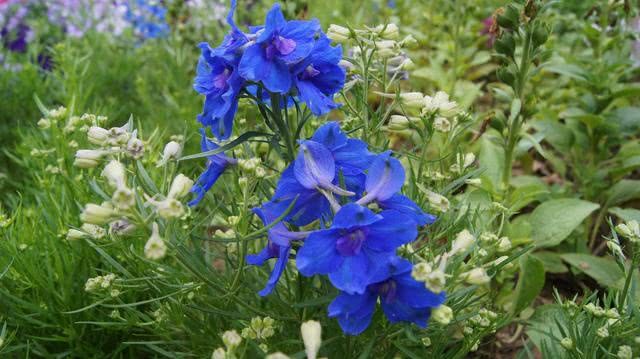
Delphinium can also be called larkspur or dove flower. It is a perennial herbaceous flower that originally grew in Europe, and later was also cultivated in various provincial capitals in China. Its flowers are quite unique, at first glance they look a bit like a dove, and with that said, its name becomes clear, truly living up to its name. The various flower postures reveal an elegant air, and it is often used in flower beds for cultivation, and can also serve as a cut flower accent. But none of this is the main point; what we want to talk about is how to cultivate alluring flowers.
I. Living habits
The dove flower has a very strong adaptability to the climate in which it lives, and the best climate environment is still humid and cool. Its seeds germinate fastest in an environment of around ten-plus degrees, and the growing temperatures during the day and at night are also different. The daytime growing temperature is around 20 degrees, while the nighttime growing temperature is somewhat lower. The dove flower is a light-loving and shade-tolerant flower, and during the growing period it is not suitable for a strong-light environment. Only when it reaches the flowering period does it need to receive a little light to maintain the color of the flowers.
II. Sowing methods
Delphinium propagation by sowing is divided into three steps: seed selection, sowing time, and post-sowing management; let us understand them one by one. The ripening period of delphinium fruit is not fixed, and after ripening the fruit will split open on its own, so if you are not careful it will drift away with the wind. In order not to lose the seeds, the fruit should be collected in advance and kept for later use. Generally, collection can begin during June. By observing the ripening state of the fruit and collecting them gradually, you can obtain the seeds after drying and threshing them.
After the seeds are treated, they should be kept until the appropriate sowing season, then taken out and planted in the soil for cultivation. There are generally two sowing periods for the dove flower: one is spring, and the other is autumn. If sowing in autumn, it must be completed by mid-September, and high-temperature weather should be avoided.
The climate in spring and autumn is relatively mild, which can greatly increase the germination rate of delphinium seeds. In an environment of around ten-plus degrees, as long as the soil is kept moist, new sprouts will soon be seen germinating. When the seedlings grow three to five leaves, the plant can be transplanted. When transplanting, do not bury the seedlings too deep, as this will affect later growth.
III. Cultivation and planting
Delphinium not only likes a humid environment, but can also grow in a dry environment. Even so, it should not be left to endure drought for a long time. When the soil is seen to be dry, water should be replenished in time, watering thoroughly and sufficiently at one time. When the flowering period arrives, the water should also be increased a little. Only with sufficient water can the flowers bloom more crystal clear.
Light is an indispensable factor for flower growth. If a plant has not seen light for a long time, the color of its leaves will appear somewhat dull, let alone the color of the flowers. The degree of light will directly affect the growth condition of the dove flower, especially in winter, when the light is already weak. If it still does not receive light, how will the growing dove flower bloom the following year?
Have you ever seen a blue dove? Do you like it? During the flowering period, the delphinium is like one blue dove after another, flying and lingering among the green leaves, embellishing the dull pace of life, embellishing the atmosphere at home, and improving the quality of life. With such delicate little birds growing under your care, how does it make you feel?