Farmers Struggle to Find Work? 3 Reasons Behind the Unemployment Wave That Leave People Helpless
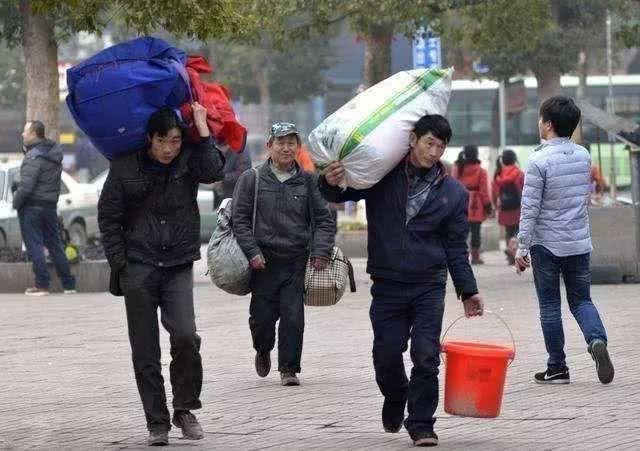
In recent years, with the rapid advance of urbanisation, the rapid development of the rural economy has been driven forward, the pace of new rural construction has grown faster and faster, and the backward face of rural areas has basically been improved. Although the rural economy has been greatly boosted, there is a strange phenomenon: the number of rural people leaving their hometowns is growing and growing. Especially among the younger rural generation, such as those born in the 1980s and 1990s, once they reach working age, they will basically choose to go out to work without hesitation.
Because deep down they have always felt that the city offers greater development prospects, more job opportunities and higher earnings. To earn money and for the sake of their families, they will naturally choose to go to the city and strive hard! It is reported that nearly 200 million people in our country go out to work, among whom rural workers around 30 years old and above are basically engaged in frontline work, such as construction, services, machine operation and so on. These migrant workers all follow the projects, going wherever there is a project, so their work is quite unstable.
Especially in recent years, under changes in the broader environment and the influence of various factors, all kinds of "unemployment waves" will also come. The following 3 points make it hard for farmers to find work, yet they can do nothing about it!
First, the impact of strict environmental inspections. In recent years, farmers have surely felt the intensity of strict environmental inspections. There is no need to say how serious environmental pollution has become now. In order to tackle the environment, clean up pollution and crack down hard on illegal environmental acts, many factories and mines face shutdown. For example, the "ban on breeding" some time ago caused many breeders to suffer losses to varying degrees, forcing them to look for other ways out, yet there was nothing they could do!
Second, the impact of the "stop-work order". In order to tackle air pollution and control smog, a "stop-work order" was implemented last year. After this policy was implemented, the environment improved, but basically all businesses in building materials industries such as cement, brick and tile kilns, ceramics and gypsum board implemented production stoppages.,This also caused many migrant workers who had gone out to have to return to their hometowns. This year is exactly the same: the stop-work order is about to be implemented again. During the stop-work order, construction is prohibited, which means that most migrant workers engaged in these industries are forced to return to their hometowns!
Third, the impact of the age of mechanisation. Nowadays many factories and construction sites use mechanical equipment, which can not only reduce costs but also improve quality. It is not hard to see that everything around us today is large-scale and mechanised. Everything has two sides. Although machines bring speed and convenience, in the foreseeable future, even if machines cannot completely replace people's jobs and positions, they will still make competition among migrant workers fiercer and fiercer!
The above is the situation farmers will face in the second half of the year. These 3 points make it even harder for farmers to find work, yet they can do nothing about it! What farmers need to do is work hard to improve themselves and learn more skills. Believe that everything will get better!
This article is reprinted from: Lao Xue Talks Farming. Images are from the internet. If there is any infringement, please contact us for deletion.