Never ignore Kalanchoe blossfeldiana and jasmine after they finish blooming, or be careful: they may not bloom again the next year
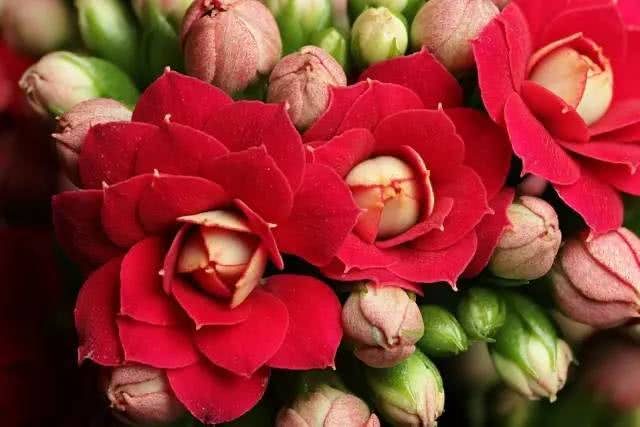
Many gardening friends just leave their flowers alone once they bloom and then naturally fade! In fact, this is bad for the plants' growth, their subsequent blooming, and even their blooming the following year. So what should you do after the flowers fade? Let's take a look!
“
After-bloom care"
- Kalanchoe blossfeldiana -
Kalanchoe blossfeldiana is a succulent plant of the genus Kalanchoe in the Crassulaceae family. Because its name is auspicious and pleasant-sounding, its flower colors are vivid, its varieties are numerous, its flower colors are rich, and it is easy to care for, and if grown properly its flowering period can last as long as two to three months, it is deeply loved by gardening friends. After Kalanchoe blossfeldiana finishes blooming, the spent flowers should be cut off in time to save nutrients for the next blooming.
After the flowers fade, the spent blooms not only affect the appearance but also consume nutrients, so it is best to remove them in time.
Generally, cut off both the second pair of leaves below the flower stem and the flower stem, which promotes branching in Kalanchoe blossfeldiana, helps it maintain a good plant shape, and also encourages better blooming next time. The trimmed flower stems can be used for cuttings. Place the pot in a shaded spot for care, reduce watering, and after one month you can resume normal care.
If the flowers fade in spring, you can repot it. There is no need to change the soil; keep the original soil, choose a pot a little larger than the original one, add an appropriate amount of organic fertilizer at the bottom, then add some soil and pot the Kalanchoe blossfeldiana, providing new nutrients for a second bloom.
Blooming consumes a large part of Kalanchoe blossfeldiana's nutrients, and generally no fertilizer is applied during the flowering period. After blooming, fertilizer should be replenished in time; you can apply one liquid fertilizer mainly based on nitrogen to help it recover and regain strength. At other times, apply a compound fertilizer of nitrogen, phosphorus, and potassium or organic fertilizer.
- Rose -
The heat of summer puts many plants into a semi-dormant state. After enduring a whole summer of stuffiness, roses can hardly hold back by autumn and want to grow and bloom. So at this time, you should provide roses with a good growing environment and prune away some branches that waste nutrients, which can encourage blooming.
Cut off all weak branches, dead branches, diseased branches, and clustered branches. If you already pruned once in summer and they have not yet recovered, there is no need to prune repeatedly.
For normal branches, generally do not prune the main branch; side branches generally keep 3 buds, and the secondary branches on the side branches keep 2 buds, while all the remaining branches need to be cut off.
Spent rose flowers consume a large amount of nutrients and affect the formation of new flower buds. Removing the spent flowers and flower stalks in time can prompt the plant to form flower buds earlier and encourage it to bloom the next round of more and more beautiful flowers faster.
Take miniature roses as an example:
Just cut about one centimeter above the second or third pair of leaves below the flower.
When pruning in winter, you can be a little more aggressive.
The appearance after pruning
(Sina Blog Mosheng)
Fertilizer cannot be applied during the flowering period, and blooming consumes a large amount of nutrients, so after the flowering period fertilizer should be replenished in time to promote flower bud differentiation. After blooming, you can use compound fertilizer as a top dressing; if conditions permit, you can apply farmyard manure after blooming, and if not, you can also buy commonly used slow-release fertilizer, liquid fertilizer, and so on. If fertilizer is not replenished in time, the roses will grow worse and worse.
- Phalaenopsis -
After Phalaenopsis finishes blooming, if you want it to bloom a second time that same year, cut the flower stem at the 4th to 5th node from the base. The advantage of cutting this way is that it can bloom again after 2-3 months. But this consumes too much of the plant's nutrients, which is not good for growth the following year.
If you want the plant to rest and recover that year and bloom again the next year, it is best to cut the flower stem from the base.
Another thing to note is that when the Phalaenopsis medium ages, it should be replaced in time; otherwise, aeration becomes poor, which can cause root rot and weaken the plant's growth or even kill it.
Phalaenopsis should be fertilized year-round. Unless low temperatures persist for a long time, fertilization should not be stopped. Winter is the flower bud differentiation period for Phalaenopsis, and stopping fertilizer can easily lead to no flowers or few flowers.
During the growing period, apply a diluted liquid fertilizer once every 7 to 10 days. Organic fertilizer is preferable, and you can also use a special nutrient solution for Phalaenopsis, but do not apply it when there are flower buds, otherwise the buds are likely to drop early.
In summer, when it grows leaves (that is, after the flowering period), you can apply additional nitrogen fertilizer and potassium fertilizer. In autumn and winter, during the flower stem growth period, phosphorus fertilizer can be used, but it should be diluted, applied about once every 2 to 3 weeks. The time for fertilizing is after watering in the afternoon. After fertilizing several times, flush the orchid pot and plant with a large amount of water to prevent residual inorganic salts from harming the roots.
- Jasmine -
Pruning after jasmine blooms is very important. Under normal circumstances, new flowering branches are generally longer, with more than 5 nodes, and the upper part is thinner. If you do not prune after blooming or only prune lightly, the plant will become too tall and thin, and the new branches will become thinner and thinner, so after blooming you should carry out moderate pruning in time.
For relatively robust flowering branches, keep 1-2 nodes and cut off the rest; do not keep very thin and weak branches, and let the first-year new branch below it (that is, the mother branch of this flowering branch) regrow new branches; do not keep thin and weak branches inside the plant, because they can hardly produce robust branches and also affect ventilation and light penetration, causing pests and diseases.
After pruning, place it in a sunny spot for care. Water appropriately, and by no means rush to apply fertilizer. Wait until flower buds sprout, then apply thin fertilizer frequently. Jasmine likes acidic soil, so you can use diluted fermented soybean cake or a ferrous sulfate aqueous solution. After pruning, 7 days later you can spray the leaves with monopotassium phosphate solution, which can promote sprouting and speed up the second bloom!
- Gardenia -
After gardenia flowers fade, just cut from 2-3 pairs of leaves below the flower.
Like jasmine, gardenia likes acidic soil. During the flowering period it consumes a large amount of nutrients, so after blooming fertilizer should be applied in time. You can use homemade cake fertilizer, or prepare a ferrous sulfate aqueous solution, dilute it, and apply it once a month.
Clivia
- If you want to keep seeds -
Before blooming, you can appropriately supplement some potassium fertilizer and phosphorus fertilizer, which can make the flowers relatively larger and more vivid, and the seeds will also be plump afterward.
If you need Clivia seeds, you can pollinate. In each flower's center, the pistil is the three-pronged one, and the others are stamens. Use the pollen from the Clivia stamen and dab it onto the three-pronged pistil to complete pollination. If pollination succeeds, there will be berries after blooming. The berries are green, and when they turn red or yellow they are ripe. From the end of blooming to the berries ripening takes 5~6 months. After the seeds mature, you can cut off the flower arrow, wrap the cut surface with a paper towel to prevent water from seeping out and flowing into the flower core, and once the remaining arrow is completely shriveled, pull it out.
- If not keeping seeds -
If you are not keeping seeds, you can cut off the flower stalk after the flowers fade, otherwise it will consume Clivia's nutrients. Cut the flower arrow from the middle, and you can leave a longer portion below. Wrap the cut surface with a paper towel to prevent water from seeping out and flowing into the flower core. After about two months, once the remaining arrow is completely shriveled, pull it out.
- After-bloom care -
After blooming, be sure to supplement some more fertilizer. You can apply fermented solid fertilizer or diluted liquid fertilizer once a month. Usually you can wipe the leaves with beer to care for the leaf surface and prepare for next year's blooming. After blooming, you can also repot and replace the growing medium to improve Clivia's growing environment, which can make Clivia bloom even more beautifully the following year.
Petunia
After petunias finish blooming, it is best to prune the flowering branches in time and supplement fertilizer, which can keep petunias blooming; otherwise, they will bloom more and more sparsely. When petunia flowers are about to fade, there are quite a lot of spent blooms.
Prune off all flowering branches
After pruning, supplement some phosphorus and potassium fertilizer, provide normal light for care, and after one week they will burst into bloom again. Fertilizer and timely pruning are the key.
(Petunia Bar qdumi)
Which flowers of yours are still in bloom now?
How do you prune your flowers after they fade?
Leave a message in the comment section below and share with everyone!
Share it with gardening friends who need it~