A pot of Dendrobium officinale costs 60 yuan; dig up 1 plant and propagate it into over a thousand pots to support a family
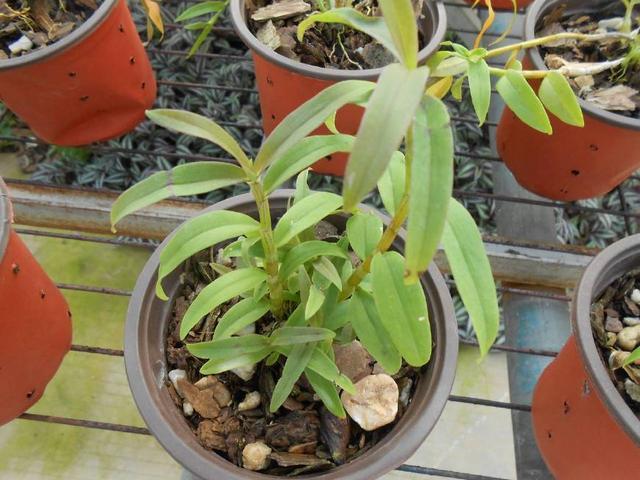
Many wild flowers and grasses, though hardly counted as precious nursery stock, are mostly highly valuable as Chinese herbal medicines. In the past, purslane in the wild was free for the taking and nobody wanted it, until someone tapped into its commercial value, and after it became a Chinese herbal medicine with health benefits, its price rose even more. The plant I am going to tell you about next is also very popular. Just hearing its name is enough to fool some people. "Dendrobium officinale" is the most valuable Chinese herbal medicine among the dendrobiums, and it can benefit the stomach and promote fluid production, nourish yin and clear heat.
Many people used to not know this plant was worth money; they simply went out into the wild, saw that its stems were rather unusual, and took it home to grow in a pot. Later, after keeping it for a long time and becoming familiar with its growth habits, the more they grew it, the more vigorous it became. At this point they gradually discovered its medicinal value. Dendrobium officinale thus became popular. Now quite a few people make a living entirely by propagating and cutting Dendrobium officinale. A single pot now sells for 60 yuan on the market, and plenty of people have propagated over a thousand pots.
How to propagate Dendrobium officinale
If you want to turn one pot of Dendrobium officinale into many pots, you must be clear about its propagation method. Generally, the "division and cutting" method is chosen. This operation is simple and easy to learn, and fairly easy to get the hang of. Specifically, take a mature Dendrobium officinale plant, especially one with tender green color, robustness, many new shoots and a well-developed root system, first cut off the dead branches, broken branches and old branches, then split the clump apart and divide it into small clumps, each clump with 5~7 leafy stems, and then it can be cut. With this cutting propagation method, over a thousand pots can be grown in two or three months.
The finer points of nutrient soil for Dendrobium officinale
Getting the growing medium for Dendrobium officinale right is fundamental to keeping it robust; generally it is suited to growing in an environment with both good water retention and ventilation and breathability. When making your own nutrient soil, in addition to the leaf mold commonly used for growing flowers, it is best to also add peanut shells, moss, wood shavings and so on, to ensure looseness. In addition, add a little barnyard manure as a base fertilizer.
Watering and light for Dendrobium officinale
In the early stage after cutting Dendrobium officinale, do not water too frequently; an overly wet environment will cause root rot and hinder growth. The suggested rule for watering is "do not water until dry." In addition, it is rather sensitive to light, so it is recommended to place it in a spot with scattered light and not expose it to direct sunlight. The suitable growth temperature for this plant is around 15-25°C. Right now it is early autumn, the peak growing season, and care is most critical. When winter comes, remember to keep it warm, otherwise growth will stop once the temperature drops below 10°C.
That is all for the knowledge about Dendrobium officinale; thank you for reading!
Next time you go to the flower market, if you see one, you must grow a plant!