You don't need to hire a landscaping company to turn your yard into a small garden - doing it yourself saves money
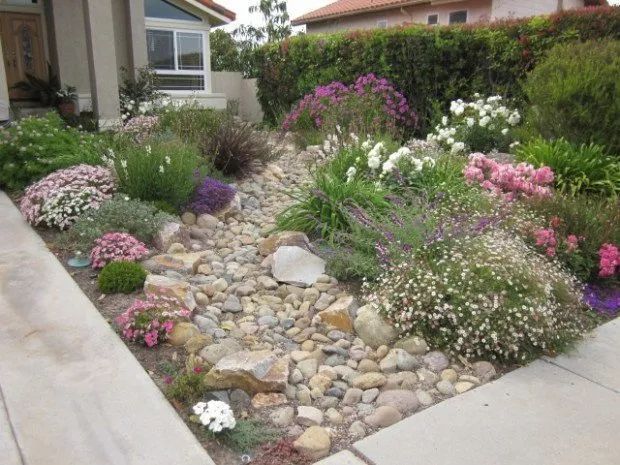
Some friends want to transform their yard into a small garden. If you go directly to a professional landscape gardening company, it will cost a huge amount of money, and they may not necessarily produce the effect you want. Below, I'll introduce some tips for laying out a small garden yourself, so you can have a charming natural small garden in front of your door.
Many people find arranging a yard too troublesome, but really they just haven't found a style that suits them. If it's a place with frequent rain year-round, the yard should have good drainage work done, there should be few bare spots in the small garden, and any spots with excess soil should be compacted with ground cover plants or small pebbles to prevent soil splash.
When planting plants and flowers in the yard, you also need to add some mulch. Like this small garden in the picture above, the plants grown are some small shrubs with a charming fresh fragrance and some succulents, such as the common green aeonium, agave, thyme and rosemary, etc. The mulch on the soil surface is wood chips, which looks very beautiful, can retain water for the plants, and prevents soil splash.
The small courtyard above is very small in area, arranged with some low-growing drought-tolerant plants that don't need frequent care. The plants grown are all some herbaceous plants and drought-tolerant succulents.
The extra spots can be filled directly with grass patches, and of course can also be filled with things like fallen leaves, wood chips or pine needles.
What I like most is the desert landscape, paved all over with pebbles. Some friends think it's fine to just use stone slab paths or poured concrete directly. I think there's no need for that. Unless it's a passageway that needs to leave room for cars, I wouldn't choose to use concrete to lay garden paths.
Besides mulch, you also need to choose suitable plants. Like this south-facing yard in the picture above, the sunlight is especially abundant, so you can plant some plants that particularly love light, such as the common sunflower and passion fruit. In other spots, arrange some succulents that like light. Keep the yard with a certain slope, which helps maintain good drainage and prevents soil from becoming waterlogged.
The yard in the picture above has a very high utilization rate. In the distance, several very tall hollyhocks are arranged; they generally bloom in summer. In other spots, some herb plants are arranged, such as the common lavender, pansy, geranium, verbena, forget-me-not, etc.
Of course, a pebble path is also left in the yard, and a relatively rough and plain wooden bench is specially installed, with two pots of aquatic plants placed beside it.
In front of the yard, some golden-yellow marigolds are planted, along with some hostas that like to grow in shady spots.
The small yard above doesn't get very abundant sunlight, so choose to grow some heuchera that don't need too much light, with about 3~4 hours of sunlight each day, and choose some loose, well-draining sandy soil. Unexpectedly, they can still bloom brilliantly, and it still looks quite nice.
The flowers grown in the yard shouldn't be of just one kind. You can choose some plants that bloom in different seasons: primroses and daffodils that bloom in spring, and for summer blooming you can choose plumbago. Of course, you also need to add some plants that bloom in autumn and winter.