How do you solve yellow leaves, root rot, and pest infestations in succulents? Let me teach you the correct way to handle them.
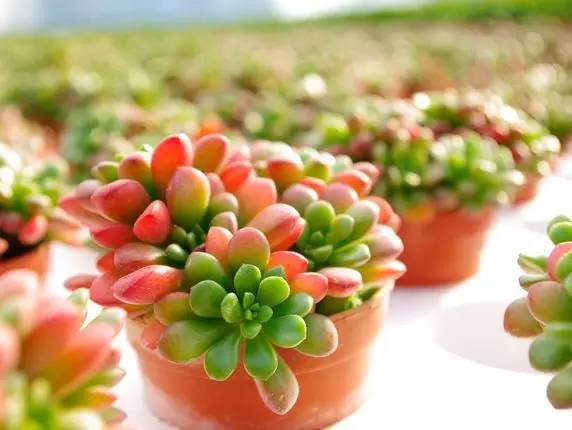
During succulent care, you often run into all kinds of problems. If you are a plant parent who does not know how to deal with yellow leaves or root rot, pay close attention! And how do you deal with all those little bugs?
Succulent care tips: do not water until the potting soil is completely dry, and grow them in bright, indirect light with good airflow!
Caring for succulents:
Many plant parents love succulents, but how many truly understand them? They like airy, cool, dry environments, must not be watered frequently, and cannot be exposed to scorching sun! So growing them in bright, indirect light, and watering only after the potting soil has dried out completely, is the most important thing!
Now let us introduce the common pests and diseases of succulents!
1
When to water succulents
Evening is the best time to water. The temperature is not too high then, and at night it helps the succulents absorb water and also lets the water droplets on the leaves dry naturally.
In summer, because the weather is hot, shorten the watering interval appropriately, and you can also increase the amount of water appropriately; in winter, do the opposite.
2
Black spot disease
When succulents enter their dormant period, black rot is very easy to trigger, and making sure the potting soil is airy and dissipates heat is key. Soaking the roots in carbendazim before planting can also provide a very good preventive effect.
3
Rust disease
In the early stage, small water-soaked spots appear on the stem surface, with yellow or reddish-brown centers, and later they gradually expand outward, as if wearing rust-colored "armor."
It is different from suberization (aging) of the surface layer; it spreads very quickly, and the color is dark in the center and lighter at the edges, with raised rust spots.
4
Black rot
This is a disease caused by bacteria. It invades through wounds and travels along the vascular bundles to endanger the whole plant. Spherical cacti are most susceptible to this disease.
If the root crown of the plant is bitten by woodlice, or if the offsets are cut off from the lower part of the globe and the soil contains fusarium rot, it will rot very quickly, and usually by the time it is discovered it is already too late.
5
Withered leaves
Withered leaves on succulents must be dealt with promptly, otherwise it is very easy for the tragedy of the whole pot of succulents dying to occur.
When removing dead leaves, remember to steady the succulent before cleaning, so as not to damage the roots. After removal, you can use a dedicated plant spray to prevent disease.
6
How do you deal with scale insects, aphids, and whiteflies?
For a small number of scale insects, you can remove them locally, picking them out with a toothpick and tweezers;
Scale insects
Blood-sucking lice
If it is a moderate scale insect infestation, use a cotton swab dipped in alcohol to repeatedly wipe the infested areas. Note that you must never drip alcohol onto the leaves; when the pests have already broken out over a large area, you have to use insecticide.
Aphids
Handpick and remove
Whiteflies mostly parasitize the young, tender parts of the plant and suck sap from the undersides of leaves, causing leaves to turn yellow and drop, and at the same time inducing sooty mold, with large patches of unsightly black powder on the stems and leaves, affecting the succulents' appearance.
To sum up, the pest and disease problems of succulents are mostly caused by a growing environment that lacks airflow, is stuffy and hot, and humid, so ventilation is an essential condition.