Mixing Bordeaux mixture with insecticides and fungicides: keep these precautions in mind
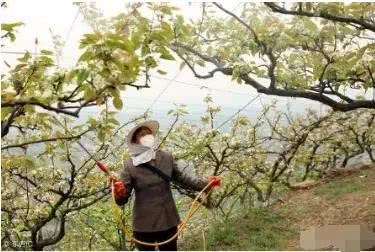
Bordeaux mixture is made by the reaction of lime and copper sulfate. Originally, Bordeaux mixture was not used for sterilization, but was a "poison" that vineyard farmers sprayed on grapes to prevent people passing by from stealing and eating them. Later, botanists discovered it and used it to control grape "downy mildew," with very good results.
Science for Agriculture has mentioned many times that, whether chemical fertilizers or pesticides, three principles must be mastered when mixing them during use. The first principle is that the mixed pesticides or fertilizers must not produce a chemical reaction; the second is that the mixed agents must not reduce the original efficacy; and the third is that use after mixing must not harm crops. Bordeaux mixture is an alkaline fungicide, while general insecticides are acidic, so not many can be mixed with Bordeaux mixture. Let us take a detailed look below.
Mixing Bordeaux mixture with organochlorine insecticides.
Bordeaux mixture first appeared in China in the late 1940s, and organochlorine insecticides began to be applied in the 1970s. Commonly used DDT, BHC, toxaphene and others were applied in large amounts, while organochlorine pesticides such as BHC and DDT had already stopped production in the 1980s. At present in China, organochlorine insecticides still have a DDT pesticide registration, used as a raw material for producing dicofol.
Dicofol has a very good effect on red spiders and rust mites on fruit trees. It can be mixed with Bordeaux mixture to reduce labor. But we all know that after World War II, organochlorine insecticides were used in large quantities worldwide, and the amount of pesticide residues in the environment was very large, making them the biggest culprit behind the "carcinogenic, teratogenic and mutagenic" three-effect effects. So if you can avoid using them, try not to use them.
Mixing Bordeaux mixture with trichlorfon.
Trichlorfon is an organophosphate insecticide, suitable for pests with chewing mouthparts on fruit trees, and has good contact-killing and stomach-poison effects. Mixing trichlorfon with Bordeaux mixture can turn trichlorfon into dichlorvos, increasing toxicity tenfold, but shortening the duration of efficacy.
After thinking it over, Bordeaux mixture can only be mixed with these two agents, right? There are quite a few agents that cannot be mixed with Bordeaux mixture, commonly including carbendazim, thiram, lime sulfur mixture, amobam and so on. In actual production, when applying Bordeaux mixture, it is rarely the case that fertilizer also needs to be applied or other pests and diseases also need to be prevented.
Therefore, special caution is needed when mixing with other agents. I do not know whether any of you have mixed Bordeaux mixture with other pesticides when using it, and which others can be mixed. Discussion is welcome.
This is Science for Agriculture. You are welcome to add a follow and grow knowledge together with us.