For home gardening, choose plants that are easy to keep alive and bloom frequently, saving effort and giving you flowers to enjoy every day
When it comes to home gardening, many flower lovers complain that plants are hard to grow. Some spend months tending a plant only to watch it wilt before it ever blooms. Others bloom for one season, then grow lush foliage and never flower again. Is there really such a thing as a flower that is easy to keep alive and also has a long blooming period? There certainly is. If you feel like a plant killer, the following easy-to-grow, free-blooming plants are worth a try, and they might just surprise you.
Peace lily:Also known as Spathiphyllum, it is a new-generation indoor potted flower that can bloom in spring, summer and autumn. Spathiphyllum is very beautiful when in bloom, and even when not flowering it is an excellent indoor foliage plant. Spathiphyllum can also filter indoor waste gases, with a certain purifying effect on ammonia, acetone, benzene and formaldehyde. It likes a warm, humid air environment and loose, breathable soil, and prefers semi-shade and scattered light, avoiding strong direct sun. If your home does not get great light, a pot of peace lily is a good choice. It fears the cold in winter and will suffer cold damage below 10°C, so certain warmth-keeping measures should be taken.
Madagascar periwinkle:Personally, I think the easiest flowering plant to grow is none other than this one, a truly popular flower. It blooms almost all year round, likes a sunny environment, tolerates drought, and is not picky about soil. It blooms even without fertilizer, but the soil must absolutely not be alkaline. Note that Madagascar periwinkle belongs to the Apocynaceae family; accidentally eating its sap or touching it with an open wound can cause symptoms such as reduced white blood cells and weakness in the limbs. But amazingly, the whole plant can also be used as medicine and anti-cancer components can be extracted from it, with auxiliary therapeutic effects on leukemia and some other rare cancers.
Jasmine:A flower that most flower lovers quite like. When in bloom, "fragrance and beauty fill the branches." With proper care, its blooming period can cover the entire summer and autumn. It likes plenty of water, plenty of fertilizer and full sun, and likes pruning. It prefers well-drained, slightly acidic soil; if planted in the ground, ordinary garden soil can meet its growth needs. During the vigorous growth period, you can water the roots monthly with diluted white vinegar or ferrous sulfate solution to prevent iron-deficiency yellowing of the leaves. After the blooming period, promptly prune the spent flowers and branches to encourage the next bloom.
Milan:Except for the low-temperature period in winter, it can bloom several times in the other seasons, most abundantly in summer and autumn. When in bloom, golden flowers the size of grains of rice cover the branches, giving off a rich fragrance like that of orchids, and it is deeply loved by many flower lovers. Growing Milan is also very simple; like jasmine, it likes water, fertilizer and sun, and prefers warm, humid climate conditions. In some courtyards in the south, Milan is also an excellent landscape tree. Milan likes loose, fertile sandy soil; during the vigorous growth period, regularly watering the roots with fermented alum fertilizer water is even more helpful for more blooms, golden color and fresh fragrance. If your home has good light conditions, try growing a pot of Milan; it really will give you a pleasant surprise.
Christmas cactus:A winter-spring blooming plant, with a blooming period from November to around May of the following year, long-lasting and with brilliant flower colors. It likes warmth, and in summer avoids strong direct light and high temperature with high humidity. It likes a well-ventilated and well-drained growing environment. It is often grafted onto cactus-type plants. In summer, Christmas cactus will enter a slow-growing dormant or semi-dormant state due to unsuitable temperatures; promptly move the plant to a cool, ventilated place, reduce watering, stop fertilizing, and wait until the temperature drops after autumn before resuming normal water, fertilizer and light management, and it will bloom normally in winter.
Kalanchoe:Like Christmas cactus, it blooms in winter and spring, and during the summer dormant period it avoids high temperatures and waterlogging. It has strong vitality, and for small plants grown from leaf cuttings, timely pinching and topping are more helpful for a full, compact plant shape. With proper care, even small plants can bloom in the same year. Kalanchoe belongs to the Crassulaceae family and is very suitable for placement in bright spots such as bedroom windowsills. Through the stomata in its leaves, it can absorb carbon dioxide at night and release oxygen for people to breathe. Moreover, both its flowers and leaves are beautiful, making it deeply loved by flower lovers.
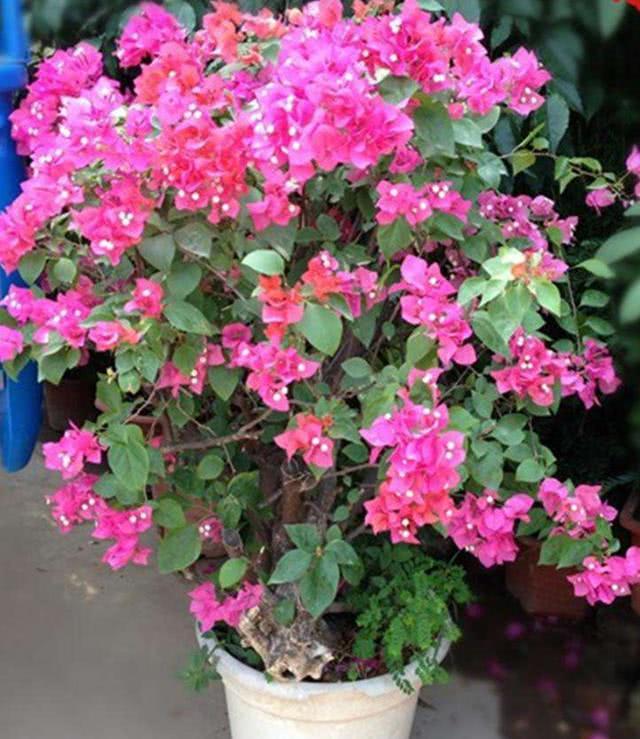
Bougainvillea:Also known as paper flower. In the south of our country, because temperature, humidity and other conditions are suitable, bougainvillea can bloom all year round. When growing bougainvillea in the north, the blooming period requires water control, increased fertilizer, pruning and other management. With proper growing and management, almost no leaves can be seen when it blooms. It likes a warm, humid climate and plenty of light. Because its name contains "three", flower lovers affectionately call it "little three", and it is deeply loved by the gardening public.
Crown of thorns:A very easy-to-grow flowering plant. Except for winter dormancy, it can bloom in the other three seasons. Red-flowered varieties are the majority; when in bloom, a few dots of red among the mass of green look very beautiful. It likes plenty of light and is not picky about soil, as long as it is loose and breathable. When the winter temperature is below 10°C, crown of thorns will enter a dormant or semi-dormant state, showing as the whole plant wilting as if it had died. When the temperature rises in spring, it will still grow branches and leaves, and with plenty of light and fertilizer and water supply, it will soon produce beautiful flowers. Crown of thorns belongs to the Euphorbiaceae family; its stems have sharp thorns, and its sap is mildly toxic. Flower lovers with small children at home should place crown of thorns somewhere children cannot touch, to prevent accidents.