After the Start of Autumn, grow a pot of cooling leaves to clear heat, dispel dryness, and chase away minor ailments
The Start of Autumn has already passed, yet the weather is still fairly hot and dry. Many people say that after the Start of Autumn, one should still keep eating foods that nourish yin and moisten the lungs, to dispel summer heat and clear heat, regulate the spleen and stomach, and nourish yin and tonify deficiency. In fact, there are quite a few cooling, dampness-dispelling plants in everyday life. Growing a pot at home is not only good for your health, but can also be used for eating and keeping well. Let's take a look!
“
Cooling leaves
”
- Mint -
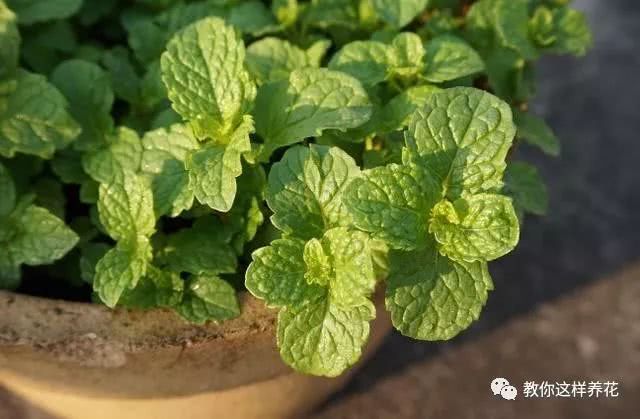
It is said that mint is the best plant for hot weather. Mint tastes cool and refreshing, and can be both eaten and used medicinally. Pungent in taste and cool in nature, mint steeped in water and drunk regularly can disperse wind and dissipate heat, clear the head and eyes, and benefit the throat. It helps with common headache and dizziness, red swollen and painful eyes, and sore throat and hoarse voice.
There are many varieties of mint, such as field mint, spearmint, curly mint and so on. They are all very easy to grow and are not fussy about soil or water.
Besides growing it in soil, mint can also be grown in water. Some plant lovers even put it straight into a fish tank, and it bushes out alarmingly fast.
Mint leaves can be used in cooking, added to dishes as a seasoning vegetable. They can also be used as a garnish in baking; placing a mint leaf on a dessert can make it look as upscale as a Michelin restaurant!
The simplest use of mint is to make a tea. Pick the mint leaves, steep them in boiling water, and you can add a little sugar too. It helps relieve colds and headaches, stimulates the appetite and aids digestion, and can relieve stomach bloating or indigestion.
It can also be made into mint congee. First cook a rice congee; when it is nearly done, add the mint and bring to a few more boils until the aroma comes out, and it is ready.
Propagating mint is also super easy. Just cut a segment and stick it in soil or water, and after a while big white roots sprout. Very simple.
Caring for mint is also fairly simple. Mint has a strong ability to adapt to temperature and is not very strict about soil. Apart from overly sandy, overly clayey, heavily acidic or alkaline soils, and low-lying poorly drained soils, it can grow in ordinary soil, with sandy loam and alluvial soil being best. Its most suitable growing temperature is 25°C-30°C, and it can withstand sub-zero temperatures. Mint is a long-day plant and likes sunlight. Long daylight hours can promote mint flowering and help the accumulation of mint oil and menthol.
- Aloe -
Aloe is bitter and cold in nature and taste, and has the effect of cooling the blood, brightening the eyes and clearing heat. It comes in handy for many minor ailments. For insect bites, smear aloe juice on the bitten area and the inflammation quickly subsides.
If you accidentally get a burn or wound, aloe has a healing-promoting effect and can shorten healing time.
Aloe can also protect oral health. Take a fresh aloe leaf, wash it and peel off the skin, and chew the leaf flesh; the longer you chew, the better the effect. If there is tenderness, you can bite down on the aloe leaf, and 2-3 times can relieve it.
Aloe can fade spots and whiten the skin. For sunburned skin or skin with freckles, apply fresh leaf juice morning and evening for 15-20 minutes, then wash it off; it can make the skin smooth, white and tender.
Aloe can be used and eaten, but for quite a few people it has a certain allergenic effect, so whether eating or using it, you can first apply a little or eat a little, and if there is no discomfort, then eat an appropriate amount. Aloe is cold in nature, so do not eat too much at one time. It can be eaten with red dates, silver ear fungus, or yogurt; the taste is quite good!
There are many varieties of aloe. Among those that can be eaten and used, Aloe vera (Curaçao aloe) is the most common. Its leaves are large and thick and it grows fast, making it relatively suitable for eating.
Aloe is especially drought-tolerant. Its stems and leaves contain a lot of water, so it can still grow well in an environment with very little water. When watering, water thoroughly only after the soil has dried out, that is, water once the potting soil is dry. Basically, watering once every 10 days to half a month is enough.
But note that aloe likes light but cannot be exposed to harsh sun. Especially the summer sun, which will scorch the leaves gray and gradually dry them out.
Aloe is generally propagated mainly by division. Aloe usually produces 5-15 offsets each year. When an offset has grown 5 small leaves, it can be cut off and divided. This is generally done in spring and autumn, when the offsets revive quickly and the survival rate is high.
Peel the offset off from the mother plant at the stem base or root, let the wound dry slightly, and then transplant it into a new pot.
- Honeysuckle -
Honeysuckle is sweet and cold in nature, aromatic in qi. Sweet and cold it clears heat without harming the stomach, and its aromatic penetrating nature can also dispel pathogenic factors, making it a very good medicine. It clears blood toxins, boosts immunity, and is effective against various heat-related diseases such as fever, rashes, macules, heat-toxin sores and abscesses, and sore swollen throat, all with notable results.
Honeysuckle congee: just add a small amount of honeysuckle buds when cooking congee, and it can boost the body's immunity.
Honeysuckle tea: just steep dried honeysuckle in water and drink it. It has the effects of relieving summer heat, sobering you up, clearing the head, quenching thirst, and removing toxic substances from the body.
Besides being used as Chinese medicine, honeysuckle can actually also be used for bonsai. Old honeysuckle trunks are quaint and elegant, with graceful posture and a well-developed root system, making them very suitable for bonsai.
Honeysuckle is not demanding about soil, and care is also very simple. It is suitable for planting on a balcony or in a yard. During planting, if you can set up a trellis for it to climb along, it will grow even better.
Propagating honeysuckle is also fairly simple, mainly by cuttings. It can be propagated by cuttings at any time except winter. Choose strong current-year branches; keep 2-3 nodes per cutting, keeping only the two leaves on the top node and cutting off the other leaves. Insert the cut branch diagonally into the soil to a depth of 1/2 of the branch, and press it down slightly firm. After inserting, water thoroughly, then keep the soil moist and place it in a ventilated, bright spot; it can take root in about half a month.
Honeysuckle can generally be harvested in May and June each year. On a sunny morning just after the dew has dried, pick the flower buds (unopened ones are better), and dry them in the sun or in a ventilated shady spot, preferably drying them within 1-2 days. When sun-drying the flowers, do not turn them, and avoid exposing them to blazing sun.
- Mugwort -
Mugwort is hailed as the diamond among herbs. Although it is a wild grass, it is used very widely among the people. There is a saying, "With three-year mugwort at home, no need to call the doctor." In ancient times, mugwort leaves were used to prevent plagues, and the leaves were believed to regulate qi and blood, expel cold and dampness, warm the meridians, stop bleeding, and calm the fetus. Modern research has also found that mugwort leaves have antibacterial and antiviral effects, and have a certain preventive and therapeutic effect on respiratory diseases!
Mugwort can also be made into mugwort leaf tea, soup or congee. Around Qingming, in the south there is also the custom of mixing the juice of young mugwort leaves into glutinous rice flour, then wrapping in red bean paste or lotus seed paste to make qingtuan, which can strengthen the body's resistance to disease.
Mugwort can also repel mosquitoes. The volatile essential oil contained in mugwort can effectively repel mosquitoes. Lighting mugwort every evening, the smoke it gives off can quickly drive mosquitoes away, and mopping the floor with mugwort water can also help repel mosquitoes.
Mugwort is very easy to grow; it is really just a kind of wild grass, and it will grow if you plant a bit of it casually. Plant lovers with space on their balcony might as well grow a little. It can be used normally and can also help repel mosquitoes.
Growing mugwort on a balcony is very simple. Just find some mugwort roots and bury them with soil in a pot, and within a few weeks they will grow into a large pot. It is best not to grow it from seed, as that takes a bit long.
Mugwort plants are relatively tall, so choose a larger or deeper pot. Mugwort is highly adaptable, and ordinary garden soil will do. To help it grow better, you can appropriately add some leaf mold or peat to make the potting soil a bit looser.
Mugwort grows fast, especially during the growing season. You can water it by the "dry then wet" principle, but do not let water accumulate. You can fertilize once a month, and after each harvest you should also top-dress. Normally just keep it in a spot with plenty of light.
These 4 plants are not only easy to grow
but also have many amazing effects
Grow a pot in hot weather, and they are the most cooling and refreshing
If you like them too, then grow a pot
Show this to plant lovers who need it!