Grafting Crab Claw Cactus onto a Cactus: One Pot Bursts Out 200 Flower Buds
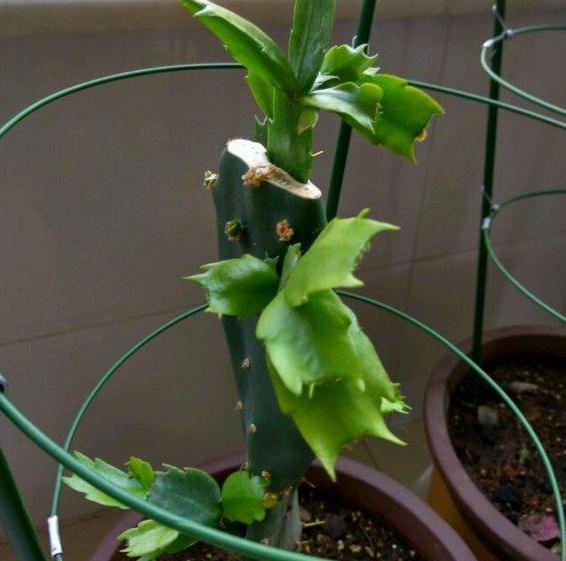
It is now August and September, which is exactly the time to grow crab claw cactus (Schlumbergera). This flower blooms in October each year and keeps blooming until February of the following year, making it a very valuable potted plant among winter-flowering plants. The crab claw cactus is actually not very easy to grow; it is rather fussy to care for, and the slightest mistake can cause yellowing leaves, leaf drop and flower drop. Of course, to grow crab claw cactus well and get it to bloom abundantly, one key point cannot be ignored, and that is "grafting". When crab claw cactus grows many flower buds, it is mostly due to good grafting. And for the rootstock used in grafting, most experienced people choose to use "cactus".
Grafting crab claw cactus onto a cactus is actually very simple. First, cut both sides of one basal segment of the crab claw cactus at a slant to form a duck-bill shape, then make a vertical cut at the top of the cactus, with the width and depth of the cut slightly larger than the cut surface of the scion. Quickly insert the cut crab claw cactus into the cut in the rootstock (cactus), fix it in place with a wooden clothespin, and it will usually take root and survive in one or two weeks. Just after grafting, remember to place the crab claw cactus in a cool, ventilated place, and do not put it in strong sunlight.
When grafting crab claw cactus, pay attention to a few issues. The first is timing. Grafting is recommended in September-October each year. During this period the climate is suitable and the grafting survival rate is high. Second, in the early stage before grafting, both the crab claw cactus and the cactus should stop being watered and fertilized first. This can be stopped two or three days before grafting. After grafting is completed, do not fertilize immediately. It is best to wait one month before applying some diluted cake fertilizer water.
Third, after grafting crab claw cactus, if you are grafting quite a few at the same time, it is best to fix them with supports as shown in the picture above. You can make some wire supports yourself. I believe fellow flower growers are all quite good with their hands, right? After grafting is completed, normal care usually starts one month later. When growing it, follow the basic growth habits of crab claw cactus. For example, it likes a warm, humid, semi-shaded environment and a loose substrate rich in organic matter with good drainage and aeration. Therefore, crab claw cactus is not suitable for growing on a balcony; if it is on a balcony, remember to shade it for 2-3 hours.
In the daily care of crab claw cactus, besides paying attention to light and watering, you also need to fertilize regularly. Especially in the coming months, it is best to apply decomposed cake fertilizer or soybean fertilizer once a month. You can boil soybeans, ferment them, mash them and bury them in the potting soil of the crab claw cactus. This ensures that many flower buds are produced. As crab claw cactus is about to enter its peak season, prices at flower markets will also climb all the way, so fellow flower growers who have not grown one yet are advised to grow a pot as soon as possible.
If you do not have a cactus, it is also recommended to grow one or two pots, so that when grown well they can be used for grafting crab claw cactus later. That is all for sharing knowledge about crab claw cactus. Thank you for reading! If you have any better experience in the process of caring for crab claw cactus, you are welcome to share it below so that more flower growers can see it.
Remember to like and share~