How to Choose and Arrange Shade Plants for the Courtyard
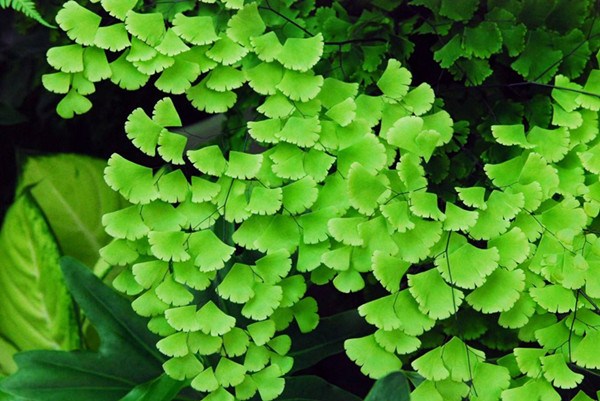
In the courtyard, areas shaded by tall courtyard trees are relatively dark, damp and shaded, and these spots hardly get any sunlight, which is often the last place plants want to be, so when arranging plants you should choose some shade plants that like to grow in shady spots.
Shade plants are plants with strong shade tolerance that can grow in shady places. Young shade trees have the characteristics of shade plants, and the better their growing conditions become as they mature, the more obviously they behave as shade plants. The leaves of shade plants have low respiration, and under weak light (illuminance below 1000 lux) their net assimilation is greater than that of the leaves of sun plants. The leaves are arranged in one plane and also have a mosaic pattern, so under weak light their production of matter is great. However, because the leaf cuticle is relatively thin, their resistance to dryness is weak, so typical shade plants (especially skiophytes) cannot grow under direct light (such as a species of Viola). But many plants that grow in shade can grow under oblique light. This kind of plant, with properties intermediate between those of sun plants, is called a skio-hel-iophyte.
Common shade plants in the courtyard include: Brazilian iron, pothos, Swiss cheese plant, green king, lucky bamboo, money tree, ZZ plant, and Dracaena reflexa; shade-tolerant orchids, banana types, taro types, and palm types; ferns such as tree fern, maidenhair fern, Boston fern, and staghorn fern; vines include orange trumpet vine, night-blooming jasmine, wisteria, bougainvillea, and pothos.
Selection of Shade Plants
In different shady environments in the courtyard, corresponding shade plants can be chosen for arrangement, such as ferns, Rohdea japonica, and Indocalamus tessellatus under deep shade; in semi-shade you can choose shade-tolerant, flowering types, such as hydrangea, lily, campanula, Bletilla striata, daylily, Lycoris radiata, and hosta.
Arrangement of Shade Plants
Plant arrangement should be artistic, fully bringing out the vivid colors and sense of layering of the courtyard plants; planting some shade plants that change through the four seasons, and under tall deciduous trees you can interplant shrubs such as camellia and azalea, and below the shrubs you can arrange perennial herbaceous plants. Autumn is the best time to plant spring-flowering bulbs, either planted throughout or in clumps of three to five planted naturally. Spring-flowering bulbs will make use of the deciduous period of the trees, growing quickly in the sunlight and fully displaying their verdant leaf color, and the next spring their flowers will be brilliantly colored, with very high ornamental value. Once the spring flowers have finished, you can plant summer-growing plants; there are many kinds in summer, such as tobacco types, clematis, and foxglove, all very beautiful. When summer turns to autumn, color-leaf ornamental plants and fruit ornamental plants also enter their ornamental period, and many of them can even last into winter, and after frost they are equally pleasing to the eye, such as purple beautyberry, nandina, and firethorn.