Want your roses to bloom into a sea of flowers? Master these care tips
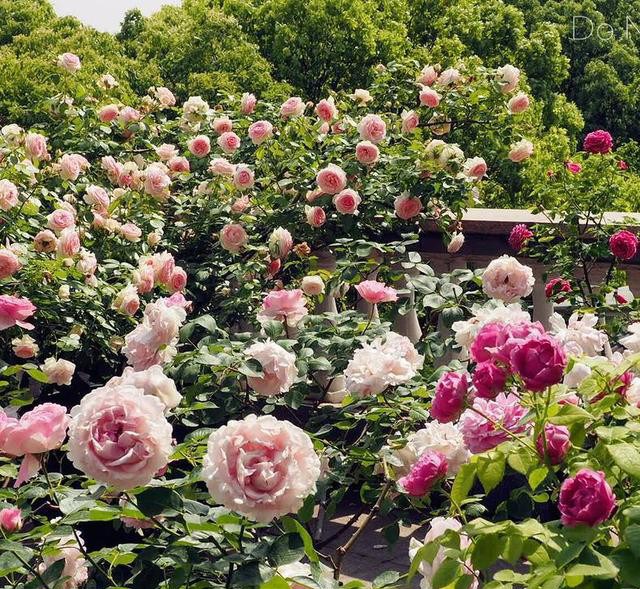
Many gardening enthusiasts are particularly fond of roses. At the mention of the word "rose," many gardeners probably picture in their minds the sight of roses blooming into a sea of flowers. Do you always feel that getting roses to bloom into a sea of flowers requires very difficult techniques? Actually, if you want roses to bloom into a sea of flowers, some low-key techniques are all you need.
1. Low-key soil mixing
People need oxygen and water to survive, and roses are the same. These elements for roses are mainly provided by the soil, which shows how important soil is for roses. Generally speaking, the requirements for potting soil for roses are higher than those for soil in the ground.
Generally, you need to use soil with water-retaining and fertilizer-retaining functions, because soil in the ground itself contains a certain amount of oxygen and microorganisms that can metabolize harmful substances at the roots, while potted soil is different. So it is best to choose sterilized, nutrient-rich "low-key" soil for planting.
2. Low-key watering There is a saying: "Dryness grows roots, moisture grows leaves." This means roses need to live in an environment of alternating dry and wet cycles. If the water in the pot does not dry out for a long time and the roses stay in a moist state, root rot can easily occur. If there is constant drought and water shortage, the roses can easily turn yellow and wilt.
Gardeners have all heard "don't water until dry, and water thoroughly when you do," but be sure to note that this does not refer only to the surface being dry. The best method is to put your finger deep into the soil to feel how dry the soil is from the middle down to the bottom. If it is still moist when your index finger goes in, then there is no need to water.
4. Low-key fertilizing
Now is exactly the growing season for roses, so you need to fertilize them to replenish the nutrients they consume. Generally, you can fertilize once every ten days. You can use some vegetable leaf juice, mixing the juice and water at a ratio of 3:7. Gardeners who do not want the hassle can use a liquid fertilizer specially made for roses, dilute it 500 times, and water the roots with it.
Huazengduo rose special-purpose organic fertilizer for indoor potted plants, rose nutrient solution, flowering-promoting fertilizer ¥33 Tmall purchase
4. Low-key pruning
No matter what kind of flower it is, pruning is very important, just as we need to trim our hair and check our bodies. The same is true for roses. It is possible that you do everything perfectly with light, watering and fertilizing, but if pruning alone is not done properly, that still will not work.
Many people think the best time to prune is after flowering, but that is not actually the case. After flowering is only for removing residual branches, while the best time to prune is during the dormant period of the roses. The so-called dormant period is the period when the roses stop growing.
When pruning, the scissors must be sharp and must not be rusty, then cut diagonally upward 2~3 cm away from the bud. If it is too close, the rose will not grow tall; if it is too far, the wound can easily become infected. Most importantly, the scissors must be disinfected before pruning, otherwise pathogen infection can easily occur at the cut.
Only this flower never grows tiresome, occupying spring through all four seasons of the year. Roses are like this: with a few low-key techniques, they can bloom with high-profile beauty. Give it a try too!
Image from the internet