For sweet potatoes to achieve high yield per mu and a big harvest, five points of field management must be done well
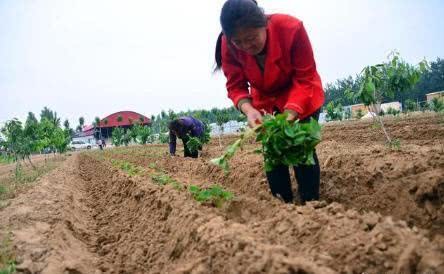
Sweet potatoes are rich in nutritional value, can be prepared in many different ways, and suit both young and old. Moreover, with the deep processing of sweet potatoes, their economic value has begun to grow year by year, and the planting area of sweet potatoes has increased year by year. To make sweet potatoes high-yielding, these five essential measures must be achieved.
First, select seeds rationally and transplant in good time.
Taking land resources, product use, pests and diseases and other factors into comprehensive consideration, choose suitable high-yield and high-quality varieties, and raise seedlings in good time. According to statistics, for every day of delay in planting, the yield decreases by about 3%. Therefore, planting early, extending the sweet potato's growth period, setting fruit early and swelling early are the foundation for ensuring a high yield of sweet potatoes.
Second, high ridges and dense planting.
High ridges are also an important measure for promoting high yields of sweet potatoes. Build the potato ridges in clear weather. The standard for a good potato ridge is short, loose and permeable, which helps drainage, increases soil pore space, and improves water permeability and water-holding capacity. The ridge spacing is 70-80 cm and the ridge height is 25-30 cm. Planting about 4,000 plants per mu is most suitable.
Third, tipping and lifting the vines.
For the first tipping, when the main vine grows to about 40 cm, remove the growing point of the main vine; for the second tipping, when the branches grow to 30 cm, remove the growing points of the branches. Tipping can increase branching and promote photosynthesis, while also shortening the distance for nutrients to travel between roots, stems and leaves, which can quickly promote the swelling of the tubers. For vine lifting, when the vines and leaves grow vigorously, lift the vines by hand and then place them back in their original position without destroying the original layered structure of the leaves. This can inhibit the stem nodes from producing adventitious roots and prevent excessive growth of vines and leaves. Generally, lift the vines once every 10-15 days; lifting the vines twice can significantly increase yield.
Fourth, apply foliar fertilizer skillfully and topdress with swelling fertilizer.
As the saying goes, "one sweet potato with a handful of ash, sweet potatoes form a big pile." This shows that sweet potatoes like potassium fertilizer. According to scientific analysis, the ratio of nitrogen, phosphorus and potassium for sweet potato tubers is 2:1:3, which shows that sweet potatoes have a very large demand for potassium fertilizer. Generally, nitrogen fertilizer remains in the soil, so the key to high yield of sweet potatoes is rational application of potassium fertilizer. You can spray 0.3% monopotassium phosphate, or 0.3% superphosphate and urea water solution, on the leaves, spraying once every 7-10 days for two consecutive sprayings. You can also directly scatter 50 kg of plant ash per mu on the leaves, or use an extract made by soaking 15 kg of plant ash in 50 kg of water for 24 hours and spray it on the leaves on cloudy days or in the evening, spraying once every 10 days.
When the sweet potatoes swell until they crack through the ground, topdress with swelling fertilizer at this time to promote the roots' absorption of nutrients. For each mu, use 0.5 kg of monopotassium phosphate added to 400 kg of water, or 2.5 kg of urea and 10 kg of superphosphate added to 500 kg of water, and prepare a fertilizer solution to pour into the cracks. Half a month later, for each mu, again use an extract of 100 kg of plant ash added to 500 kg of water (soaked for 4 hours) to pour into the cracks and seal them tightly.
Fifth, prevent pests and diseases.
In the later stage of sweet potato growth, leaf roller pests are prone to occur. For the pesticide, you can choose a targeted agent combined with 500-fold New High-Fat Film solution for spray control. Spraying at 4-5 p.m. gives the best effect.
This is Science Promoting Agriculture. You are welcome to add a follow and learn together with us.