This flower is prettier than camellia, blooms for more than 200 days, and many people use it to dye their nails
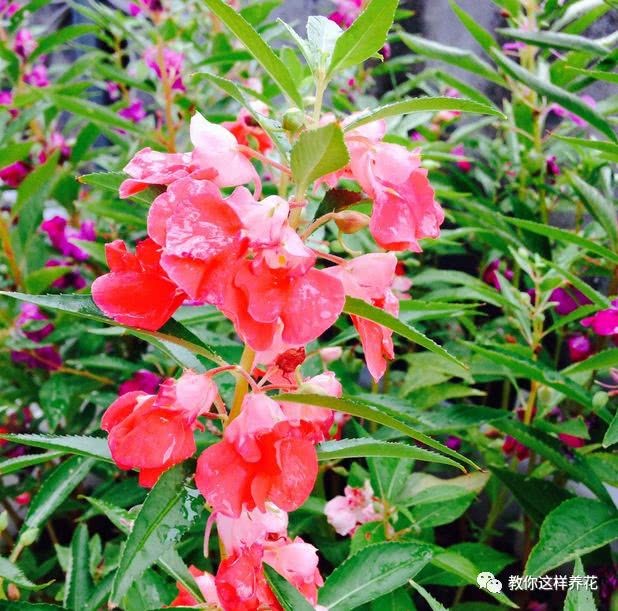
Garden balsam (Impatiens balsamina), also called henna, touch-me-not, many rural gardening enthusiasts played with it as kids pretending to put on makeup, and quite a few people of the older generation used it to dye their nails. Besides dyeing nails, garden balsam comes in many flower colors, pink, bright red, purple, pinkish purple, etc. It is also excellent as a potted ornamental, truly like a crane's crest, like a colorful phoenix, graceful in form, charming and delightful.
“
Garden Balsam
”
Garden Balsam Care
-Soil-
Garden balsam likes a sunny, moist environment, and the soil is best if it is loose, fertile, well-draining and well-aerated.
-Watering-
Garden balsam leaves have many stomata and transpire vigorously, so regular care requires timely watering, generally following the principle of watering when dry and holding back when wet. But do not let water accumulate; during the rainy season pay attention to drainage and flood prevention, otherwise the roots rot easily. During the flowering period it must not lack water, otherwise the buds tend to drop and wither.
-Fertilizing-
During the growing season, apply a dilute fertilizer solution 1-2 times a month; after buds appear, spray 1-2 times with 0.1% monopotassium phosphate, which can make the flowers larger, more vividly colored and longer-lasting.
-Light-
Garden balsam likes light and also tolerates shade, and needs at least 4 hours of scattered sunlight each day. In summer it should be shaded to prevent excessively high temperatures and scorching sun.
-Temperature-
The suitable growing temperature for garden balsam is 16-26°C, and the ambient temperature during the flowering period should be kept above 10°C. In winter it should be moved into a greenhouse to prevent cold damage.
-Propagation-
Generally sown in spring, with April being the most suitable month for sowing. Scatter the seeds evenly into a flower pot or furrow, cover with a thin layer of soil, then water thoroughly; at around 25°C they germinate in about 5 days.
Varieties of Garden Balsam
Actually quite a few plants on the market are called garden balsam; the henna that grows wild in the fields is generally called Chinese garden balsam, with varieties such as top-headed balsam, dwarf balsam and dragon-claw balsam.
Also relatively common is African balsam (Impatiens walleriana), also called busy Lizzie or Sudan balsam.
New Guinea balsam (Impatiens hawkeri), also called colorful balsam.
Camellia balsam, whose flowers resemble camellias somewhat, with vivid colors and large blooms, extremely beautiful!
Dyeing Nails with Garden Balsam
I believe many gardening enthusiasts played with garden balsam as children; applied to the nails it is said to be not only pretty but also able to treat fungal nail infection. Generally use flowers that have been open in the sun for several days; garden balsam from rainy days gives poor color. Pick the garden balsam flowers, collect them, crush them, and apply to the nails. It is best to protect the rest of the nail area with plastic wrap, otherwise the skin will also turn pale yellow.
If you feel the color is too light, you can apply it several times repeatedly, and the color will become fairly deep.
A more advanced method is to add alum to the petals, which gives a sparkling look and a more vivid red color; if you do not have alum, salt can be used instead.
Were the beauties of several thousand years ago dressing themselves up just like this? At that time it probably counted as a big-brand makeup technique, right? Hahaha
Garden balsam in the wild is truly beautiful
Not only pretty but also fun
If you like it, plant a little in front of and behind your house too!
After reading, show it to other gardening enthusiasts!