How to grow jasmine so it grows strong and produces many fragrant flowers
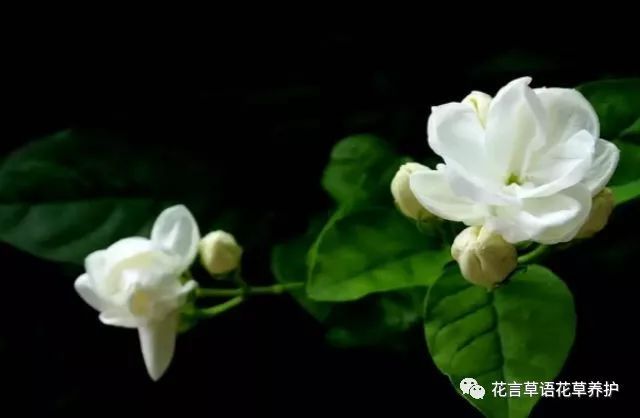
Jasmine is one of the typical strongly sun-loving flowers; it grows vigorously during the hot summer season and needs plenty of sunlight. There is a saying that "jasmine cannot be killed by sun."
If the light is insufficient, the leaves will become larger and thinner, the leaf color will turn pale green, and there will be few flowers with poor fragrance.
Choosing a pot
Choose a medium-sized pot with a mouth diameter of 15 to 25 cm; generally plant two plants per pot, spaced 5 cm apart.
Soil
Generally you can use four parts garden soil, four parts compost, and two parts river sand or rice husk ash, plus an appropriate amount of fully decomposed dried cake meal, chicken and duck manure, etc., and sieve out the powder and coarse particles, using the coarse particles as a bottom layer and the powder to cover the surface.
Watering
Throughout spring, jasmine is sprouting branches and growing leaves, and its water consumption is not large, so you can water once every 2-3 days to keep the soil surface moist. In autumn, when the air humidity drops, you can water once every 1-2 days, just enough to keep the soil surface moist. In winter, spray the leaf surface with water about once every half a month, just enough to make the leaf surface moist.
Light
"Jasmine cannot be killed by sun, and Chloranthus cannot be killed by shade." Therefore, jasmine is most suitable for pot cultivation on a building balcony with strong light. Jasmine is sensitive to cold; when the temperature drops to 6-7 degrees, it should be moved indoors, and at the same time attention should be paid to opening windows for ventilation, so as to avoid the leaves turning yellow and falling off.
Pruning
Jasmine must be pruned so that the branches and leaves become strong and there are more flowers. Jasmine blooms in three periods each year, and after the third period of flowers fades it must be pruned to prepare for the next year's flowering season.
Fertilizing
During the vigorous growing season, jasmine needs plenty of water and fertilizer, which can promote vigorous growth, more flowers, and fragrant flowers. The saying "clear orchids, cloudy jasmine" shows how much jasmine likes fertilizer.
Notes
1. After each flowering, promptly remove the spent flowers and properly trim away overly long branches. It should also be fertilized once;
2. When buying jasmine, try to buy young plants, because jasmine blooms on new branches. Be cautious about buying old plants that have already formed woody stumps; old stumps often bloom less and are often plants culled by flower growers after their peak flowering years;
3. After moving outdoors in spring, promptly change the soil, remove the old leaves left from the previous year, trim away overly long branches (leaving about 10 cm is enough), and cut off diseased and dead branches and overly dense or thin branches, so as to encourage the sprouting of healthy new branches.
4. Pests are all caused by weak plants and poor ventilation; strong plants rarely have problems.
5. By early September, fertilization should be stopped to help the branches lignify, which is beneficial for overwintering. As long as you fully grasp the key points of jasmine cultivation and practice carefully, you will certainly be able to keep jasmine robust and continually fragrant.