Succulents not growing big? It's most likely because your care methods are incorrect
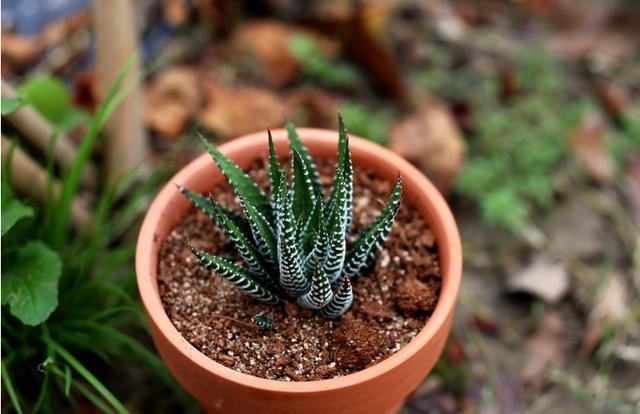
"Succulents are so cute, I love these plants that don't grow big the most"; "Succulents just don't grow big"; "Huh? Yours is the same as mine, so why is yours growing so big?". In daily life we hear many such questions. People who understand find such questions rather ridiculous, because succulents can grow big, they just don't grow as big as other plants, but they do have the potential to grow. The reason your succulents aren't growing big is mainly that your care methods are wrong. Master the methods I'm sharing with you today, and your succulents can grow big, or at least grow stronger and bigger than they are now.
The main reason our succulents aren't growing big is the issue of repotting, so how should we repot them?
1. Choosing the time. When we repot plants, we need to consider the timing; you can't just do it whenever you feel like it, as that will definitely harm the plants. We generally choose spring or autumn for repotting, because these two seasons are the plants' growing periods. Repotting at this time lets the plants recover very quickly and adapt more easily to their new living environment. In spring and autumn, the humidity in the air is relatively high, which also promotes plant growth.
We should repot plants twice a year. One time fewer is fine, but more is not good. Once in spring and once in autumn, this way the plants can absorb sufficient nutrients in their new environment, which is the basic condition for succulents to grow big.
2. The specific method. To repot our succulents, we definitely need to first take the succulent out of its original pot. There's a right way to do this; you can't just pull the plant out with your hands, as that will damage the succulent's roots. We generally turn the succulent's pot upside down and gently tap the bottom of the pot with a small hammer. This is to break up the soil in the pot, making it easier to remove the plant from the soil. After doing this, we can use tweezers to take the succulent out. Next, we need to clear away the soil from the succulent's roots. If we find withered yellow leaves and roots, we should cut them off with scissors, because those are parts that are already dead and can't come back to life; keeping them would only waste nutrients. We only need to keep the main root and stem.
After we've trimmed the plant, it will definitely have wounds on it. At this point, it can't be placed directly into the soil; we must wait for the wounds to heal before proceeding. So we generally apply some carbendazim to the wounds, which promotes the plant's recovery. Then we place the carbendazim-treated succulent in a ventilated spot where it can receive indirect sunlight to dry. Before long, the plant will heal, and we can move on to the next step. Before repotting our succulents, we've surely already chosen the new pot and soil.
But the editor reminds everyone here that our new pot and soil must be disinfected and sterilized before use, otherwise the transplanted succulent will very likely not survive. We'd best use physical methods for sterilization; chemical methods aren't necessary. Every medicine has its toxicity, and chemical products will definitely leave residues that harm the plants. We can use the method of sun exposure for disinfection and sterilization; this is the simplest, most direct, and most reliable method. After doing all this, we can plant the succulents following the usual steps.