Mimosa leaves closing is not just because it is shy - these reasons also deserve attention
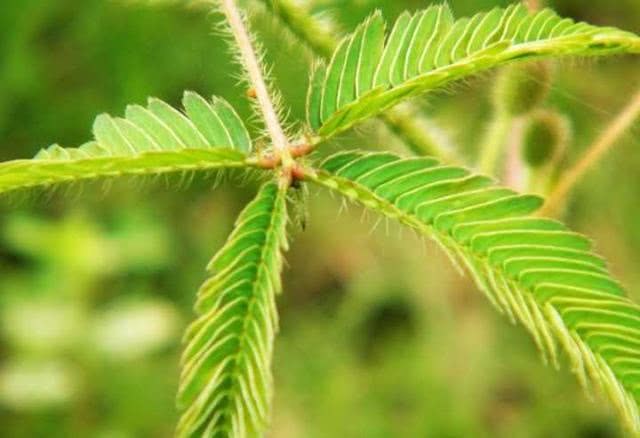
Nowadays many people know about the mimosa plant, and many of us came into contact with mimosa as children. As for how we came into contact with it, I suppose maybe after school we had nothing to do and played in the yard? And then we saw the mimosa - children are quite curious, so perhaps upon seeing a plant they would want to reach out and touch it. Once a child touches it, they then know what the texture and feel of the mimosa is like. As for the mimosa, why has it not been seen around in recent years? Actually, it is not because there is anything bad about the mimosa, but rather because the mimosa looks quite similar to wild grass - in other words, it is too ordinary.
If you keep it at home as a potted plant, it does not serve much of an ornamental purpose, and you might even be asked by unknowing friends whether you dug up wild grass from outside and brought it home to plant? If you have touched mimosa leaves before, you will find that when you gently touch its leaves, it will close them up. When we were young, we knew nothing about the physiological mechanisms of plants, so perhaps some thought the mimosa was just being shy. Moreover, the name "mimosa" is quite interesting - through the name, we naturally associate it with being shy, just like people can be shy too.
1. So in reality, is the mimosa actually shy? Once we grow up, the truth becomes clear - how could plants be shy? Plants have no emotions. Even if they did have emotions, they would not react in a particularly obvious way. Abroad, experiments have also been conducted on plant emotional responses, using particularly advanced emotion-sensing instruments connected to plant leaves and so on, expressing plant emotions through advanced science and technology.
Facts have proven that plants do indeed have emotions, but these emotional expressions are certainly not as obvious as those of humans. Therefore, there would not be such an obvious leaf-closing state as seen in the mimosa. So the mimosa closing its leaves is actually just a natural physiological response. As for what kind of response it is? Later, after looking up information, it was found that in nature, the mimosa closes its leaves under the influence of photosynthesis.
2. Although the mimosa is not particularly popular now, there are still some people who especially want to grow mimosa. So how should mimosa be grown? Because mimosa leaves are particularly thin and slender, mimosa is generally a relatively fragile plant. So you must not let it endure the scorching sun in the hot summer, as this may damage the mimosa leaves. In addition, the mimosa root system is also relatively detailed, so when watering normally, you must not water too excessively.
3. What does a mimosa look like? If you go to a flower and bird market to pick out a mimosa, you must remember that the mimosa has many leaves, basically all oval-shaped. When selecting, it is also best to choose the kind that is relatively lush and thriving - that is, a mimosa plant that has many branches. Although a mimosa that looks relatively thin is not to say completely impossible to grow well, it is just that a mimosa with many branches is easier to keep alive.
In addition, do not constantly and frequently touch mimosa leaves just because you find it fun. Although you may find it interesting and it can pass the time, for the mimosa, frequently closing and opening its leaves is also harmful.