Edible flowers go unnoticed at the vegetable market, with nutrition a hundred times that of soybeans; buy twenty blooms and take them home
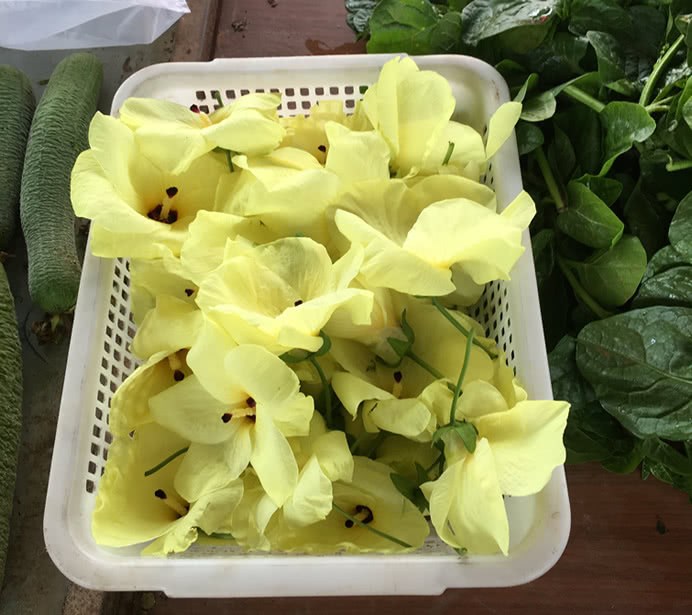
While shopping for vegetables at the market, I came across a stall selling flowers, but these flowers were not for us to admire - they were for eating. The owner told me these flowers cost 2 yuan each and are called tengteng flowers, and they are quite a treasure; take them home to make soup, and the taste is superb and they even have medicinal effects.
Never mind that these few plain little flowers are really not much to look at, and when you pick one up and sniff it, there is not much scent either. I quickly took a photo to verify, and it turns out its scientific name is caifurong, also called wild hibiscus in some places, and it is indeed an edible flower.
In my memory, aside from having eaten pumpkin flowers, it seems I had never eaten any other flowers. But the flowers of caifurong are not only non-toxic and harmless, they are also delicious to eat and rich in nutrition.
Caifurong flowers can be used to make fillings, soups, or steeped in water as a tea. When the fresh flowers touch the tongue, there is a particularly fresh and crisp fragrance, with a very unique mouthfeel. According to research, this flower also has a remarkable effect: eating it can make a person feel relaxed and joyful, and all fatigue and drowsiness quickly vanish, with a clear function of relieving tension and helping people relax.
All of this has a scientific basis. Its secret lies in the fact that fresh caifurong flowers contain a variety of bioactive substances, with flavonoid content as high as 6%, nearly 100 times higher than that of ginkgo, soybeans and the like.
In fact, if you have seen okra, you can see that caifurong looks a lot like it, and caifurong is indeed an annual herbaceous plant belonging to the okra genus. It blooms from June to October each year, in pale yellow, and the larger blooms can be as big as a bowl.
Although these caifurong at the vegetable market are not very large, at 2 yuan each, compared with their nutritional value, they are an absolute bargain. After learning about their effects, I quickly picked 20 of them, packed them up and headed home to make soup!