What plants are good to grow for Chinese-style courtyard landscaping? These 10 are essential
Chinese-style courtyard design inherits the literati idea of "retreating into seclusion, emerging into the world," emphasizing a dwelling realm of "harmony between heaven and humanity" that blends with nature. In ancient China, men of letters and refined scholars often used plants to express a person's nobility, friendship, and political integrity, thereby displaying elegance and refinement.
In the choice of plants, Chinese-style courtyards tend to favor plants endowed with symbolic meaning, such as: pine symbolizing longevity, peony symbolizing wealth and honor, and plum, orchid, bamboo and chrysanthemum symbolizing the Four Gentlemen, to highlight personal character.
The 10 essential plants for Chinese-style courtyard landscaping are as follows:
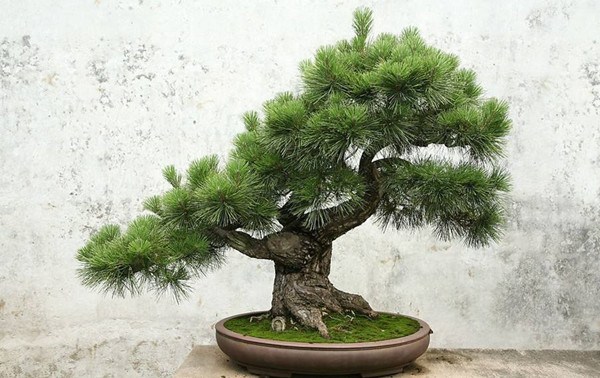
1. Pine
Pine trees are the most common in Chinese-style courtyards. Pine is an evergreen tree with a relatively long lifespan, so it is often praised as a symbol of longevity.
2. Bamboo
Bamboo has both fine appearance and character and is used to express aspirations. In China's classical garden design, particular emphasis is placed on embodying meaning in objects and comparing objects to virtue. People always like to regard natural scenery as a symbol of moral beauty, spiritual beauty and beauty of character, and bamboo, as one of the "Three Friends of Winter," with its slender appearance and tough character, has become one of the most frequently appearing plants in Chinese-style courtyards. When designing a Chinese-style courtyard, if rockeries, landscape stones and other courtyard features are appropriately planted with bamboo, it can add layers and color to the mountain form, presenting a natural momentum and the beauty of mountain forests. Bamboo plants can also be combined with other plant materials, bringing infinite poetic charm into the garden.
3. Plum
Plum blossoms are best planted in courtyards and on lawns, and can be planted alone, in clusters, or in groups. They can also be grown in pots for viewing or pruned into various bonsai forms, or used as cut flowers in vases for indoor decoration. They are an indispensable element in Chinese-style courtyards. The ancients believed that "for plum, form and posture come first," that is, shape and pose. Forms include leaning down, facing up, sideways, lying, leaning, and gazing; postures are divided into upright, curved, and slanting. The bark of the plum tree is pitch-black and full of rough patterns, and its branches are gnarled, vigorous, rugged, and graceful, possessing a masculine beauty that has weathered many hardships and remains unyielding. The plum branches are lean, clear, and harmonious in color, sometimes curved like a roaming dragon, sometimes sweeping downward, varied yet regular, showing a strong sense of force and linear rhythm.
4. Orchid
Orchid is a perennial herbaceous plant with ovate leaves, serrated edges, growing in clumps, with slender leaves, blooming in spring, and a fresh fragrance. It is a famous potted ornamental plant in China. Orchids prefer shade and avoid direct sunlight, prefer moisture and avoid dryness, and prefer fertile, humus-rich, well-drained, slightly acidic sandy loam soil, and an environment with good air circulation. The earliest meaning of the orchid was as a mascot of love. Qu Yuan used the orchid as a metaphor for a gentleman in his poetry, so later generations also understood the orchid as a symbol of a gentleman's nobility and virtuous grace.
5. Chrysanthemum
Chrysanthemums can be planted in Chinese-style courtyards or grown in pots, and placed by a pond or pavilion to better reflect the style of a Chinese-style courtyard. Chrysanthemums are graceful in appearance and bright in color. Chrysanthemums have strong adaptability and are not strict about climate and soil conditions. Chrysanthemums are drought-tolerant, afraid of waterlogging, and prefer loose, fertile sandy soil rich in humus, a cool climate, and sufficient sunlight. Because chrysanthemums have characteristics such as a long history, numerous varieties, brilliant colors, varied flower shapes, and noble character, they were deeply loved by the ancients and praised as one of the "plum, orchid, bamboo and chrysanthemum" Four Gentlemen.
6. Vine
Heaven and earth stretch far, above and below blending together. If at this time a green vine crosses a white wall, draped in leaves and winding upward, or an entire wall is covered with dense vine leaves, then the static scene of the courtyard gains another vibrant stroke. Besides climbing vines on walls, vine tables and chairs placed beside paths and ponds can also add an antique and elegant charm to the courtyard. The naturalness and rusticity exuded by the vine throughout symbolize a leisurely and self-contented lifestyle. In addition, light rattan furniture is also easy to move; a rattan table or chair can be lifted with one hand, which is also one of the characteristics most suited to courtyards.
7. Peony
Peony is China's national flower and means great wealth and honor. In Chinese-style courtyards, peonies are often indispensable. Peony is also known as Luoyang flower and wealth flower, and is one of China's unique flowers, praised as the king of flowers. Peonies are graceful and magnanimous, and their blooming signifies wealth and honor; they are a symbol of auspiciousness and prosperity. Peonies hold a special place in the hearts of the Chinese people and have rich cultural symbolic meaning.
8. Magnolia
"The magnolia flower has nine petals, is white with a slight bluish tint, and its fragrance resembles that of an orchid, hence the name." As a deciduous tree that blooms in early spring, it is extremely graceful from tree form to flower shape, and at peak bloom it looks like snow waves falling in rain, pure white and fragrant.
Magnolia has a cultivation history of 2,500 years in China. Because of its elegance and quietness, it is widely planted in temples and courtyards. After Qin unified China, magnolia family plants including magnolia were introduced into Epang Palace and Shanglin Garden. By the Tang Dynasty, planting magnolia in courtyards had become a common form of plant arrangement, often planted in front of halls and behind courtyards in classical gardens, and also planted by roadsides, in lawn corners, in front of and behind pavilions, inside and outside latticed windows, and beside moon gates.
9. Banana
"Sparse and spreading like a tree, yet its substance is not wood, tall and spreading with hanging shade." The banana plant carries so much Chinese culture and elegance. Its leaves are like giant fans, and the tender green leaves are lovely. In midsummer it can block the sky and sun, giving people a sense of coolness. If several clumps of banana are planted in the garden, with dense green shade and night rain on the banana window, it creates a scene full of poetic charm.
The ancients did not necessarily plant bananas only in front of windows; probably because houses were relatively low, it was convenient to view the scenery by the window, and the sound of rain dripping on banana leaves was heard especially clearly. In poetic lines, rain and banana seem to be a perfect match, but banana cannot entirely interpret sorrow. In "Nanxiangzi": "The visitor on the water, the girl on the sand, looks back, laughing and pointing to where she lives in the banana grove," makes one's heart yearn for it.
10. Xifu Crabapple
"At first like dots of rouge, then when it opens it gradually becomes bright as colored mist, and when it falls it is like lingering makeup and pale powder." In autumn, the bright red fruits hang on the branches like little lanterns, and their taste is sweet and sour and can be eaten fresh. Crabapple also has a cultivation history of 2,000 years in China. Before the Qin and Han dynasties, there was no special description of its application in gardens in garden-making literature. From the Han Dynasty onward, crabapple was used in gardens as an ornamental tree species.
In the Tang Dynasty, Jishan of Pingquan Villa, a suburban villa garden, took crabapple and others as its main scenery. The term "crabapple" first appeared in the Song Dynasty. Song Dynasty literati generally liked to use crabapple as a subject, whether in poetry or prose. Song emperors also attached great importance to crabapple. Emperor Zhenzong composed imperial poems on ten themes of later flowers and miscellaneous flowers, with crabapple as the first chapter, and bestowed them on close ministers for responsive composition. By the Ming and Qing dynasties, crabapple was used not only in imperial gardens and private gardens, but also in temple gardens. For example, in the Qing Dynasty, Fahua Temple had a crabapple courtyard, and a poem says, "Before Minzhong Temple there are a thousand trees in bloom, yet only visitors come to see the crabapple." In the Qing Dynasty, public gardens such as Du Fu Thatched Cottage, and ethnic minority gardens such as manor gardens in Tibet, also widely used crabapple.